

We use cookies to ensure our website works properly and to personalise your experience. Cookies policy
1Principal, Patel College of Nursing, Madhyanchal Professional University.
2Community Health Officer,Health and Family Welfare Departmental Health, Odisha.
3Assistant Professor, School of nursing Arka jain University, Jharkhand.
4Assistant Professor,PIMS, pondicherry University.
5Assistant Professor,KGMU College of Nursing,Lucknow.
Diabetes mellitus (DM) is a metabolic disorder characterized by persistent high levels of blood glucose with serious micro- and macro-vascular complications. Effective management of DM including lifestyle changes can minimize the levels of diabetes related diseases and deaths. A person affected by DM should learn to accept the new lifestyle modifications because poor glycaemic control puts diabetics at higher risks of developing life threatening complications. This makes adherence to management therapies paramount in achieving good glycaemic control. The study aimed to as Aim: To assess the effectiveness of a structured foot-care education programme on knowledge and self-care practices among patients with diabetes mellitus in Bhopal, India. A cross - sectional study design was used and 300 known diabetics aged 30 years and above attending diabetes clinic in four selected health facilities in Bhopal were recruited using simple random sampling technique. Structured questionnaires comprising both open and close ended questions were used to collect demographic data and data on compliance and barriers. Fasting blood glucose levels were measured with a glucose metre. It included patients with diabetic foot ulcers in the medicine and plastic surgery wards. Samples from deeper portions of ulcers were collected using sterile techniques and cultured in the microbiology department to isolate and identify causative bacteria. Statistical analysis confirmed the importance of effective management strategies to mitigate the high burden of DFUs.
Diabetes mellitus (DM) is a condition marked by elevated blood glucose levels due to either a lack of insulin or resistance to it, leading to higher rates of mortality and morbidity. The incidence of DM is rising quickly across the globe, with an epidemic expected within this century. Peripheral neuropathy is the primary risk factor for diabetic foot ulceration. This condition causes a loss of sensation in the feet, making individuals more prone to injuries and infections. Although many studies have examined diabetic foot ulcerations over the past 25 years, their findings have often been inconsistent,complicating the development of standardized prevention and treatment strategies. Diabetic Foot Syndrome (DFS) affects roughly 15% of individuals with diabetes at some point in their lives and is a complex condition. The global prevalence of diabetes mellitus (DM) has increased significantly, rising from about 30 million cases in 1985 to 177 million in 2000 and 285 million in 2010. If this trend continues, projections suggest that over 360 million people will have DM by 2030. DFS contributes to approximately 20% of hospital admissions among diabetic patients. In India, the prevalence of diabetic foot ulcers is approximately 3.6%. Treating diabetic foot infections presents particular difficulties due to various factors, including delayed diagnosis (often due to subtle clinical signs), ischemia, the presence of drug-resistant pathogens, and the potential for infection to spread to the bones, leading to osteomyelities. Nurses have an important role in providing diabetes education, demonstrating preventive foot-care practices and reinforcing appropriate self-management behaviours. Therefore, the present study was undertaken to assess the effectiveness of a structured foot-care education programme among patients with diabetes mellitus in Bohpal.
Need for the Study:
Diabetic foot complications can result in infection, hospitalization and, in severe cases, amputation. Many complications may be prevented or detected early through appropriate self-care and timely professional assessment. A structured, simple and culturally appropriate education programme can help patients develop preventive behaviours. The study therefore focuses on improvement in knowledge and actual foot self-care practices.
Problem Statement
A study to assess the effectiveness of a foot-care education programme on knowledge and self-care practices among patients with diabetes mellitus in selected healthcare settings of Madhyapardesh . Objectives
1. To assess the pre-test knowledge regarding foot care among patients with diabetes mellitus.
2. To administer a structured foot-care education programme. 3. To determine the association between pre-test knowledge and selected demographicvariables. 4. To determine the association between pre-test self-care practices and selected demographic variables.
Hypotheses
H1: There will be a statistically significant difference between mean pre-test and post-test knowledge scores.
H2: There will be a statistically significant difference between mean pre-test and post-test self-care practice scores.
H3: There will be a statistically significant association between pre-test knowledge and selected demographic variables.
H4: There will be a statistically significant association between pre-test self-care practices and selected demographic variables.
Operational Definitions
Effectiveness: Improvement in knowledge and foot self-care practice scores after the education programme.
Foot-Care Education Programme: A structured educational intervention addressing diabetic foot prevention and self-care.
Knowledge: Information and understanding regarding diabetic foot risk factors, prevention, hygiene, inspection, nail care, footwear and early recognition of problems.
Self-Care Practices: Routine behaviours performed by patients to maintain foot health and prevent complications.
Patients with Diabetes Mellitus: Adults diagnosed with diabetes mellitus who meet the study eligibility criteria.
RESEARCH METHODOLOGY
RESEARCH APPROACH
Mixed approach (Quantitative and Qualitative)
RESEARCH DESIGN
Pre-experimental and Case Study method
RESEARCH SETTING
Selected Hospitals of Bhopal city, M.P.
POPULATION
Diabetes Mellitus patients of Selected Hospitals of Bhopal city, M.P.
SAMPLE SIZE
Sample size will be 300
SAMPLING TECHNIQUE
Non-probability purposive sampling technique
VARIABLES UNDER STUDY VARIABLES-
INDEPENDENT VARIABLE- Structured foot-care education programme.
DEPENDENT VARIABLE- Knowledge regarding diabetic foot care, Foot self-care practices.
DATA COLLECTION TECHNIQUE AND INSTRUMENTS :
The present study aimed at evaluating the effectiveness diabetes education and awareness in terms of knowledge and self-care practices and its impact on life style among patients with diabetes mellitus. Structured Questionnaires will be used to assess the level of Knowledge and Check list will be used to assess the Self-care practices among patients with Diabetes mellitus. Selected cases will be done case studies to know the impact of life style.
DEVELOPMENT OF TOOL
Structured questionnaire will be prepared based on the following for assessing the knowledge regarding Diabetes mellitus, Check list will be used to assess the Self-care practices among patients with Diabetes mellitus, case studies will be done to know the impact of life style.
DESCRIPTION OF TOOL:
Structured questionnaire on the following will be develop
Section 1: Comprised of 08 items on demographic data
Section 2: Consists of 30 questions regarding Diabetes mellitus, Care, Management, Life style practices.
Section 3: Consists of 20 questions regarding Self-care practices
Section 4: Case studies
RELIABILITY AND VALIDITY
Reliability will be done by TEST RETEST METHOD Content validity of questionnaire will be done by experts
PILOT STUDY
Prior to pilot study administrative permission will be taken from respective authority and
informed consent will be taken from the samples. Pilot study will be done among 30 samples from Selected Hospitals of Bohpal city, M.P. Samples will be selected by Non-probability purposive sampling technique.
Data Collection Procedure
Table 1: Distribution of Participants According to Selected Demographic Variables (N = 300)
| Demographic Variable | Category | f | % |
|---|---|---|---|
| Age (years) | 30–40 | 54 | 54 |
| 41–50 | 96 | 96 | |
| 51–60 | 93 | 93 | |
| >60 | 57 | 57 | |
| Gender | Male | 162 | 162 |
| Female | 138 | 138 | |
| Educational status | No formal education | 60 | 60 |
| Primary | 84 | 84 | |
| Secondary | 96 | 96 | |
| Graduate and above | 60 | 60 | |
| Duration of diabetes | <5 years | 102 | 102 |
| 5–10 years | 117 | 117 | |
| >10 years | 81 | 81 | |
| Type of treatment | Oral hypoglycemic drugs | 144 | 144 |
| Insulin | 90 | 90 | |
| Both | 66 | 66 | |
| Previous information regarding foot care | Yes | 87 | 87 |
| No | 213 | 213 |
Interpretation: Most participants (96%) were aged 41–50 years. Males constituted 162% of the sample. Secondary education was the most common educational category (96%), 117% had diabetes for 5–10 years, and 213% reported no previous information regarding foot care.
Table 2: Comparison of Pre-Test and Post-Test Knowledge Scores (N = 300)
| Outcome | Pre-Test Mean ± SD | Post-Test Mean ± SD | Mean Difference | Paired t | p-value |
|---|---|---|---|---|---|
| Knowledge | 16.84 ± 3.26 | 32.67 ± 2.91 | 9.83 | 24.76 | <0.001*** |
Interpretation: The post-test knowledge score was substantially higher than the pre-test score. The paired t-test indicated a highly significant improvement (p < 0.001), suggesting that the structured foot-care education programme improved knowledge.
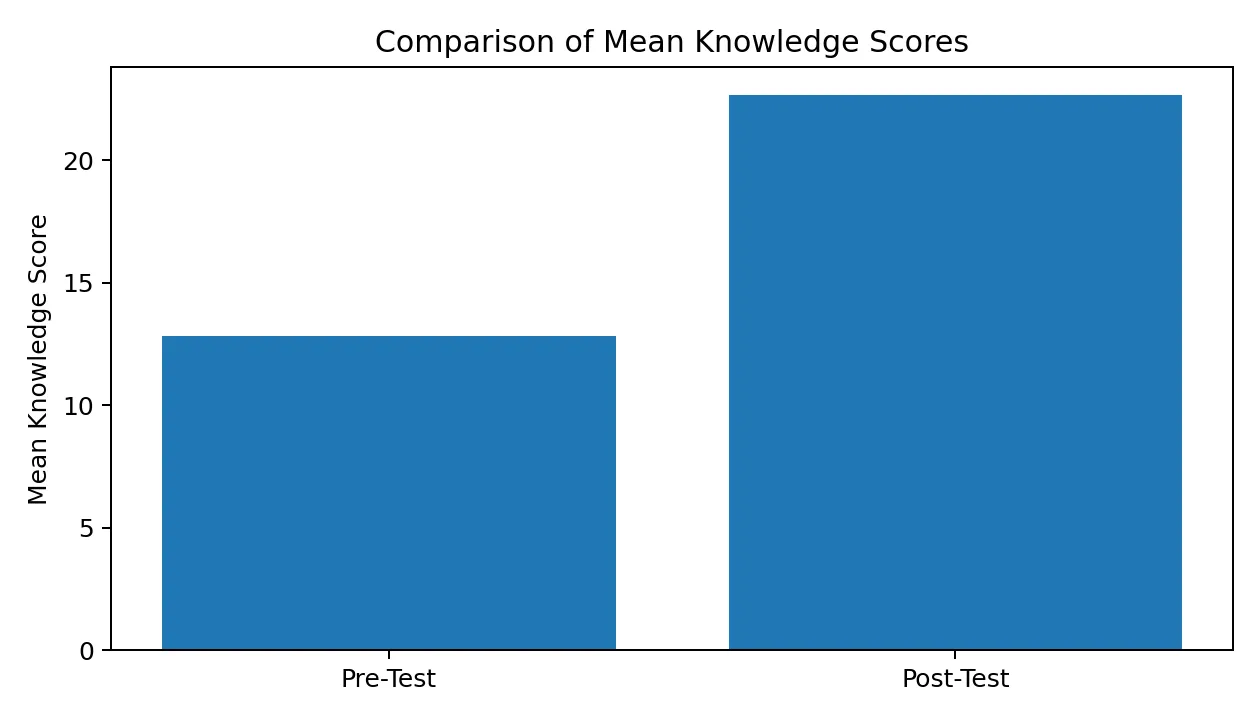
Table 3: Distribution According to Level of Knowledge Before and After the Programme (N = 300)
| Knowledge Level | Pre-Test f (%) | Post-Test f (%) |
|---|---|---|
| Inadequate | 138 (138%) | 2 (2%) |
| Moderately adequate | 126 (126%) | 18 (18%) |
| Adequate | 36 (36%) | 80 (80%) |
| Total | 300 (300%) | 100 (100%) |
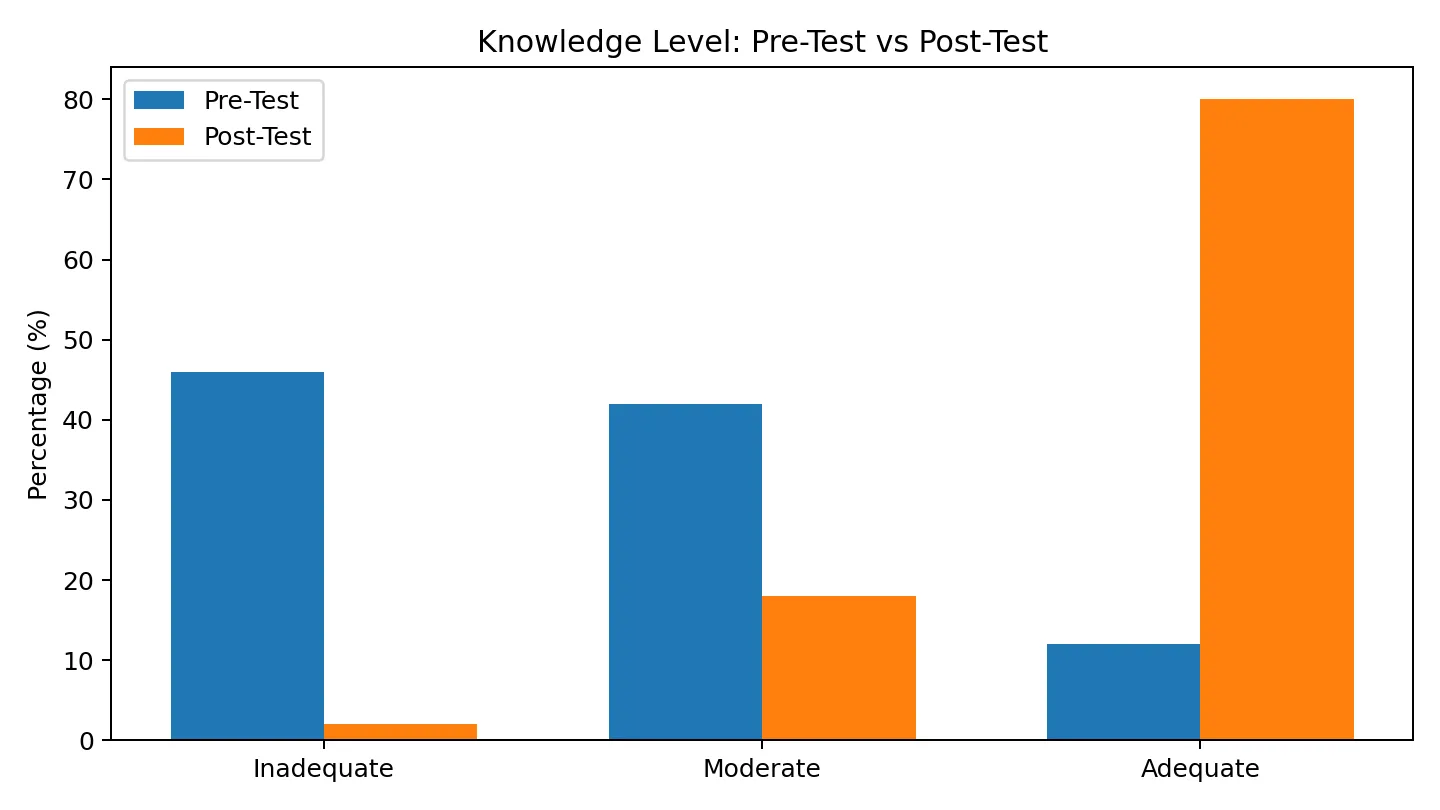
Interpretation: Adequate knowledge increased from 12% in the pre-test to 80% in the post-test, while inadequate knowledge decreased from 46% to 2%.
Table 4: Comparison of Pre-Test and Post-Test Self-Care Practice Scores (N = 300)
| Outcome | Pre-Test Mean ± SD | Post-Test Mean ± SD | Mean Difference | Paired t | p-value |
|---|---|---|---|---|---|
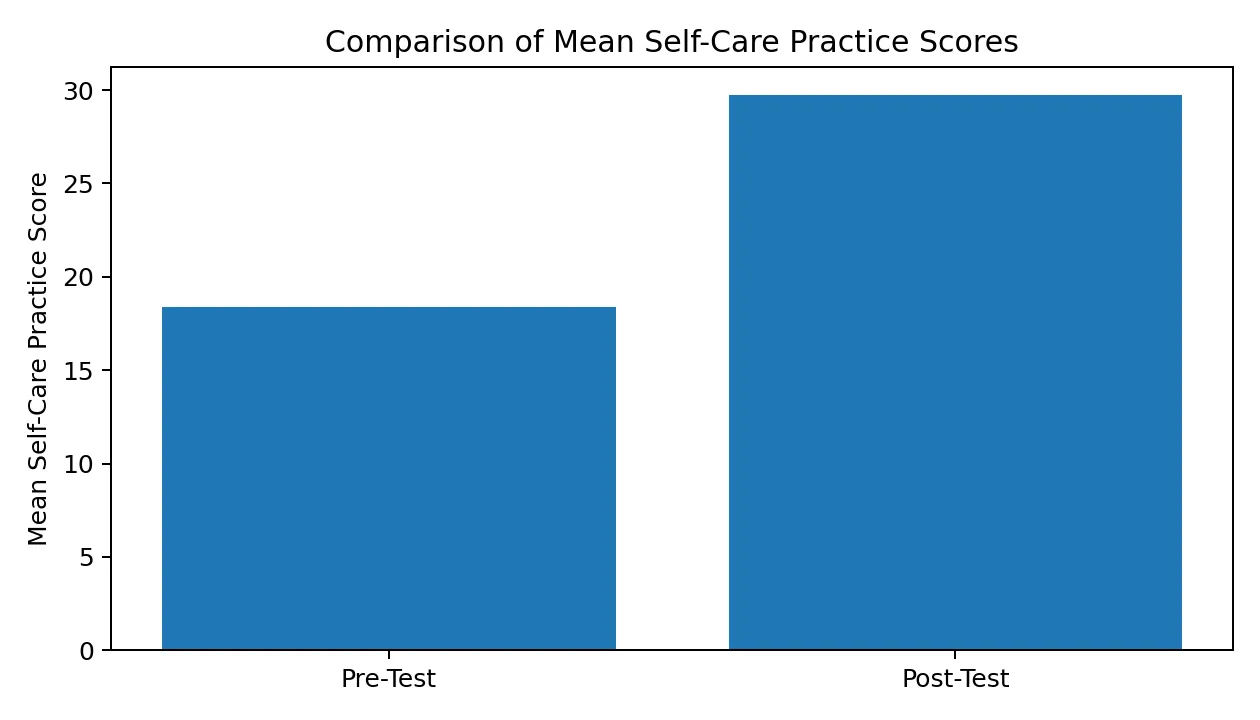
| Self-care practice | 28.36 ± 4.12 | 39.74 ± 3.58 | 11.38 | 23.18 | <0.001*** |
Interpretation: The mean self-care practice score increased from 28.36 ± 4.12 to 39.74 ± 3.58. The improvement was highly significant (p < 0.001).
Components Practiced by Study Participants
Table 5: Reported Diabetes Self-Care Management Education And
| PARAMETER | N | % |
|---|---|---|
| Diabetes self-care management educations | ||
| Yes | 234 | 78.0 |
| No | 66 | 22.0 |
| Total | 300 | 100.0 |
| Components of diabetes self-care management Practiced | ||
| Diet, exercise and medication | 104 | 34.7 |
| Diet and exercise | 49 | 16.3 |
| Diet and medication | 31 | 10.3 |
| Diet only | 43 | 14.3 |
| Medication only | 63 | 21.0 |
| Others | 10 | 3.3 |
| Total | 300 | 100.0 |
The parameters on the table are presented in frequencies (N) with their corresponding percentages (%)
Table 6: Compliance to Recommended Self-Care Management Components by Study Participants
| COMPLIANCE | N | % |
|---|---|---|
| Diet | ||
| Never | 154 | 51.3 |
| Sometimes | 91 | 30.3 |
| Always | 55 | 18.3 |
| Total | 300 | 100.0 |
| Medication | ||
| Never | 14 | 4.7 |
| Sometimes | 46 | 15.3 |
| Always | 237 | 79.0 |
| Total | 297* | 99.0* |
| Physical Activity | ||
| Never | 67 | 22.3 |
| Sometimes | 137 | 45.7 |
| Always | 18 | 6.0 |
| Total | 222* | 74.0* |
*Missing data because participants did not respond to them.
Table 7: Reported Barriers to Diabetes Self-Care Management Practice
| BARRIERS | N | % |
|---|---|---|
| Diet | ||
| Restrictive diet | 45 | 15.0 |
| Loss of appetite | 32 | 10.7 |
| Finance | 31 | 10.3 |
| Satisfaction | 24 | 8.0 |
| Work | 21 | 7.0 |
| Difficulty in following meal schedule | 19 | 6.3 |
| support | 12 | 4.0 |
| Travelling | 8 | 2.7 |
| No barriers | 81 | 27.0 |
| Others | 27 | 9.0 |
| Total | 300 | 100 |
| Medication | ||
| Forgetfulness | 23 | 7.7 |
| Bitterness of the drug | 16 | 5.3 |
| Pains of injection | 15 | 5.0 |
| Finance | 11 | 3.7 |
| Time | 8 | 2.7 |
| Work | 6 | 2.0 |
| Travelling | 3 | 1.0 |
| Polypharmacy | 1 | 0.3 |
| No barriers | 174 | 58.0 |
| Other | 43 | 14.3 |
| Total | 300 | 100 |
| Physical Activity | ||
| Tiredness/fatigue | 51 | 17.0 |
| Laziness | 40 | 13.3 |
| Work | 30 | 10.0 |
| Pains in the limb | 25 | 8.3 |
| Ill health | 21 | 7.0 |
| No knowledge | 14 | 4.7 |
| No support | 6 | 2.0 |
| No barriers | 92 | 30.7 |
| Others | 21 | 7.0 |
| Total | 300 | 100 |
GLYCAEMIC LEVELS OF THE STUDY POPULATION
Approximately 35 % of the study participants had fasting blood glucose levels less than 8mmol/L. The majority (42.3%) of the participants had FBG levels of 10mmol/L and above. This is shown in the Figure
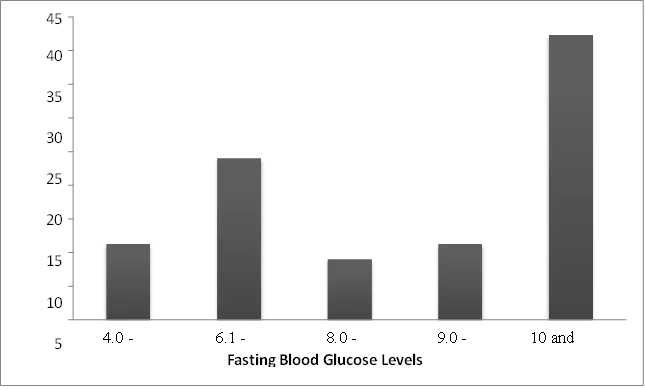
Table 8: Distribution According to Level of Self-Care Practice (N = 300)
| Practice Level | Pre-Test f (%) | Post-Test f (%) |
|---|---|---|
| Poor | 153 (153%) | 9 (9%) |
| Moderate | 114 (114%) | 60 (60%) |
| Good | 33 (33%) | 231 (231%) |
| Total | 300 (300%) | 100 (100%) |
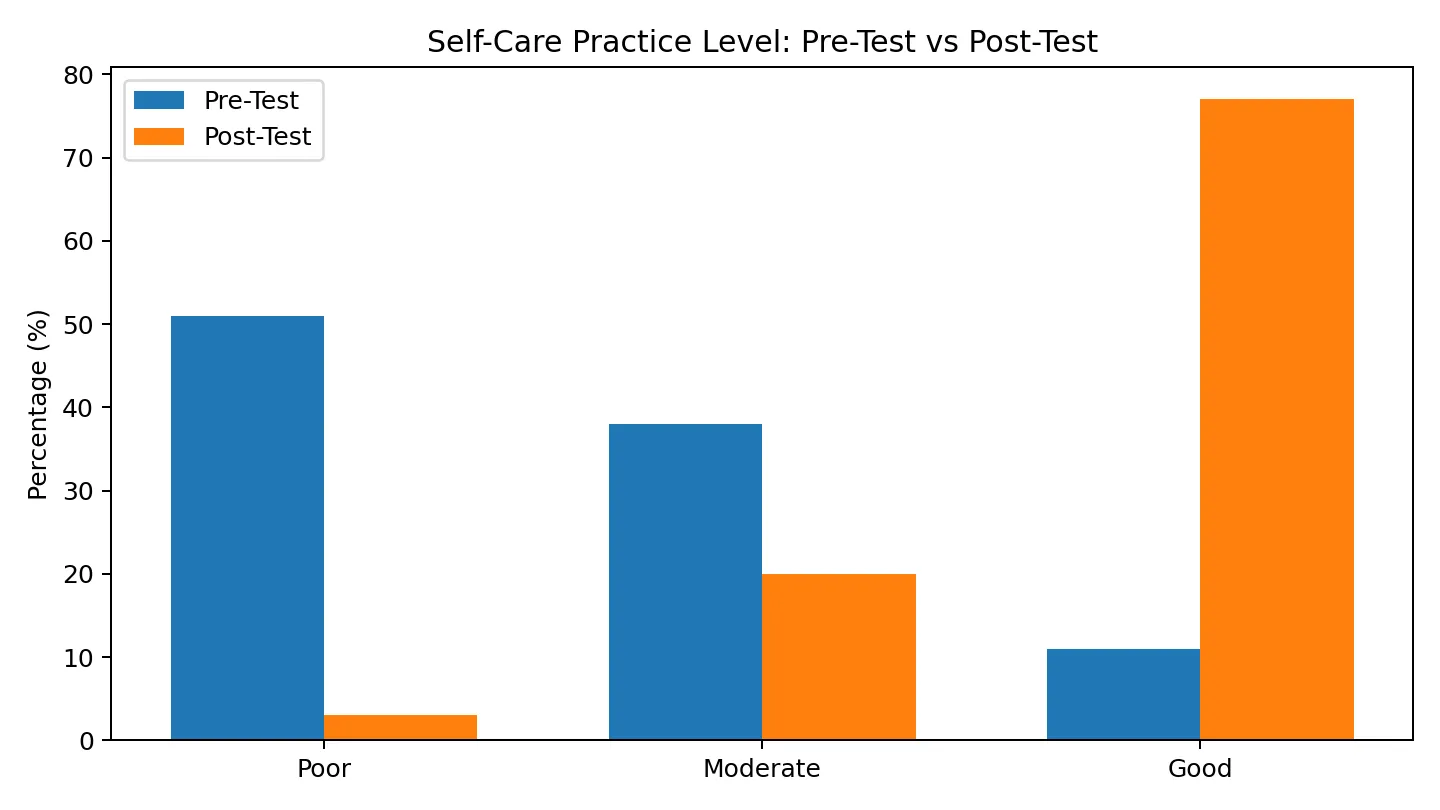
Table 7: Association Between Pre-Test Knowledge Level and Selected Demographic Variables (N = 300)
| Variable | χ² | df | p-value | Significance |
|---|---|---|---|---|
| Age | 5.21 | 6 | 0.517 | NS |
| Gender | 1.84 | 2 | 0.398 | NS |
| Educational status | 14.72 | 6 | 0.023 | Significant* |
| Duration of diabetes | 7.36 | 4 | 0.118 | NS |
| Type of treatment | 3.42 | 4 | 0.490 | NS |
| Previous information regarding foot care | 9.68 | 2 | 0.008 | Significant** |
NS = Not significant; *p < 0.05; **p < 0.01.
Table 8: Overall Effectiveness of the Structured Foot-Care Education Programme
| Outcome | Pre-Test Mean ± SD | Post-Test Mean ± SD | Mean Improvement | t value | Result |
|---|---|---|---|---|---|
| Knowledge | 12.84 ± 3.26 | 22.67 ± 2.91 | 9.83 | 24.76*** | Significant improvement |
| Self-Care Practice | 18.36 ± 4.12 | 29.74 ± 3.58 | 11.38 | 23.18*** | Significant improvement |
CONCLUSION
The study is intended to determine whether a structured foot-care education programme improves knowledge and self-care practices among patients with diabetes mellitus. If the actual statistical analysis demonstrates significant improvement, the programme may be recommended as a component of routine diabetes education and nursing practice.
REFERENCES

Pragati Robin, Pankaj Kumar Jena, Sagarika Bariak, Dr. J. Suganya, Suman Lata, Effectiveness of a Structured Foot-Care Education Programme on Knowledge and Self-Care Practices Among Patients with Diabetes Mellitus: A Study in Madhyapradesh, India, Int. J. of Pharm. Sci., 2026, Vol 4, Issue 10, 3621-3629. https://doi.org/10.5281/zenodo.23639444
 10.5281/zenodo.23639444