

We use cookies to ensure our website works properly and to personalise your experience. Cookies policy
Department of Pharmaceutics, Bharathi College of Pharmacy, Bharathinagara, Mandya, 571422.
Aim: The present study aimed to develop and optimize Domperidone solid dispersion-integrated fast-dissolving oral films to enhance its solubility and dissolution, achieve rapid disintegration, and improve patient convenience.Objectives: Domperidone is a poorly water-soluble drug that may exhibit limited dissolution. The study focused on improving its dissolution through solid dispersion and incorporating the optimized dispersion into fast-dissolving oral films.Methods: Domperidone solid dispersions were prepared using PVP K30 and PEG by the solvent evaporation and Melting method. The selected solid dispersion was incorporated into fast-dissolving oral films using solvent casting. The films formulation were Designed by Box Behnken Design and were evaluated for physical characteristics, folding endurance, disintegration time, drug content, and in vitro drug release. Optimization was performed using by DoE Software – Design Expert.Results: Domperidone showed a melting point of 243.3°C and DSC Endothermic Peak 246 °C. The drug exhibited poor aqueous solubility of 0.085 mg/mL, while solubility in phosphate buffer pH 6.8 was 0.401 mg/mL. The calibration curve showed good linearity with an R² value of 0.9994 at ?max 286 nm. FTIR studies confirmed Drug –Excipients Compatability. Among the solid dispersions, SD3 with a 1:5 drug-to-PVP K30 ratio showed 96% drug content, 39.41 mg/mL solubility and 93.60% cumulative drug release at 30 min. Box–Behnken design was employed for optimization of the fast-dissolving oral film using disintegration time and cumulative drug release as responses. The optimized formulation containing the selected solid dispersion, film-forming polymer and superdisintegrants showed a predicted disintegration time of 26.57 sec and predicted cumulative drug release of 95.00%, with a desirability of 0.995. The optimized formulation showed 26.00 ± 0.20 sec disintegration time, 94.12% cumulative drug
Oral administration is widely preferred because of its convenience, ease of use, and patient acceptability. However, Domperidone has poor aqueous solubility and a slow dissolution rate, which may limit its effective oral delivery.1
Fast-dissolving oral films (FDOFs) offer a convenient alternative to conventional tablets, particularly for patients with swallowing difficulties. They rapidly disintegrate in the oral cavity and can provide quick drug release without the need for water.2,3
Solid dispersion technology can improve the solubility and dissolution of poorly water-soluble drugs by incorporating the drug into a hydrophilic polymeric carrier and reducing its crystalline nature. Incorporating the optimized solid dispersion into oral films can therefore enhance drug dissolution while providing a convenient dosage form.4
In the present study, Box–Behnken Design (BBD) was employed for systematic formulation optimization. The effects of selected formulation variables on disintegration time and cumulative drug release were evaluated to obtain an optimized fast-dissolving oral film formulation.5,6
Salient Features of Fast Dissolving Oral Film:
Patients who suffer from vomiting cannot be administered the conventional oral formulations and need fast acting formulation. In general, emesis is preceded with nausea and in such condition it is difficult to administer drug with a glass of water; hence it is beneficial to administer drugs as mouth dissolving films with good mouth feel.8
This delivery method bypasses hepatic first-pass metabolism, potentially leading to improved bioavailability and faster therapeutic effects compared to traditional oral dosage forms. The route offers several advantages over oral route. The oral cavity has a large surface area, leading to rapid dissolution and disintegration of oral dosage forms. There is no risk of choking9. Oral fast-dissolving films (OFDFs) are solid unit dosage forms, providing accurate
dosing and great precision. Pregastric absorption improves the bioavailability of the drug, requiring fewer doses and enhancing patient compliance.10
This study focuses on the formulation and optimization of Domperidone-loaded fast-dissolving films integrating solid dispersion technology. The integration of solid dispersion with FDOFs offers a novel approach to improving drug delivery and patient outcomes for water-insoluble therapeutic agents.11
Pre-formulation studies
Preformulation studies were carried out to evaluate the physicochemical properties of Domperidone prior to formulation development. These studies included melting point determination to confirm the identity and purity of the drug, solubility analysis in various solvents to assess its solubility profile, determination of the maximum absorption wavelength (λmax) for analytical estimation, and compatibility studies using Fourier Transform Infrared (FTIR) spectroscopy to investigate potential interactions between Domperidone and the selected excipients. The results of these studies provided essential information for the successful development of the formulation.12
The melting point of Domperidone was determined using the capillary tube method to confirm its identity and purity. The solubility of Domperidone in different solvents was evaluated by the shake flask method to assess its solubility characteristics and support formulation development.13
Drug-Excipient compatibility studies using FTIR spectroscopy
FTIR analysis was carried out using a Shimadzu FTIR spectrophotometer. After initializing the instrument and cleaning the sample holder with acetone, the software was opened and the scan range set to 650–4500 cm⁻¹. A background spectrum was collected, then the sample was placed on the holder and scanned. The obtained spectrum was labeled, saved in ASCII format, and the instrument was turned off after analysis.14
Determination of λmax
Domperidone 10 µg/ml concentration was prepared by using mixture of phosphate buffer 6.8 and methanol. The solution was scanned from 200-400 nm by UV Spectrometer and a spectrum was observed for absorption maxima.15
Methods of Preparation Of Solid Dispersion:
I. Preparation of Solid Dispersion; Melting Solvent Method or Melting Fusion method)
A. Solvent evaporation method:
Drug and the polymer were dissolved in 10 ml of methanol and 5ml of dichloromethane. The solvent was stirred on magnetic stirrer at temperature 40°C and then evaporated in oven at 40°C. The solidified mass was then crushed, size reduced in a mortar and pestle and sieved through sieve.no 80.16
B. Melting Method:
The physical mixture of the drug and hydrophilic carrier is heated until a molten mass is formed. The molten mixture is then rapidly cooled in an ice bath with continuous vigorous stirring. After solidification, the solid mass is crushed, ground into a fine powder, and passed through a sieve.17
II. Formulation of solid dispersion incorporated fast dissolving oral films. 1. Solvent Casting Method
The required quantity of film-forming polymer is dissolved in distilled water and allowed to hydrate completely. Plasticizer and other excipients are added with continuous stirring to obtain a uniform solution. The prepared solid dispersion (Solid Dispersion containing equivalent 10 mg of Domperidone in 2*2 cm2 of Oral films) dispersed uniformly into the polymeric solution. The mixture is stirred to remove air bubbles and poured onto a petriplate or casting surface. The solution is dried at room temperature or in a hot air oven until a thin film is formed. The dried film is carefully peeled off and cut into required sizes for evaluation.18
Formulation table for the Preperation of solid Dispersion
| F.code | SD1 | SD2 | SD3 | SD4 | SD5 | SD6 |
|---|---|---|---|---|---|---|
| Drug(gm) | 0.1 | 0.1 | 0.1 | 0.1 | 0.1 | 0.1 |
| PVP K30(gm) | 0.1 | 0.3 | 0.5 | - | - | - |
| PEG4000(gm) | - | - | - | 0.1 | 0.3 | 0.5 |
| Methanol(ml) | 10 | 10 | 10 | 10 | 10 | 10 |
| Dichloromethane(ml) | 5 | 5 | 5 | 5 | 5 | 5 |
| Method | SE | SE | SE | MM | MM | MM |
Formulation of PVP K30 SD incorporated Fast Dissolving oral film design by using Box Behnken Design
| Formulation code | Run | Factor 1 | Factor 2 | Factor 3 |
|---|---|---|---|---|
| A | B | C | ||
| F1 | 1 | 0 | 0 | 1 |
| F2 | 2 | 120 | 0 | 1 |
| F3 | 3 | 0 | 120 | 1 |
| F4 | 4 | 120 | 120 | 1 |
| F5 | 5 | 0 | 60 | 0.5 |
| F6 | 6 | 120 | 60 | 0.5 |
| F7 | 7 | 0 | 60 | 1.5 |
| F9 | 9 | 60 | 0 | 0.5 |
| F10 | 10 | 60 | 120 | 0.5 |
| F11 | 11 | 60 | 0 | 1.5 |
| F12 | 12 | 60 | 120 | 1.5 |
| F13 | 13 | 60 | 60 | 1 |
| F14 | 14 | 60 | 60 | 1 |
| F15 | 15 | 60 | 60 | 1 |
| F16 | 16 | 60 | 60 | 1 |
A. Crosspovidone B. Sodium Starch Glycolate C. PEG 400
Formulation table for the preparation of Fast dissolving Oral Films By incorporating PVP K30 Solid Dispersion.(F1-F16)
| F.Code | SD (PVP) |
HPMC E15 (gm) |
PVP K30 (gm) |
PEG 400 (ml) |
Citric acid (gm) |
CP (mg) |
SSG (mg) |
SS (gm) |
Water (ml) |
|---|---|---|---|---|---|---|---|---|---|
| F1 | 0.06 | 0.7 | 0.2 | 1 | 0.08 | 0 | 0 | 0.02 | 20 |
| F2 | 0.06 | 0.7 | 0.2 | 1 | 0.08 | 120 | 0 | 0.02 | 20 |
| F3 | 0.06 | 0.7 | 0.2 | 1 | 0.08 | 0 | 120 | 0.02 | 20 |
| F4 | 0.06 | 0.7 | 0.2 | 1 | 0.08 | 120 | 120 | 0.02 | 20 |
| F5 | 0.06 | 0.7 | 0.2 | 0.5 | 0.08 | 0 | 60 | 0.02 | 20 |
| F6 | 0.06 | 0.7 | 0.2 | 0.5 | 0.08 | 120 | 60 | 0.02 | 20 |
| F7 | 0.06 | 0.7 | 0.2 | 1.5 | 0.08 | 0 | 60 | 0.02 | 20 |
| F8 | 0.06 | 0.7 | 0.2 | 1.5 | 0.08 | 120 | 60 | 0.02 | 20 |
| F9 | 0.06 | 0.7 | 0.2 | 0.5 | 0.08 | 60 | 0 | 0.02 | 20 |
| F10 | 0.06 | 0.7 | 0.2 | 0.5 | 0.08 | 60 | 120 | 0.02 | 20 |
| F11 | 0.06 | 0.7 | 0.2 | 1.5 | 0.08 | 60 | 0 | 0.02 | 20 |
| F12 | 0.06 | 0.7 | 0.2 | 1.5 | 0.08 | 60 | 120 | 0.02 | 20 |
| F13 | 0.06 | 0.7 | 0.2 | 1 | 0.08 | 60 | 60 | 0.02 | 20 |
| F14 | 0.06 | 0.7 | 0.2 | 1 | 0.08 | 60 | 60 | 0.02 | 20 |
| F15 | 0.06 | 0.7 | 0.2 | 1 | 0.08 | 60 | 60 | 0.02 | 20 |
| F16 | 0.06 | 0.7 | 0.2 | 1 | 0.08 | 60 | 60 | 0.02 | 20 |
Evaluation of solid Dispersion:
1. Solubility:
prepared solid dispersion was separately added into conical flasks containing phosphate buffer pH 6.8 or distilled water. The flasks were shaken continuously in a mechanical shaker for 24 hours at room temperature to attain equilibrium. The solutions were then filtered
through Whatman filter paper, suitably diluted and analyzed using a UV spectrophotometer at 286 nm.19
2. Drug Content
An accurately weighed quantity of prepared solid dispersion equivalent to 10 mg of Domperidone was transferred into a 100 mL volumetric flask containing phosphate buffer pH 6.8. The volume was made up to 100 mL and shaken thoroughly to obtain a clear solution. The solution was filtered through Whatman filter paper. From the filtrate, 1 mL was withdrawn and diluted to 10 mL with phosphate buffer pH 6.8. The diluted solution was analyzed using a UV spectrophotometer at 284 nm to determine drug content.20
3. Dissolution Studies:
Accurately weigh solid dispersion equivalent to 10 mg of solid dispersion. Fill 500ml of phosphate buffer pH 6.8 into dissolution vessel and maintain temperature at 37±0.5∘C and 50 rpm for 1hr. Add the weighed solid dispersion sample into the Dissolution medium.Withdraw 5ml sample at specific time intervals such as 5,10,15,20,30,45 and 60min.After each withdrawl ,replace with equal volume of fresh dissolution medium maintained at some temperature.Filter the collected sample using whtatsman filter paper to remove undissolved particle.Measure absorbance using uv spectrometer at 286nm.Calculate cumulative % drug release using calibration curve.21
4. FTIR Study :
FTIR analysis was carried out using a Shimadzu FTIR spectrophotometer.After initializing the instrument and cleaning the sample holder with acetone, the software was opened and the range set to 400-4000 cm¯¹. A background spectrum was collected, then the sample was placed on the holder and scanned.The obtained spectrum was labeled, saved in ASCII format, and the instrument was turned off after analysis.22
5. X-Ray Diffractometry Analysis:
X-ray diffractometry analysis of pure Domperidone, physical mixture, and prepared solid dispersion was carried out to determine the crystalline nature of the drug. The samples were finely powdered and analyzed using an X-ray diffractometer with Cu-Kα radiation operated at 40 kV and 30 mA. The diffraction patterns were recorded over a scanning range of 5°–50° (2θ) at a scanning speed of 2°/min. The obtained diffraction peaks of solid dispersion were compared with those of pure drug. Reduction in intensity or disappearance of characteristic crystalline peaks indicated conversion of the drug into amorphous form, which may enhance solubility and dissolution rate.23
4.6.Evaluation of Fast Dissolving Oral Films
a) Folding endurance
Folding endurance gives the brittleness of a film. It is measured by manually repeated folding of film at some place till it breaks. The number of times the film is folded without breaking is the folding endurance value.24
b) Film thickness
It was measured by using a digital Vernier calliper. The thickness of films was measured at five different points (Four on the corners and in centre), The average thickness of all films
is calculated.25
c) Weight variation
Three films of every 8 films of 2×2 cm² for each formulation were weighed individually and calculated. A calibrated electronic weighing balance is used for weighing buccal film. The
mean weight of all films is calculated.26
d) Percent drug content
A 2 × 2 cm² film was placed in 100 mL of phosphate buffer (pH 6.8) and stirred continuously on a bench-top orbital shaker for 24 hours. The resulting solution was then filtered, suitably diluted, and analyzed using a UV-visible spectrophotometer at 286nm. The drug content was calculated from film samples and reported as the final result.27
e) In vitro drug release
For in vitro drug release study USP type I apparatus (Basket type) dissolution test apparatus containing 500 ml of PB of pH 6.8 as a dissolution medium at 37 ± 0.5°C temperature and speed at 50 rpm. 5 ml of sample solution was withdrawn at time intervals from 2 to 10 min respectively, and equilibrated with a new or fresh dissolution medium to maintain sink state. Drug release was analyzed spectrophotometrically at a λmax of 286 nm using UV visible spectroscopy.28
f) Disintegration Time
the prepared film was placed in a Petri plate containing 10 mL of phosphate buffer pH 6.8, maintained at approximately 37 ± 0.5°C. The time required for the film to completely break down and disperse in the medium was recorded using a stopwatch. The test was performed in triplicate for each formulation, and the results were expressed as mean ± standard deviation (SD).29
g) Stability studies as per ICH (International Conference on Harmonization) guidelines
Stability studies were carried out to investigate the degradation of drug from buccal films formulation during storage. Stability studies are carried out as per ICH guidelines for intermediate study protocol. The formulation was stored at the specific storage condition
30ºC ± 2ºC and 65 ± 5% RH for a period of 6 months. The parameters like % drug content and in vitro drug release were compared at specific time interval of 0, and 6 months as per ICH guidelines.30
Preformulation studies
Preformulation studies were carried out and the results for the experiment conducted are as follows;
a) Identification of drug by Melting point determination
Melting point report of Domperidone
| Reported | Method | Results observed |
|---|---|---|
| 240-246℃ | Thiele’s tube method | 243.3℃ |
| DSC | 246℃ |
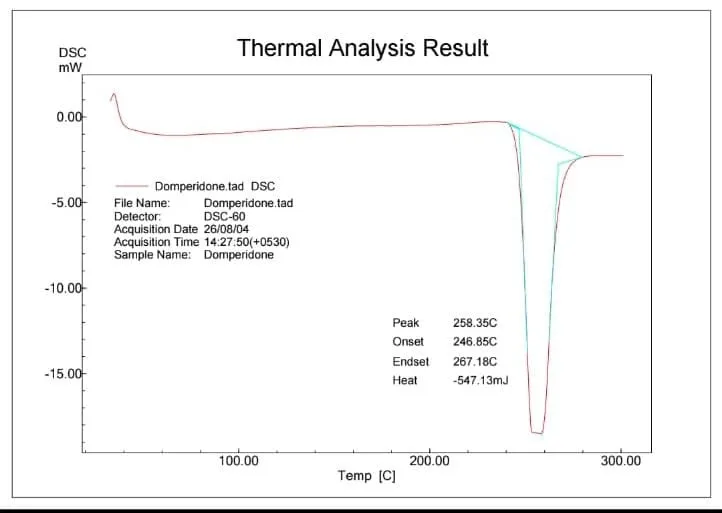
DSC graph of pure Domperidone
b) Solubility analysis
Solubility analysis of Domperidone
| Solvents | Solubility (mg/ml) | Parts of solvents required for parts of solutes | Solubility Criteria |
|---|---|---|---|
| Water | 0.085 | 11.70 | Practically insoluble |
| Methanol | 97.65 | 10.24 | Freely Soluble |
| Ethanol | 43.50 | 22.99 | Soluble |
| Chloroform | 54.52 | 18.34 | Soluble |
| Phosphate buffer 6.8 | 0.401 | 24.70 | Very Slightly Soluble |
c) Determination of λmax Domperidone.
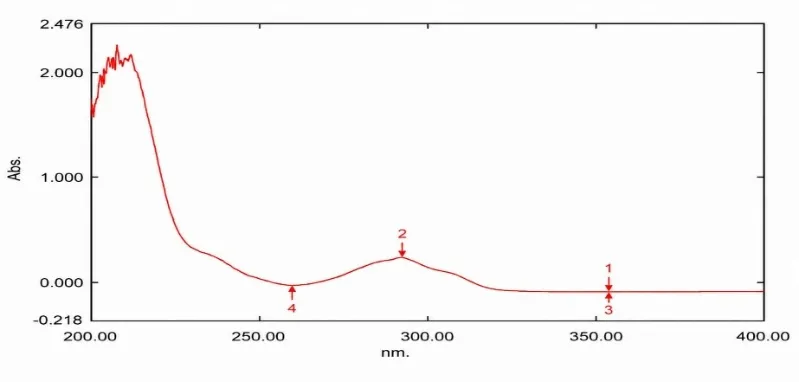
UV spectrum of Domperidone at 10 µg/ml concentration
d) Standard calibration curve of Domperidone
Table 5.3: Data for Standard Calibration Curve of Domperidone
| Absorbance at λmax 286 nm | ||||
|---|---|---|---|---|
| Conc. | T-1 | T-2 | T-3 | AVG ± SD n = 3 |
| 0 | 0 | 0 | 0 | 0 |
| 8 | 0.213 | 0.223 | 0.229 | 0.215±0.006 |
| 10 | 0.412 | 0.419 | 0.422 | 0.417±0.005 |
| 24 | 0.598 | 0.603 | 0.609 | 0.603±0.005 |
| 32 | 0.798 | 0.801 | 0.811 | 0.803±0.006 |
| 40 | 0.981 | 0.992 | 0.995 | 0.989±0.007 |
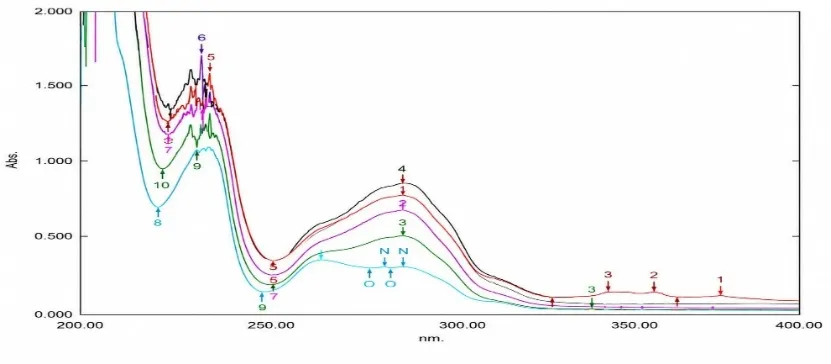
UV spectra of Domperidone at different concentration of 0-40 µg/ml
[Figure - see the formatted PDF]
Plot of standard calibration curve of Domperidone
e) Compatibility studies by FTIR spectrophotometer
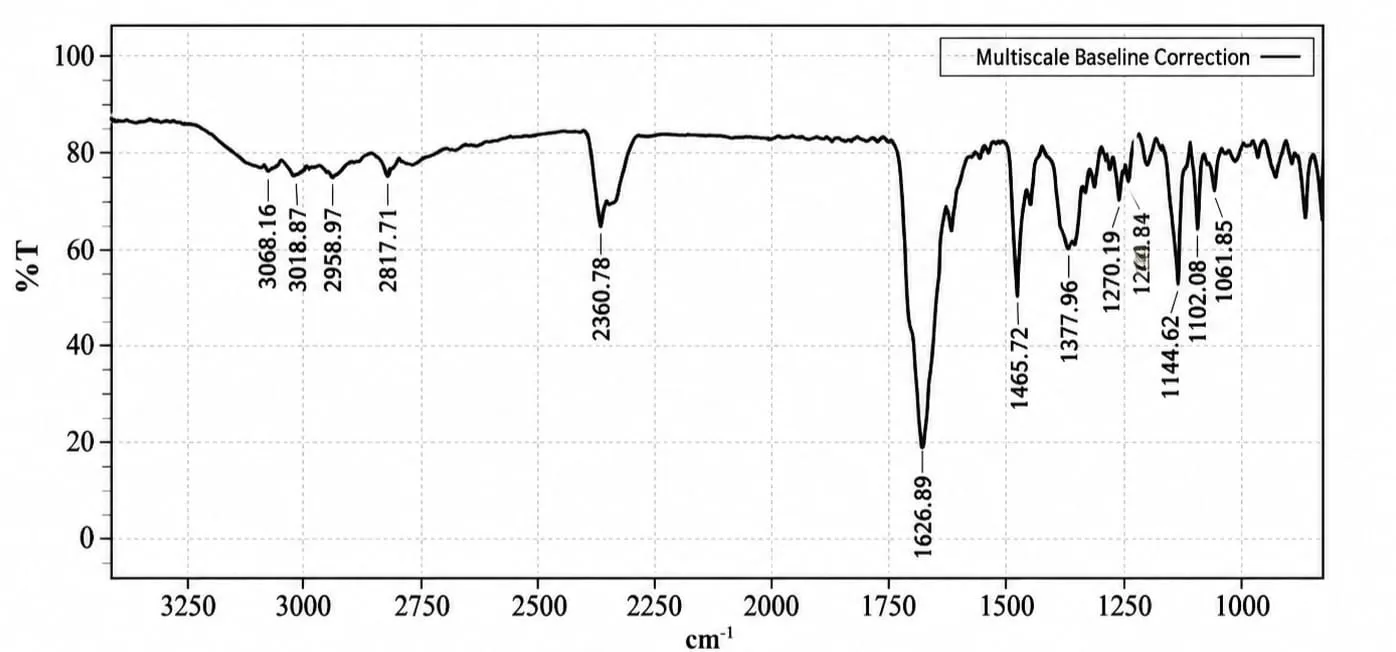
FTIR Spectra of Domperidone
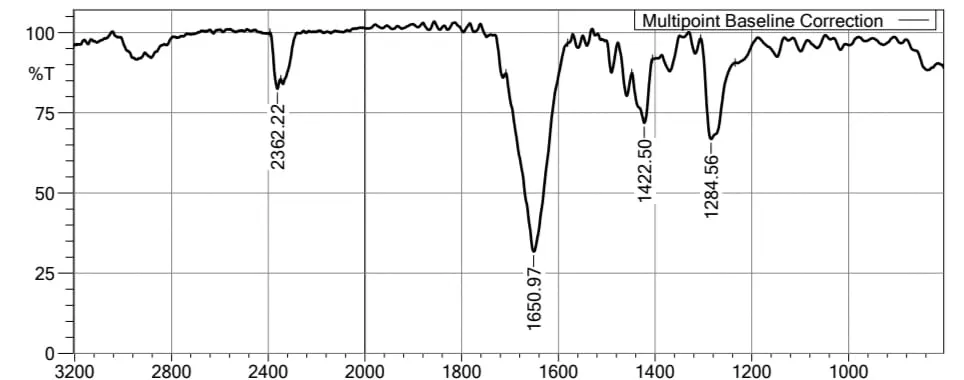
FTIR Spectra of SD3 1:5 (PVP K30 and Domperidone)
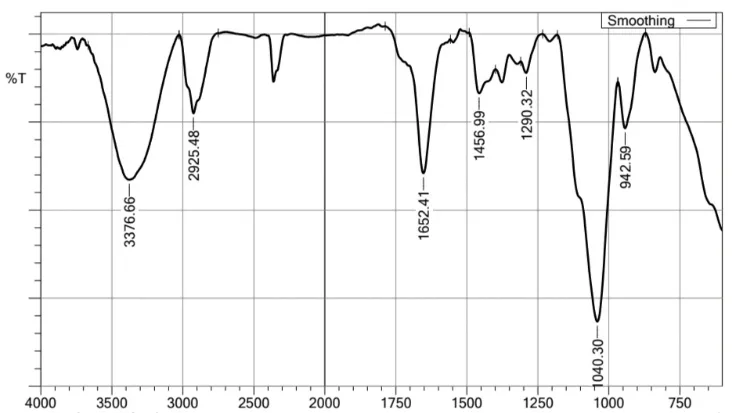
FTIR Spectra Fast Dissolving Oral Films
FTIR Comparison: Doperidone pure Drug vs PVPK30 Solid Dispersion vs film Physical Mixture
| Vibrations | Domperidone | Solid Dispersion {PVP k30(1:5)} |
SD incorporated Film | Inference |
|---|---|---|---|---|
| Wave number (cm-1) |
Wave number (cm-1) |
Wave number (cm-1) |
||
| O-H Stretching | 3068.16 | Broad~3300 | 3376.66 | Brodening indicates hydrogen bonding between drug and polymer |
| C-H Stretching | 2958.97 | Overlap with Polymer | 2925.48 | Peak Retained-no interaction,drug stable |
| C=O Stretching | 1626.89 | 1650.97 | 1652.41 | Slight shift-weak physicalinteraction |
| C=C Stretching | 1465.72 | 1422.50 | 1456.99 | Minor shift in SD – possible interation |
| C-N Stretching | 1270.19 | 1284.56 | 1290.32 | Slight shift Physical compatability |
| C-O Streching | 1061.85 | Overlap with Polymer | 1040.30 | Peak retained-no chemical linteraction |
Evaluations studies solid Dispersion
Drug Content of Solid Dispersion
| Formulation | Drug Content |
|---|---|
| SD1 | 86.00% |
| SD2 | 90.40% |
| SD3 | 96.00% |
| SD4 | 85.60% |
| SD5 | 88.40% |
| SD6 | 91.60% |
in vitro dissolution study of formulation SD1-SD6
| %cumulative Drug Release | ||||||
|---|---|---|---|---|---|---|
| Time | SD1 | SD2 | SD3 | SD4 | SD5 | SD6 |
| 0 | 0 | 0 | 0 | 0 | 0 | 0 |
| 5 | 21.40 | 27.80 | 31.60 | 19.80 | 25.80 | 29.8 |
| 10 | 32.80 | 38.40 | 43.60 | 29.80 | 35.40 | 40.8 |
| 15 | 42.80 | 49.60 | 54.20 | 39.40 | 46.80 | 51.6 |
| 20 | 58.60 | 63.60 | 69.60 | 53.80 | 62.40 | 66.2 |
| 25 | 71.00 | 77.00 | 82.40 | 65.80 | 74.40 | 79.6 |
| 30 | 81.00 | 87.60 | 93.60 | 76.20 | 86.00 | 89.8 |
Solubility Analysis of PVP K30 Solid Dispersion
| PVP K 30 Ratio | Solubilty (mg/ml) | Parts of solvents required for parts of solutes | Solubity Criteria |
|---|---|---|---|
| 1:1 | 8.41 | 118.86 | Slghtly soluble |
| 1:3 | 12.50 | 79.99 | Sparingly Soluble |
| 1:5 | 39.41 | 25.35 | Soluble |
Solubility Analysis Of PEG 4000 Solid Dispersion
| PEG 4000 Ratio | Solubilty (mg/ml) | Parts of solvents required for parts of solutes | Solubity Criteria |
|---|---|---|---|
| 1:1 | 7.24 | 138.88 | Slightly Soluble |
| 1:3 | 10.51 | 95.23 | Slightly Soluble |
| 1:5 | 11.50 | 86.93 | Sparingly Soluble |
[Figure - see the formatted PDF]
% Drug Content of Solid Dispersion SD1-SD6
[Figure - see the formatted PDF]
% Cumulative Drug Release of Solid Dispersion SD1-SD6
[Figure - see the formatted PDF]
Figure 5.10: XRD of Solid Dispersion PVP K30 (1:5)
Evaluation Studies of Solid Dispersion incorporated Fast Dissolving Oral Fims
| F. code | Weight variation (gm), Avg± SD, n=5 | Thickness (mm), Avg ± SD, n=5 | % of Drug Content n=3 | Disintegration time in sec n=3 |
Folding Endurance n=3 |
|---|---|---|---|---|---|
| F1 | 0.118±0.001 | 0.113±0.01 | 85.60±0.2 | 82.00±0.7 | 320±1.00 |
| F2 | 0.120±0.002 | 0.115±0.02 | 96.80±0.3 | 35.00±0.6 | 324±1.00 |
| F3 | 0.121±0.001 | 0.118±0.02 | 93.80±0.2 | 42.00±0.6 | 322±1.00 |
| F4 | 0.124±0.002 | 0.128±0.03 | 98.70±0.1 | 25.00±0.4 | 325±1.00 |
| F5 | 0.119±0.001 | 0.123±0.03 | 85.50±0.3 | 63.00±0.6 | 319±1.00 |
| F6 | 0.123±0.001 | 0.125±0.01 | 95.40±0.1 | 29.00±0.6 | 320±1.00 |
| F7 | 0.124±0.001 | 0.124±0.02 | 81.20±0.2 | 77.00±0.5 | 330±1.00 |
| F8 | 0.126±0.002 | 0.127±0.03 | 94.60±0.2 | 33.33±0.8 | 334±1.00 |
| F9 | 0.123±0.001 | 0.122±0.01 | 89.20±0.1 | 54.00±1.6 | 322±1.00 |
| F10 | 0.124±0.001 | 0.126±0.02 | 93.40±0.3 | 34.00±1.3 | 321±1.00 |
| F11 | 0.124±0.001 | 0.124±0.03 | 82.30±0.2 | 65.00±1.1 | 331±1.00 |
| F12 | 0.126±0.002 | 0.128±0.02 | 93.60±0.2 | 41.53±1.1 | 332±1.00 |
| F13 | 0.122±0.001 | 0.124±0.02 | 90.30±0.1 | 43.46±0.7 | 322±1.00 |
| F14 | 0.121±0.001 | 0.125±0.01 | 91.50±0.2 | 46.00±0.6 | 326±1.00 |
| F15 | 0.123±0.002 | 0.127±0.03 | 90.70±0.2 | 44.00±0.5 | 323±1.00 |
| F16 | 0.122±0.002 | 0.125±0.02 | 89.90±0.1 | 46.00±0.5 | 324±1.00 |
[Figure - see the formatted PDF]
Weight variation of formulation F1-F16
[Figure - see the formatted PDF]
Thickness of formulation F1-F16
[Figure - see the formatted PDF]
% Drug Content Of Solid Dispersion Incorporated Films F1-F16
Invitro Dissolution Study OF PVP K15 Solid Dispersion incorporated Fast Dissolving Oral Film F1-F16
| % of Cumulative Drug Release | |||||||||
|---|---|---|---|---|---|---|---|---|---|
| Time in (min) | F1 | F2 | F3 | F4 | F5 | F6 | F7 | F8 | |
| 0 | 0.00 | 0.00 | 0.00 | 0.00 | 0.00 | 0.00 | 0.00 | 0.00 | |
| 1 | 39.40 | 47.30 | 44.80 | 50.90 | 45.40 | 44.30 | 38.10 | 42.30 | |
| 2 | 46.10 | 58.20 | 56.60 | 61.90 | 50.30 | 57.20 | 45.90 | 55.9 | |
| 4 | 55.20 | 68.40 | 65.10 | 73.10 | 63.10 | 67.10 | 54.80 | 65.90 | |
| 6 | 62.40 | 75.20 | 73.20 | 81.60 | 72.20 | 73.10 | 61.40 | 71.00 | |
| 8 | 73.20 | 86.00 | 84.20 | 90.10 | 76.50 | 87.20 | 72.50 | 85.20 | |
| 10 | 80.00 | 96.26 | 91.60 | 98.20 | 82.80 | 94.60 | 78.20 | 92.80 | |
Invitro Dissolution Study OF PVP K15 Solid Dispersion Incorporated Fast Dissolving Oral Film F9-F16
| % of Cumulative Drug Release | |||||||||
|---|---|---|---|---|---|---|---|---|---|
| Time in (min) | F9 | F10 | F11 | F12 | F13 | F14 | F15 | F16 | |
| 0 | 0.00 | 0.00 | 0.00 | 0.00 | 0.00 | 0.00 | 0.00 | 0.00 | |
| 1 | 46.90 | 44.60 | 36.10 | 43.20 | 44.20 | 44.20 | 44.70 | 42.90 | |
| 2 | 54.20 | 55.40 | 44.40 | 53.60 | 49.40 | 49.40 | 50.40 | 50.60 | |
| 4 | 67.40 | 64.60 | 52.60 | 62.80 | 61.20 | 61.20 | 62.20 | 60.70 | |
| 6 | 74.80 | 72.90 | 60.20 | 70.90 | 70.20 | 70.20 | 69.50 | 67.20 | |
| 8 | 79.60 | 83.80 | 70.20 | 82.20 | 75.30 | 75.20 | 74.40 | 74.10 | |
| 10 | 85.20 | 91.50 | 76.42 | 91.00 | 82.20 | 82.20 | 82.20 | 81.90 | |
[Figure - see the formatted PDF]
% of Cumulative Drug Release of Formulation F1-F16
Optimization By DOE Software – Design Expert
1)optimized formulation composition and Predicted Results
| Factor | Optimizes Value |
|---|---|
| Crospovidone | 101.862 |
| Sodium starch glycolate | 116.42 |
| PEG 400 | 0.84666 |
| Predicted disintegration time | 26.5718 s |
| Predicted % drug release | 95.0001% |
| Desirability | 0.995 |
2)Optimized Solid Dispersion Incorporated Fast Dissolving Oral FILMS formulation result
| Formulation Code | Disintegration time (sec) | % CDR at 10 minutes | Drug content (%) |
|---|---|---|---|
| OF | 26.00±0.20 | 94.12 | 96±0.30 |
Stability Studies
Results of intermediate stability studies of optimized Solid Dispersion Incorporated Fast Dissolving Oral Films 30ºC ± 2ºC
| Parameters | Duration in days | ||
|---|---|---|---|
| 0 | 30 | 60 | |
| %CDR | 94.12 | 93.45 | 92.23 |
| %DC | 96 | 95.5 | 94.3 |
CONCLUSION:
The present study successfully developed Domperidone solid dispersions using PVP and PEG carriers to improve its solubility and dissolution characteristics. Preformulation studies confirmed the purity, identity, and analytical suitability of the drug. successfully demonstrated the potential of solid dispersion technology combined with fast-dissolving oral films for improving Domperidone delivery. PVP K30 at a 1:5 drug-to-polymer ratio (SD3) provided enhanced solubility (39.41 mg/mL), drug content (96%), and drug release (93.6% at 30 min).
The optimized solid dispersion was successfully incorporated into oral films using the solvent casting method, producing films with acceptable physical characteristics, flexibility, and rapid disintegration. The optimized formulation achieved 26.0 ± 0.20 s disintegration time, 94.12% drug release at 10 min, and 96% drug content, demonstrating rapid drug release and satisfactory formulation performance. Box–Behnken-based optimization enabled systematic evaluation of formulation variables and identification of the optimized film composition. The formulation also showed acceptable stability during the study period, with only minor changes in drug release and drug content. Overall, the developed PVP K30 solid dispersion-incorporated fast-dissolving oral film represents a promising approach for improving the dissolution of Domperidone while providing a convenient and rapidly disintegrating dosage form.
Acknowledgement
I express my sincere gratitude towards Dr. Parthiban S, Head of the department, Department of Pharmaceutics, and Bharathi College of Pharmacy who has been abundantly helpful in numerous ways for this research work. The authors also thank Bharathi College of Pharmacy, Mandya, Karnataka, India, for providing the required facilities to carry out this research work.
Funding
No funding was provided for this study
BIBILOGRAPHY:
REFERENCES

Ananya M. S., Parthiban S., Enhancing Dissolution Profile of Domperidone Through Solid Disperstion Integrated Fast Dissolving Films: Formulation, Optimization, and Evaluation, Int. J. of Pharm. Sci., 2026, Vol 4, Issue 10, 3495-3509. https://doi.org/10.5281/zenodo.23633318
 10.5281/zenodo.23633318