

We use cookies to ensure our website works properly and to personalise your experience. Cookies policy
Department Of Pharmacy, Sims College of Pharmacy, Guntur, India.
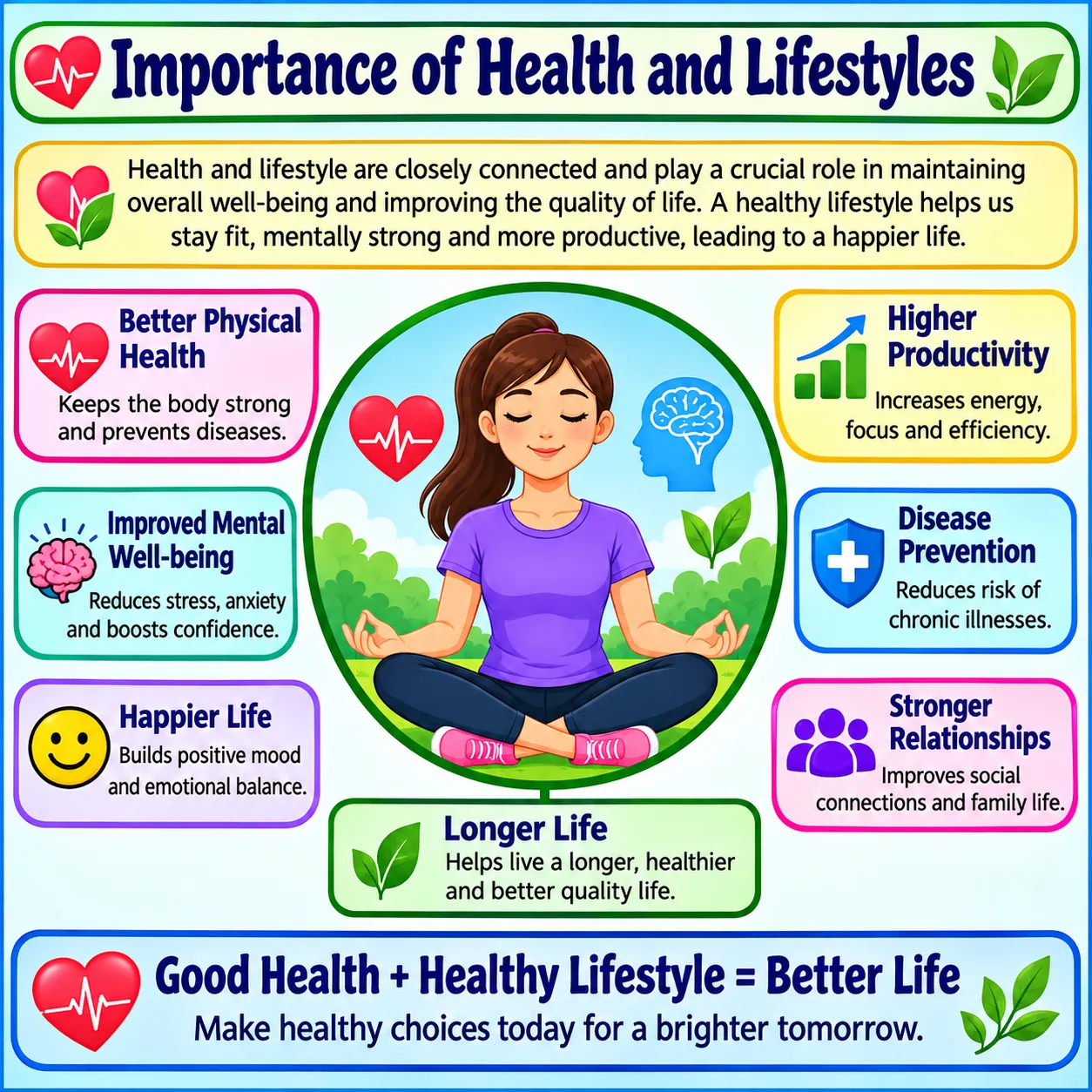
Health and lifestyle are important factors that influence the overall well-being and quality of life of individuals. A healthy lifestyle involves making positive choices related to food, physical activity, sleep, personal hygiene, mental health, and social relationships. A balanced diet provides the body with essential nutrients, while regular exercise improves physical fitness, strengthens the immune system, and reduces the risk of diseases such as obesity, diabetes, and heart problems. Adequate sleep and proper rest are also necessary for maintaining energy, concentration, and emotional stability.In modern society, unhealthy lifestyles are becoming increasingly common due to sedentary habits, excessive screen time, stress, irregular eating patterns, and lack of physical activity. These habits can negatively affect both physical and mental health. Therefore, developing healthy habits from an early age is essential for preventing lifestyle-related diseases and promoting long-term well-being. Mental health is equally important and can be supported through stress management, relaxation, positive relationships, and sufficient leisure time.Health education plays an important role in helping people understand the connection between their daily choices and their health. Individuals, families, schools, and communities can work together to encourage healthier lifestyles. Small changes, such as eating nutritious foods, exercising regularly, drinking enough water, sleeping well, and avoiding harmful substances, can make a significant difference. Overall, maintaining a healthy lifestyle is a continuous process that helps individuals lead active, productive, and fulfilling lives
Health and lifestyle are closely connected and play an important role in maintaining overall well-being. Health refers to a person's physical, mental, emotional, and social well-being, while lifestyle refers to the daily habits, choices, and behaviours that influence health.A healthy lifestyle includes eating a balanced diet, doing regular physical activity, getting enough sleep and rest, maintaining personal hygiene, drinking sufficient water, managing stress, and maintaining positive relationships. Avoiding harmful habits such as smoking, excessive alcohol consumption, and substance misuse is also important.
In today's world, unhealthy eating habits, lack of exercise, stress, and excessive screen time can negatively affect health. Therefore, developing healthy habits from an early age can help prevent diseases, improve fitness, support mental well-being, and enhance quality of life.
Overall, health and lifestyle are important for living a healthy, active, happy, and productive life. Small positive changes in everyday habits can make a significant difference to long-term health.
Importance of health and lifestyles
🟢 HEALTHY LIFESTYLE
│
┌────────────────┼────────────────┐
↓ ↓ ↓
🔵 PHYSICAL 🟣 MENTAL 🟠 SOCIAL
HEALTH HEALTH HEALTH
│ │ │
Exercise Stress control Relationships
Healthy diet Good sleep Communication
Hygiene Relaxation Support
│ │ │
└────────────────┼────────────────┘
↓
🟡 DISEASE PREVENTION
↓
🔴 MORE ENERGY
↓
🟢 BETTER QUALITY OF LIFe
History of health and lifestyles:
The history of health and lifestyle shows how people’s way of living and understanding of health have changed over time. In ancient times, people depended mainly on natural foods, physical activity, and traditional remedies. Ancient civilizations such as India, China, Egypt, and Greece developed systems of medicine and emphasized cleanliness, diet, and exercise.
During the Middle Ages, infectious diseases were common, and medical knowledge was limited. Poor sanitation and overcrowding contributed to the spread of illness. During the Industrial Revolution, rapid urbanization and changes in working conditions created new health challenges.
In the 19th and 20th centuries, improvements in sanitation, vaccination, nutrition, medical science, and public health greatly reduced many diseases. In the modern era, lifestyles have become more sedentary because of technology, processed foods, and increased screen time. As a result, greater attention is now given to exercise, balanced diets, mental health, and disease prevention.
ANCIENT TIMES
Natural food • Exercise • Traditional medicine
↓
MIDDLE AGES
Poor sanitation • Infectious diseases
↓
INDUSTRIAL AGE
Urbanization • Pollution • New health challenges
↓
MODERN MEDICINE
Vaccines • Sanitation • Medical technology
↓
PRESENT DAY
Healthy diet • Exercise • Mental health
↓
HEALTHY & BALANCED LIFESTYLE
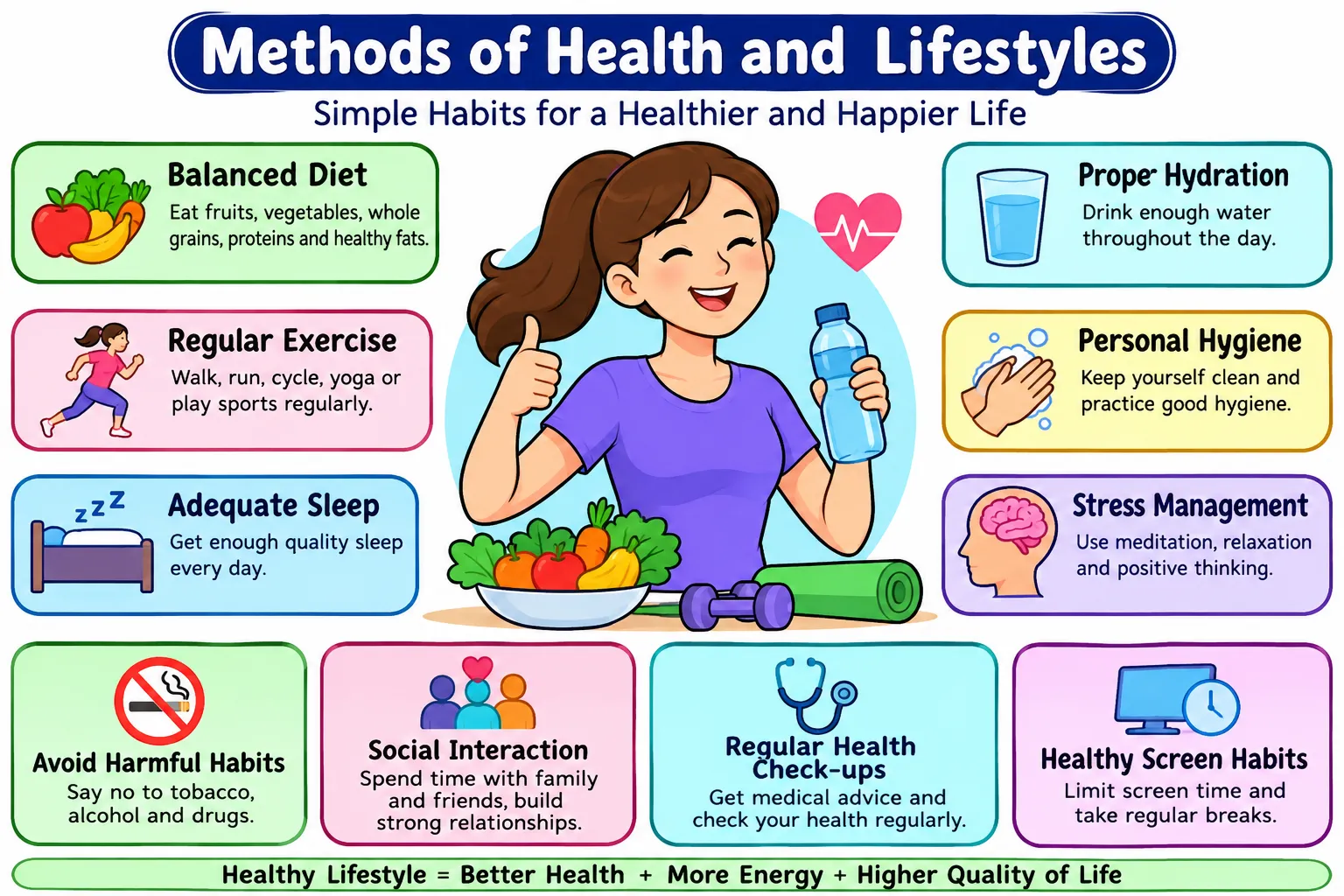
Methods of health and lifestyles
Maintaining a healthy lifestyle requires regular habits and practices that support physical, mental, and social well-being.
Method
Description
Benefits
Balanced Diet
Eating fruits, vegetables, whole grains, proteins, and healthy fats
Provides nutrients and maintains healthy weight
Regular Exercise
Walking, running, cycling, yoga, or sports regularly
Improves fitness and strengthens the body
Adequate Sleep
Getting sufficient quality sleep every day
Improves energy, memory, and concentration
Proper Hydration
Drinking enough water throughout the day
Supports body functions and prevents dehydration
Personal Hygiene
Regular bathing, handwashing, dental care, and clean clothing
Prevents infections and promotes cleanliness
Stress Management
Meditation, relaxation, hobbies, and positive thinking
Supports mental and emotional health
Avoid Harmful Habits
Avoiding tobacco, substance misuse, and excessive alcohol
Reduces the risk of serious health problems
Social Interaction
Maintaining healthy relationships with family and friends
Provides emotional support and improves well-being
Regular Health Check-ups
Monitoring health and seeking medical advice when needed
Helps detect health problems early
Healthy Screen Habits
Limiting unnecessary screen time and taking regular breaks
Supports sleep, posture, and mental well-being
ADVANTAGES AND DISADVANTAGES OF HEALTH AND LIFESTYLES
Health and lifestyle choices have a major effect on a person's physical, mental, and social well-being. A healthy lifestyle provides many benefits, while unhealthy lifestyle habits can create several problems.
ADVANTAGES OF A HEALTHY LIFESTYLE
Improves physical fitness – Regular exercise keeps the body strong and active.
Prevents diseases – Healthy eating and exercise can reduce the risk of many lifestyle-related diseases.
Improves mental health – Good sleep, relaxation, and stress management support emotional well-being.
Maintains healthy weight – A balanced diet and physical activity help control body weight.
Increases energy – Nutritious food and adequate rest help maintain energy throughout the day.
Improves immunity – Healthy habits support the body's natural defenses.
Increases productivity – Good health improves concentration and performance.
Promotes longer life – Healthy choices can contribute to a longer and better-quality life.
DISADVANTAGES OF AN UNHEALTHY LIFESTYLES
Risk of diseases – Poor diet and inactivity can increase the risk of obesity, diabetes, and heart disease.
Mental stress – Poor sleep and unhealthy habits may contribute to stress and low mood.
Weight problems – Excessive unhealthy food and lack of exercise can cause obesity.
Low energy – Poor nutrition and inadequate sleep can lead to tiredness.
Poor concentration – Lack of sleep and unhealthy routines can affect memory and focus.
Weak physical fitness – Lack of exercise can reduce strength and stamina.
Social and emotional problems – Poor lifestyle choices may affect relationships and daily activities.
Higher healthcare costs – Lifestyle-related health problems may require more medical care.
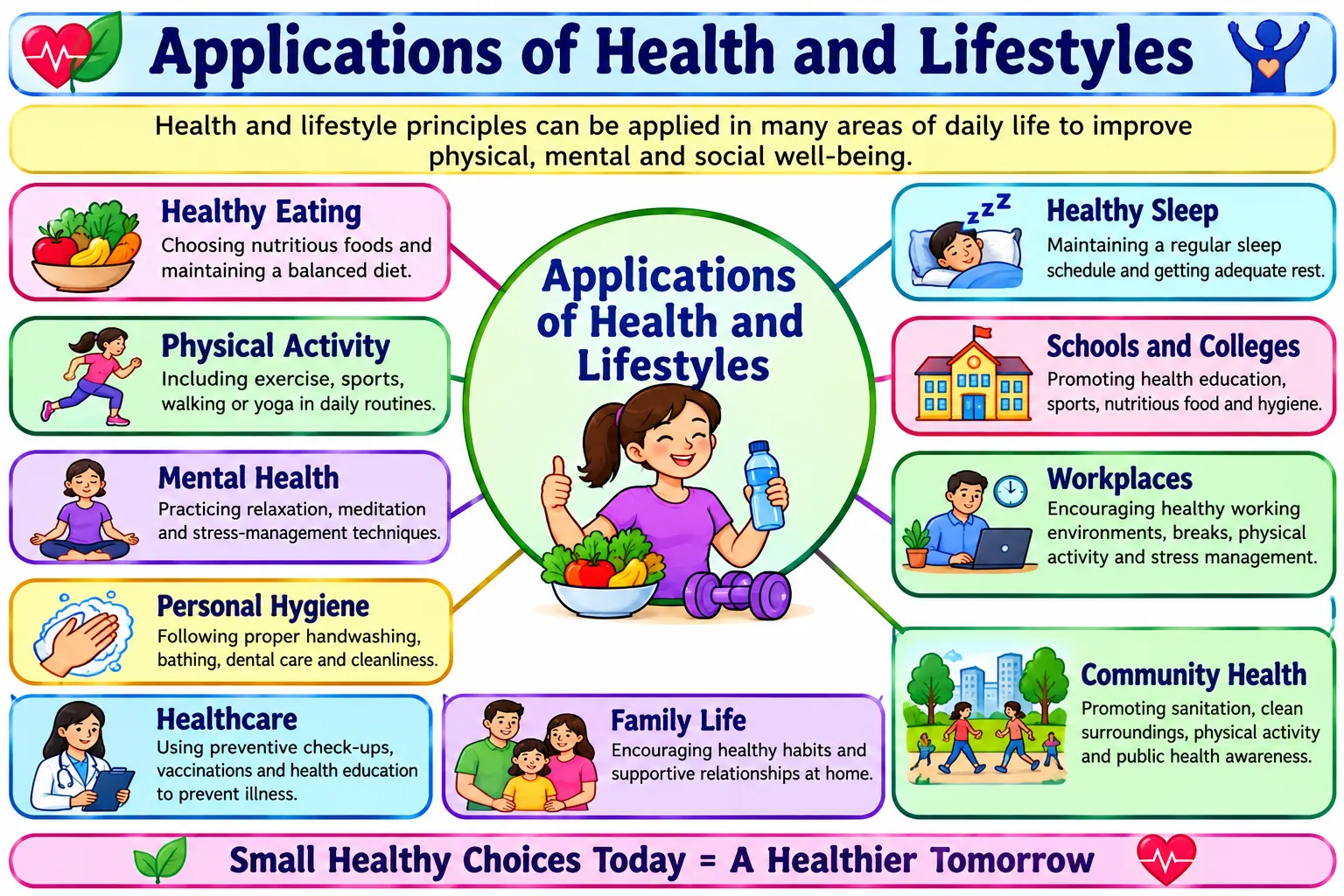
APPLICATION FOR HEALTH AND LIFESTYLES
Health and lifestyle principles can be applied in many areas of daily life to improve physical, mental, and social well-being.
Healthy Eating – Choosing nutritious foods and maintaining a balanced diet.
Physical Activity – Including exercise, sports, walking, or yoga in daily routines.
Mental Health – Practicing relaxation, meditation, and stress-management techniques.
Personal Hygiene – Following proper handwashing, bathing, dental care, and cleanliness.
Healthy Sleep – Maintaining a regular sleep schedule and getting adequate rest.
Schools and Colleges – Promoting health education, sports, nutritious food, and hygiene.
Workplaces – Encouraging healthy working environments, breaks, physical activity, and stress management.
Healthcare – Using preventive check-ups, vaccinations, and health education to prevent illness.
Family Life – Encouraging healthy habits and supportive relationships at home.
Community Health – Promoting sanitation, clean surroundings, physical activity, and public health awareness.
FUTURE ASPECTS OF HEALTH AND LIFESTYLES
CONCLUSION
Health and lifestyle are essential components of a happy, active, and productive life. A healthy lifestyle includes a balanced diet, regular physical activity, adequate sleep, personal hygiene, stress management, and positive social relationships. Healthy habits help prevent many diseases, improve physical and mental well-being, and increase overall quality of life.
In today’s world, unhealthy eating habits, lack of exercise, stress, and excessive use of technology can negatively affect health. Therefore, individuals should take responsibility for their daily choices and develop healthy habits from an early age. Schools, families, healthcare professionals, and communities also have an important role in promoting health awareness.
With advances in technology and healthcare, the future offers new opportunities for disease prevention, personalized healthcare, and better health monitoring. Overall, maintaining a balanced and healthy lifestyle is one of the most important steps toward a healthier, longer, and more fulfilling life.
REFERENCES

Thota Srinivas, Yunglama Daina Maring, Tangtanga Temui-in, Albina Thokchom, Dr. B. Thangabalan, Health & Lifestyles, Int. J. of Pharm. Sci., 2026, Vol 4, Issue 8, 4552-4559, https://doi.org/10.5281/zenodo.22129315
 10.5281/zenodo.22129315