

We use cookies to ensure our website works properly and to personalise your experience. Cookies policy
Ashokrao Mane Institute of Pharmaceutical Sciences and Research, Save, Maharashtra 416213.
Background: Diabetes mellitus is a progressive metabolic disorder associated with chronic hyperglycaemia and multiple long-term complications. Morus alba L. (white mulberry) is traditionally used as a medicinal plant and contains several bioactive phytoconstituents with reported anti-diabetic potential. Objective: The present study aimed to evaluate the phytochemical profile of Morus alba leaves and to predict the drug-likeness, pharmacokinetic behaviour and toxicity of selected anti-diabetic phytoconstituents using in-silico tools. Methods: Morus alba leaves were shade dried, powdered and extracted by Soxhlet extraction using ethanol/methanol as extraction solvent. The crude extract was subjected to qualitative phytochemical screening for alkaloids, flavonoids, phenolic acids and anthocyanins. Five compounds, namely deoxynojirimycin, quercetin, kaempferol, chlorogenic acid and cyanidin, were selected for computational evaluation. PubChem was used for structural data retrieval, while SwissADME, pkCSM and ProTox-II were used to assess physicochemical properties, Lipinski drug-likeness, absorption, distribution, metabolism, and excretion and toxicity parameters. Results: Phytochemical screening confirmed the presence of alkaloids, flavonoids, phenolic acids and anthocyanins in the extract. Most selected compounds complied with Lipinski’s rule and showed acceptable bioavailability scores. Deoxynojirimycin, quercetin, kaempferol and cyanidin showed high gastrointestinal absorption, whereas chlorogenic acid showed comparatively low gastrointestinal absorption and one Lipinski violation. Toxicity prediction suggested that all compounds were non-mutagenic, non-hepatotoxic and non-hERG blockers. Conclusion: The findings indicate that Morus alba phytoconstituents, particularly deoxynojirimycin, possess promising anti-diabetic potential with favourable predicted ADMET and safety profiles. Further in-vitro and in-vivo validation is recommended.
Diabetes mellitus is a major public health challenge characterised by impaired insulin secretion, reduced insulin action or both. Persistent hyperglycaemia affects carbohydrate, protein and lipid metabolism and contributes to complications involving the cardiovascular system, kidneys, eyes, blood vessels and nervous system. The increasing prevalence of type 2 diabetes has created a continuous need for safer, effective and affordable therapeutic agents. Medicinal plants remain a valuable source of structurally diverse bioactive compounds. Morus alba L., commonly known as white mulberry, belongs to the family Moraceae. Different parts of the plant, particularly the leaves and fruits, have been used in traditional systems of medicine. The leaves contain alkaloids, flavonoids, phenolic acids, anthocyanins, glycosides, polysaccharides, tannins, terpenoids and other secondary metabolites. These constituents are associated with anti-diabetic, antioxidant, anti-inflammatory and other pharmacological effects.
Among the important constituents of Morus alba, deoxynojirimycin is known for alpha-glucosidase inhibitory potential, while quercetin, kaempferol, chlorogenic acid and cyanidin are associated with antioxidant action and glucose metabolism regulation. However, biological activity alone is not sufficient for drug development. A candidate compound should also possess acceptable absorption, distribution, metabolism, excretion and toxicity characteristics. In-silico ADMET prediction offers a rapid, economical and ethically favourable approach for early-stage screening of natural compounds before extensive experimental studies. The present article reports the extraction, preliminary phytochemical screening and in-silico ADMET prediction of selected Morus alba phytoconstituents. The study combines experimental qualitative observations with computational pharmacokinetic and toxicity predictions to identify promising compounds for future anti-diabetic drug development.
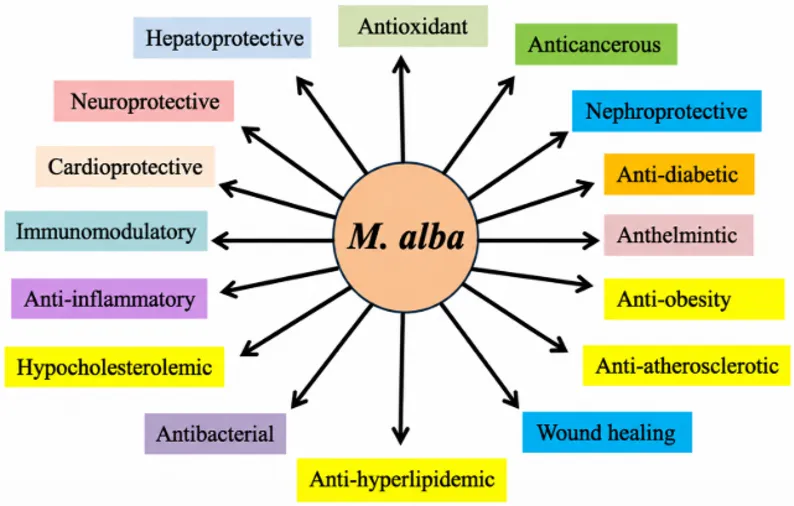
Figure 1: Reported pharmacological properties of Morus alba plant.
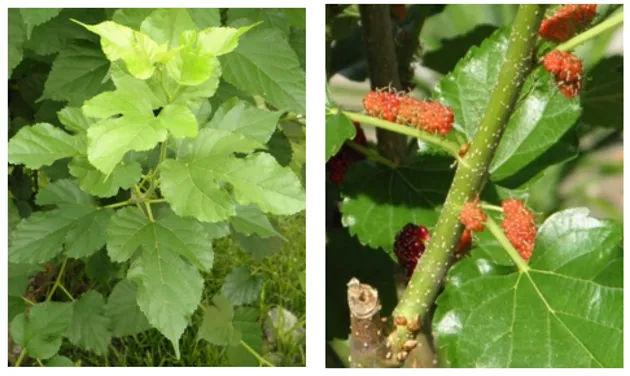
Figure 2: Leaves and fruits of Morus alba.
MATERIALS AND METHODS
Materials
The chemicals used in the study included ethanol, methanol, Dragendorff’s reagent, magnesium turnings, concentrated hydrochloric acid, sodium hydroxide, dilute hydrochloric acid, ferric chloride solution, ammonia solution, and distilled water. These chemicals and reagents were procured from standard laboratory chemical suppliers/analytical-grade suppliers.
Collection, authentication and preparation of plant material
The plant material used in the study was authenticated by the Department of Botany, Prof. Dr. N. D. Patil Mahavidyalaya, Malkapur-Perid, District Kolhapur. The authentication was carried out by Dr. Makarand Mohanrao Aitawade, M.Sc., M.Phil., Ph.D., Head and Assistant Professor, Department of Botany.
Extraction procedure
The powdered leaf material was placed in a filter paper thimble and extracted by Soxhlet extraction using ethanol/methanol as solvent. The process was carried out at approximately 60-70°C for 6-8 hours. Continuous solvent evaporation, condensation and siphoning allowed efficient extraction of alkaloids, flavonoids, phenolic compounds and related phytoconstituents. The extract was filtered and concentrated by solvent evaporation to obtain a semi-solid crude extract for phytochemical screening.
Phytochemical screening
Phytochemical screening of the semi-solid crude extract of Morus alba leaves was carried out using standard qualitative chemical tests. The purpose of this study was to identify the major classes of phytoconstituents present in the extract, such as alkaloids, flavonoids, phenolic compounds, and anthocyanins. The observed colour changes or precipitate formation were used as preliminary indicators for the presence of these bioactive compounds.
a) Alkaloids
The presence of alkaloids was detected by Dragendorff’s test. A small quantity of the extract was treated with Dragendorff’s reagent. The formation of an orange or reddish-brown precipitate indicated the presence of alkaloids in the Morus alba leaf extract.
b) Quercetin
Quercetin was identified using the Shinoda test, which is commonly used for flavonoid detection. The extract was dissolved in ethanol, followed by the addition of magnesium turnings and concentrated hydrochloric acid. The appearance of a pinkish-red colour confirmed the presence of quercetin-type flavonoids.
c) Kaempferol
The presence of kaempferol was confirmed by the alkaline reagent test. Sodium hydroxide solution was added to the extract, resulting in the development of an intense yellow colour. This colour disappeared after the addition of dilute acid, indicating the presence of kaempferol and related flavonoids.
d) Chlorogenic Acid
Chlorogenic acid was detected by the ferric chloride test. The extract was treated with ferric chloride solution, and the formation of a greenish or dark colour indicated the presence of phenolic compounds, particularly chlorogenic acid.
e) Cyanidin
The presence of cyanidin was evaluated by the anthocyanin test. Dilute hydrochloric acid was added to the extract, followed by ammonia solution. A colour change from red to blue or violet indicated the presence of cyanidin-type anthocyanins in the extract.
Selection of bioactive compounds
Five phytoconstituents were selected on the basis of their reported anti-diabetic, antioxidant and glucose-regulating properties: deoxynojirimycin, quercetin, kaempferol, chlorogenic acid and cyanidin. Deoxynojirimycin was included because of its alpha-glucosidase inhibitory activity and potential to reduce postprandial glucose absorption. Quercetin and kaempferol were selected for antioxidant activity and possible improvement of insulin sensitivity. Chlorogenic acid was selected for its role in carbohydrate metabolism regulation, while cyanidin was included for its free radical scavenging and insulin-sensitising potential.
|
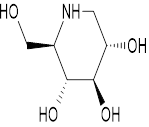
Deoxynojirimycin |
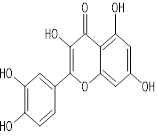
Quercetin |
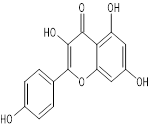
Kaempferol |
|
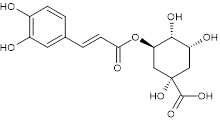
Chlorogenic acid |
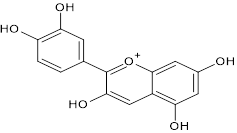
Cyanidin |
|
Figure 3: Chemical structures of selected Morus alba phytoconstituents
In-silico ADMET analysis
The structures of selected compounds were retrieved from PubChem in SMILES format. SwissADME was used for physicochemical properties, water solubility, topological polar surface area, gastrointestinal absorption, bioavailability score and Lipinski drug-likeness. pkCSM was used for additional ADME and toxicity predictions, including Caco-2 permeability, skin permeability, P-glycoprotein status, volume of distribution, CNS permeability, cytochrome P450 interaction and renal clearance. ProTox-II was used to predict acute toxicity class and LD50 values, while additional endpoints such as hepatotoxicity, mutagenicity, immunotoxicity and cardiotoxicity were interpreted from the computational outputs.
RESULTS AND DISCUSSION
Phytochemical Study of Methanolic and Ethanolic Extracts of Morus alba Leaves
Phytochemical screening of methanolic and ethanolic extracts of Morus alba leaves was carried out using standard qualitative tests to detect the presence of major secondary metabolites. Both extracts showed the presence of alkaloids, flavonoids, phenolic compounds, and anthocyanins. The methanolic extract showed comparatively stronger phytochemical response than the ethanolic extract, which may be due to better solubility and extraction efficiency of polar phytoconstituents in methanol. The presence of these compounds indicates the possible antioxidant, anti-inflammatory, antimicrobial, and therapeutic potential of Morus alba leaves.
Table 1: Outcomes of Phytochemical Study
|
Phytochemical Constituent |
Test Performed |
Observation |
Methanolic Extract |
Ethanolic Extract |
|
Alkaloids |
Dragendorff’s test |
Orange/reddish-brown precipitate |
Present |
Present |
|
Quercetin / Flavonoids |
Shinoda test |
Pinkish-red colour |
Present |
Present |
|
Kaempferol / Flavonoids |
Alkaline reagent test |
Yellow colour, discharged with dilute acid |
Present |
Present |
|
Chlorogenic acid / Phenolics |
Ferric chloride test |
Greenish or dark colour |
Present |
Present |
|
Cyanidin / Anthocyanins |
Anthocyanin test |
Red to blue/violet colour change |
The qualitative screening confirmed the presence of alkaloids, flavonoids, phenolic acids and anthocyanins in Morus alba leaf extract. This supported the selection of the five phytoconstituents for further in-silico assessment.
Physicochemical and drug-likeness properties
Table 2: In-silico physicochemical and drug-likeness properties of selected compounds
|
Parameter |
Deoxynojirimycin |
Quercetin |
Kaempferol |
Chlorogenic acid |
Cyanidin |
|
Formula |
C11H23NO4 |
C15H10O7 |
C15H10O6 |
C16H18O9 |
C15H11O6 |
|
Molecular weight (g/mol) |
233.30 |
302.24 |
286.24 |
354.31 |
287.24 |
|
Fraction Csp3 |
1.00 |
0.00 |
0.00 |
0.38 |
0.00 |
|
H-bond donors |
4 |
5 |
4 |
6 |
5 |
|
Rotatable bonds |
5 |
- |
- |
5 |
- |
|
H-bond acceptors |
5 |
7 |
6 |
9 |
6 |
|
Bioavailability score |
0.55 |
0.55 |
0.55 |
0.11 |
0.55 |
|
Molar refractivity |
64.34 |
78.03 |
76.01 |
83.50 |
76.17 |
|
TPSA (Ų) |
84.16 |
131.36 |
111.13 |
164.75 |
114.29 |
|
Water solubility Log S (Ali) |
-1.23 |
-3.91 |
-3.86 |
-2.58 |
-2.75 |
|
Lipinski drug-likeness |
Yes; 0 violation |
Yes; 0 violation |
Yes; 0 violation |
Yes; 1 violation |
Yes; 0 violation |
The in-silico physicochemical and drug-likeness analysis of the selected phytoconstituents of Morus alba showed that most compounds possess acceptable properties for drug-like behavior. Deoxynojirimycin had a molecular weight of 233.30 g/mol, good hydrogen bonding capacity, moderate TPSA of 84.16 Ų, and a bioavailability score of 0.55. Its Lipinski result showed zero violations, indicating good oral drug-likeness. Quercetin and kaempferol also followed Lipinski’s rule with no violations, suggesting acceptable drug-like properties. However, their higher TPSA values, especially quercetin with 131.36 Ų, may reduce membrane permeability to some extent.
Chlorogenic acid showed the highest molecular weight among the selected compounds, 354.31 g/mol, and the highest TPSA value of 164.75 Ų, indicating strong polarity. Although it followed Lipinski’s rule with only one violation, its low bioavailability score of 0.11 suggests comparatively poor oral absorption potential. Cyanidin showed acceptable molecular weight, TPSA, and bioavailability score, with zero Lipinski violations, indicating favorable drug-like characteristics. The water solubility values showed that deoxynojirimycin was the most soluble compound, while quercetin and kaempferol were comparatively less soluble due to their more negative Log S values. The results indicate that deoxynojirimycin, quercetin, kaempferol, and cyanidin possess good drug-likeness characteristics, while chlorogenic acid may have limited oral bioavailability because of its high polarity and one Lipinski violation. These findings support the therapeutic potential of Morus alba phytoconstituents and justify their further evaluation through docking and pharmacological studies.
ADME pharmacokinetic profile
Table 3: ADME pharmacokinetic properties of selected compounds
|
Parameter |
Deoxynojirimycin |
Quercetin |
Kaempferol |
Chlorogenic acid |
Cyanidin |
|
Caco-2 permeability |
-5.52 |
-5.80 |
-5.26 |
-6.49 |
-5.38 |
|
GI absorption |
High |
High |
High |
Low |
High |
|
Skin permeability |
-1.35 |
0.23 |
-0.35 |
-2.61 |
-0.54 |
|
P-glycoprotein inhibitor |
Non-inhibitor |
Non-inhibitor |
Non-inhibitor |
Non-inhibitor |
Non-inhibitor |
|
P-glycoprotein substrate |
Yes |
No |
No |
No |
Yes |
|
Volume of distribution |
0.44 |
0.14 |
0.27 |
0.47 |
0.00 |
|
Fraction unbound |
0.46 |
0.80 |
0.83 |
0.64 |
1.02 |
|
BBB permeant |
No |
No |
No |
No |
No |
|
CNS permeability |
-4.19 |
-3.12 |
-2.75 |
-3.60 |
-2.93 |
|
CYP2D6 substrate |
Non-substrate |
Non-substrate |
Non-substrate |
Non-substrate |
Non-substrate |
|
CYP3A4 inhibitor |
Non-inhibitor |
Non-inhibitor |
Inhibitor |
Non-inhibitor |
Non-inhibitor |
|
CYP2C9 inhibitor |
Non-inhibitor |
Inhibitor |
Non-inhibitor |
Non-inhibitor |
Inhibitor |
|
CYP2D6 inhibitor |
Non-inhibitor |
Non-inhibitor |
Non-inhibitor |
Non-inhibitor |
Non-inhibitor |
|
Total renal clearance |
1.92 |
8.91 |
5.81 |
6.32 |
7.11 |
|
Renal OCT2 substrate |
Non-inhibitor |
Non-inhibitor |
Non-inhibitor |
Non-inhibitor |
Non-inhibitor |
The ADME results showed high gastrointestinal absorption for deoxynojirimycin, quercetin, kaempferol and cyanidin, whereas chlorogenic acid showed low gastrointestinal absorption. None of the compounds was predicted to cross the blood-brain barrier, suggesting reduced central nervous system exposure. The compounds were not CYP2D6 substrates and did not inhibit CYP2D6, while kaempferol showed CYP3A4 inhibition and quercetin/cyanidin showed CYP2C9 inhibition, indicating possible metabolism-related interaction considerations.
Toxicity prediction
Table 4: Predicted toxicity properties of selected compounds
|
Parameter |
Deoxynojirimycin |
Quercetin |
Kaempferol |
Chlorogenic acid |
Cyanidin |
|
Maximum tolerated dose |
1.35 |
1.18 |
1.17 |
0.63 |
1.22 |
|
hERG blockers |
No |
No |
No |
No |
No |
|
Oral rat acute toxicity |
1.91 |
2.50 |
2.46 |
1.88 |
2.36 |
|
Oral rat chronic toxicity |
2.78 |
3.46 |
3.03 |
3.28 |
3.12 |
|
AMES toxicity |
No |
No |
No |
No |
No |
|
Hepatotoxicity |
No |
No |
No |
No |
No |
|
Skin sensitization |
Yes |
Yes |
Yes |
Yes |
Yes |
|
Immunotoxicity |
No |
No |
No |
Yes |
No |
|
T. pyriformis toxicity |
-0.87 |
3.10 |
3.44 |
-0.41 |
3.56 |
|
Minnow toxicity |
1.50 |
3.94 |
4.10 |
3.87 |
4.16 |
|
Predicted LD50 (mg/kg) |
1200 |
159 |
3919 |
5000 |
5000 |
|
Predicted toxicity class |
4 |
3 |
5 |
5 |
5 |
Toxicity prediction indicated that all compounds were non-hERG blockers, non-AMES toxic and non-hepatotoxic. Kaempferol, chlorogenic acid and cyanidin had higher predicted LD50 values and were placed in toxicity class 5, suggesting comparatively lower acute toxicity. Deoxynojirimycin showed toxicity class 4. Quercetin showed a lower predicted LD50 and toxicity class 3, indicating comparatively higher predicted acute toxicity and the need for careful dose optimisation.
DISCUSSION
The phytochemical screening and in-silico analysis support the therapeutic relevance of Morus alba leaves. The presence of alkaloids, flavonoids, phenolic acids and anthocyanins provides a pharmacological basis for the traditionally reported anti-diabetic and antioxidant effects of the plant. These phytochemical classes are widely associated with modulation of oxidative stress, carbohydrate digestion and glucose metabolism.
Deoxynojirimycin emerged as a promising molecule because it showed favourable molecular weight, acceptable topological polar surface area, high gastrointestinal absorption and no Lipinski violation. Its predicted safety profile was also acceptable, with absence of hepatotoxicity, mutagenicity and hERG blockade. These findings are consistent with its role as a potential alpha-glucosidase inhibitory constituent of mulberry leaves.
Quercetin and kaempferol also showed favourable drug-likeness and high gastrointestinal absorption. However, metabolic interaction alerts were observed, particularly CYP2C9 inhibition for quercetin and CYP3A4 inhibition for kaempferol. These findings do not exclude their therapeutic potential but indicate that further experimental pharmacokinetic studies are required, especially in relation to drug-drug interaction risk. Quercetin also showed comparatively higher predicted acute toxicity, suggesting the importance of controlled dosing and formulation design.
Chlorogenic acid demonstrated one Lipinski violation, a high TPSA value, lower bioavailability score and low predicted gastrointestinal absorption. These results suggest that its oral absorption may be limited. Formulation strategies such as nanoformulation, phytosomal delivery or structural optimisation could be explored to improve its bioavailability. Cyanidin showed good predicted absorption, no Lipinski violation and low acute toxicity class, supporting its inclusion as a potentially useful antioxidant and anti-diabetic phytoconstituent.
Overall, the findings indicate that the selected Morus alba constituents possess acceptable pharmacokinetic and toxicity profiles. The study also highlights the usefulness of integrated computational tools such as SwissADME, pkCSM and ProTox-II for early evaluation of phytochemicals. Nevertheless, in-silico predictions should be considered preliminary and require confirmation through in-vitro enzyme inhibition assays, cell-based safety studies and in-vivo anti-diabetic models.
CONCLUSION
The present research article demonstrates that Morus alba leaf extract contains important phytoconstituents such as deoxynojirimycin, quercetin, kaempferol, chlorogenic acid and cyanidin. In-silico ADMET prediction showed that most of these compounds possess favourable drug-likeness, acceptable gastrointestinal absorption and low predicted toxicity. Deoxynojirimycin was identified as the most balanced candidate due to its favourable absorption, drug-likeness and safety profile. Chlorogenic acid showed lower predicted bioavailability and gastrointestinal absorption, while quercetin showed relatively higher predicted acute toxicity. The study supports the anti-diabetic potential of Morus alba phytoconstituents and recommends further experimental validation for development of safe plant-based anti-diabetic therapeutics.
FUTURE PROSPECTS
Future work should include quantitative phytochemical estimation, chromatographic standardisation of the extract, in-vitro alpha-glucosidase and alpha-amylase inhibition assays, antioxidant studies, cell-line toxicity studies and in-vivo anti-diabetic evaluation. Formulation-based approaches may be used to improve the bioavailability of compounds such as chlorogenic acid. Molecular docking and molecular dynamics studies against diabetes-related targets may further clarify the mechanism of action.
REFERENCES

Aniket Patil, Abhijeet Kulkarni, Harshvardhan Bendre, Arman Kerotagi, Dhanashree Khurange, In-Silico ADMET Prediction and Anti-Diabetic Potential of Morus alba Phytoconstituents, Int. J. of Pharm. Sci., 2026, Vol 4, Issue 6, 3989-3998. https://doi.org/10.5281/zenodo.20722668
 10.5281/zenodo.20722668