

We use cookies to ensure our website works properly and to personalise your experience. Cookies policy
Chandra Shekhar Singh College of Pharmacy, Prayagraj, Uttar Pradesh.
Topical delivery of non-steroidal anti-inflammatory drugs (NSAIDs) offers the possibility of a site-specific treatment with minimized side effects; however, the dermal permeation of the active component is limited owing to the presence of stratum corneum in the skin barrier. Nanogels have emerged as promising carriers for topical NSAID delivery due to their ability to enhance drug solubility, improve skin permeation, and provide sustained drug release. In this review article, we present an overview of the developments in NSAID-based nanogel formulations in recent years (2018-2025), specifically focusing on the matrix, cross-linker type, and methods of preparation used for various polymer formulations. Herein, we describe important parameters of nanogel particles such as particle size, drug loading capacity, zeta potential, and rheological properties along with their in vitro and ex vivo permeation characteristics. Some in vivo studies highlighting the anti-inflammatory potential of various NSAID nanogels are also mentioned. Safety and irritation data and the current state of clinical translation is discussed herein. Despite several studies suggesting the great efficacy of NSAIDs nanogels for the reduction of inflammation, no product based on them has been successfully marketed.
Nonsteroidal anti-inflammatory drugs (NSAIDs) like ibuprofen, diclofenac, naproxen, and meloxicam have been used widely to manage pain and inflammation[1]. Orally taken NSAIDs induce gastrointestinal and cardiovascular side-effects and suffer significant first-pass effect metabolism, reducing their bioavailability[2]. The application of NSAIDs in a transdermal manner presents an opportunity to deliver localized therapy (such as treating musculoskeletal pain) and reduce systemic toxicity. However, the passive permeation of most NSAIDs through the skin has been difficult owing to their hydrophobic nature and barrier function of the stratum corneum layer. To counteract such drawbacks, methods including the use of penetration enhancers, electroporation/ iontophoresis and nanocarriers are among the options available[3]. Nanogels, nano-sized hydrogels made up of cross-linked polymer chains (20-200 nm), which have the ability to swell in water and entraps high concentrations of drugs inside its network, are some of the approaches that have been considered as topical vehicles. The softness and hydrated environment created by nanogels enable the diffusive release of drugs and allow extended release as well[4]. In addition, the small size of nanogels together with their deformability allows easy penetration through the skin pores and hair follicles. Furthermore, nanogels have the ability to carry hydrophilic and hydrophobic drugs by physically entrapping them or chemically conjugating them with drugs. Also, nanogels can be developed in a way such that their dissolution is triggered either by pH and/or temperature for controlled release. Compared to regular gels or creams, NSAIDs formulated as nanogels possess higher solubility, increased skin permeation and enhanced anti-inflammatory activities. As an example, an ibuprofen nanogel prepared using xanthan aldehyde/gelatin had more than twice the percentage of edema inhibition compared to an over-the-counter ibuprofen gel, 82% vs 37% respectively[5].
This paper reviews various approaches involved in formulating NSAIDs as nanogels with their characteristics and effectiveness. This is particularly focused on studies published since 2018 for various NSAIDs including ibuprofen, diclofenac, naproxen, meloxicam, and etoricoxib. In-vitro and in-vivo results for their effectiveness as topical drugs, as well as the safety issues involved in topical delivery of nanogels, are discussed. Finally, future perspectives for the development of topical NSAID nanogels are highlighted.
2. Challenges Associated with Skin Permeation
Topical medicine distribution faces substantial physiological challenges despite these advantages. The effectiveness of topical NSAID therapy is determined by the ability of drug molecules to penetrate the epidermis and reach the underlying tissues at therapeutically acceptable levels[6]. The majority of NSAIDs have physicochemical characteristics that restrict how well they penetrate the skin. Transport through the skin barrier is frequently hampered by high molecular weight, poor water solubility, and insufficient partition coefficients. Additionally, the availability of medication molecules at deeper target areas may be diminished if they become caught in the superficial skin layers. The penetration enhancing powers of conventional gels and creams are frequently limited. As a result, patients with thickened skin, altered barrier function, or chronic inflammatory conditions requiring deep tissue penetration may experience inconsistent therapeutic outcomes[7].
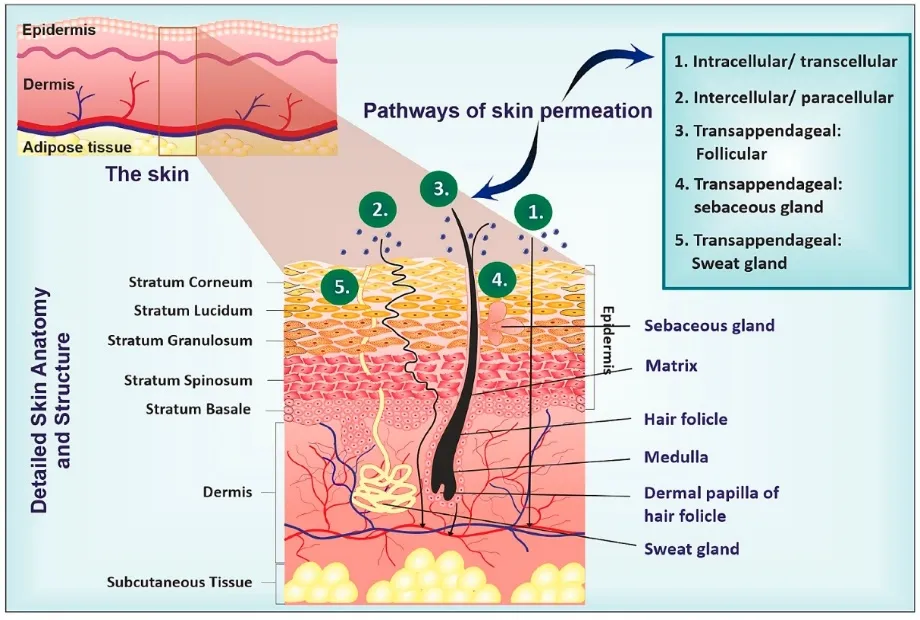
Figure 1. Skin Structure and Pathways of Nanogel-Mediated Drug Penetration
3. Role of the Stratum Corneum as a Barrier
The primary barrier to percutaneous medication absorption is the stratum corneum. The "brick-and-mortar" paradigm is frequently used to explain its structure, which is composed of corneocytes embedded within a highly ordered lipid matrix. Lipid bilayers that are closely packed prevent excessive water loss and limit molecular transport.
Drug molecules must get past this barrier via one or more penetration channels in order for transdermal distribution to be effective. However, deeper aqueous layers may prevent lipophilic molecules from penetrating, whereas the stratum corneum's strong lipophilicity restricts the transport of hydrophilic substances. Topical medication administration is complicated by this twofold barrier[8].
Nanogel systems use a number of strategies to overcome these difficulties. Hydrated polymeric networks enhance medication solubilization and retention, and their nanoscale diameters enable interactions with skin microstructures. Furthermore, adding stimuli-responsive elements and permeation enhancers can boost medication transport across the skin barrier.
When compared to traditional gels, a thorough analysis of the available data indicates that nanogels provide better skin retention and regulated drug release. However, formulation parameter improvement is still necessary to get repeatable clinical results and successful commercial product translation[9].
4. Nanogel Design and Formulation Strategies
Hydrophilic polymers are usually crosslinked into nanoscale particles to create nanogels. Emulsion polymerization, nanoprecipitation, and ionotropic or covalent crosslinking techniques are common techniques. Both synthetic and natural polymers, such as carbomer, polyvinyl alcohol, Eudragit, and poly(acrylic acid), have been employed, including chitosan, gelatin, and xanthan. For instance, Schiff-base (imine) crosslinks between amino-gelatin and oxidized xanthan-aldehyde created xanthan-gelatin nanogels. Similar to this, a cyclodextrin-based nanogel forms a hydrophilic matrix for ibuprofen using an epichlorohydrin-crosslinked β-cyclodextrin polymer (EPIβCD). Ionotropic gelation is used in some formulations. Chitosan nanogels, for instance, can be created by reacting chitosan (amine groups) with alginate (aldehyde groups) or multivalent anions (tripolyphosphate) to create a hydrogel network[10].
Drugs can be loaded after the gel is formed or integrated during the process. Before cross-linking, NSAIDs are frequently dissolved or distributed in an aqueous polymer solution (occasionally with co-solvents or surfactants) due to their hydrophobic nature. For example, Eudragit S100 and Tween 80 were emulsified (solvent diffusion) to create diclofenac nanogels, which were then gelled using a Carbopol gel foundation. Eudragit RS100 and sodium alginate were used in an emulsification-diffusion process to create naproxen nanogels. A recent work used emulsification-solvent diffusion to load etoricoxib, an NSAID that inhibits COX-2, into nanogels composed of ethyl cellulose (EC) and polyvinyl alcohol (PVA)[11].
The type of surfactant, crosslinker concentration, and polymer/drug ratio are important formulation factors. These characteristics were optimized through the application of design of experiments (DoE). A 15:10 drug:polymer ratio and a 1:2 gelatin:xanthan-aldehyde ratio produced ~180 nm particles and good encapsulation for the xanthan–gelatin ibuprofen nanogel. An optimized batch (F4) of the Naproxen nanogel resulted in particles smaller than 150 nm and longer release (93% in 6 hours). Interestingly, the xanthan/gelatin nanogel produced stable gels with >90% ibuprofen loading via the Schiff base reaction (glutaraldehyde-free), eliminating the need for hazardous crosslinkers. To avoid glutaraldehyde, crosslinkers like genipin or carbodiimides have also been employed[12, 13].
All things considered, nanogel production techniques are versatile and usually employ chemicals that are approved for use in pharmaceuticals. For topical applications, polymers like cellulose derivatives or carbomers (like Carbopol 934) can also be used as gelling bases, creating a gel matrix that disperses nanogels. For topical use, the final formulation is often a gel or cream with a suitable viscosity and spreadability. For instance, adding diclofenac nanogels to a Carbopol gel produced a transparent semisolid with good extrudability[14].
5. Classification of Nanogels
Depending on the type of polymers utilized and how responsive they are to outside stimuli, nanogels can be divided into a number of types, such as: This classification is crucial since the drug-loading capacity, release behaviour, biocompatibility, and therapeutic efficacy of nanogels are greatly influenced by their composition and structural features. While advanced nanogels are made to react to certain physiological triggers like temperature, pH, enzymes, or oxidative stress, conventional nanogels are often classified as natural, synthetic, or hybrid systems. Particularly for the targeted delivery of anti-inflammatory drugs, the variety of nanogel platforms has increased their uses in topical and transdermal drug delivery[15]. Table 1 summarizes the main categories of nanogels and their uses in medicine.
Table 1. Classification of Nanogels and Their Pharmaceutical Applications
|
Nanogel Type
|
Common Polymers
|
Key Characteristics
|
Pharmaceutical Applications |
|
Natural Polymer Nanogels
|
Chitosan, Alginate, Hyaluronic acid, Gelatin |
Biocompatible, biodegradable, bioadhesive |
Topical delivery, wound healing, anti-inflammatory therapy |
|
Synthetic Polymer Nanogels
|
PNIPAM, PEG, PVA, Polyacrylamide
|
Tunable properties, high stability
|
Controlled drug delivery, transdermal systems |
|
Hybrid Nanogels
|
Chitosan-PNIPAM, HA-PEG |
Improved stability and biocompatibility |
Targeted delivery, sustained release |
|
Thermoresponsive Nanogels |
PNIPAM-based systems |
Temperature-triggered release |
Localized anti-inflammatory therapy |
|
pH-Responsive Nanogels |
Poly(acrylic acid), Chitosan derivatives |
pH-sensitive swelling |
Inflammation-targeted delivery |
|
Enzyme-Responsive Nanogels |
Peptide-crosslinked systems |
Enzyme-triggered degradation |
Targeted release in diseased tissues |
6. Formulation Approaches for NSAID-Loaded Nanogels
The physicochemical characteristics and therapeutic efficacy of NSAID-loaded nanogels are largely dependent on the preparation technique. The fabrication method used has a major impact on parameters including particle size, polydispersity index, drug-loading capacity, entrapment efficiency, release kinetics, stability, and skin penetration behavior. Depending on the physicochemical properties of the drug and the polymer system, a variety of techniques have been devised for the creation of nanogels, each with unique benefits and drawbacks[16].
6.1. Emulsion Polymerization
One of the most popular methods for creating nanogels is emulsion polymerization. This process creates nanosized gel particles (GJPs) by dispersing monomers in an aqueous phase including surfactants, then polymerizing and crosslinking the mixture. Because it makes it possible to effectively incorporate poorly water-soluble medications into the polymeric matrix, this method is especially useful for encapsulating hydrophobic NSAIDs. Moreover, emulsion polymerization typically yields nanogels with excellent entrapment efficiency and narrow particle size distributions. However, the existence of leftover initiators and surfactants may cause toxicity issues, requiring thorough purification. Additionally, the process's intricacy can restrict its scalability and raise production costs[17].
6.2. Nanoprecipitation
A common technique for creating polymeric nanogels is nanoprecipitation, often referred to as solvent displacement. It is straightforward and repeatable. Using this method, the drug and polymer are dissolved in an appropriate organic solvent and then added to an aqueous phase, causing nanoparticles to precipitate quickly[18]. Because of the moderate processing conditions, this approach is especially appropriate for thermolabile chemicals and requires a relatively modest energy input. Because it may increase drug solubility and produce high encapsulation efficiency, nanoprecipitation has been thoroughly studied for the manufacture of meloxicam and diclofenac nanogels. However, eliminating organic solvents completely is still difficult, and this approach might not work with every polymer system[19].
6.3. Ionic Gelation
Ionic gelation is a gentle and eco-friendly process that uses crosslinking agents and oppositely charged polymers to interact electrostatically. One of the ionic gelation-based nanogels for topical drug administration that has been investigated the most is chitosan-tripolyphosphate (TPP) systems. The lack of chemical solvents, straightforward manufacturing conditions, and superior biocompatibility are only a few benefits of this approach. Ionic gelation is very appealing for creating topical NSAID formulations because of these features. Nevertheless, ionic gelation-produced nanogels frequently have poorer mechanical stability and may be susceptible to environmental variables like pH and ionic strength, which may have an impact on their long-term stability and drug release characteristics[20].
6.4. Microfluidic Approaches
Recently, microfluidic technology has become a highly regulated and sophisticated platform for creating nanogels. Fluids are controlled in microscale channels in microfluidic systems, giving exact control over the processes of particle generation and mixing. This method has a number of benefits, such as precise particle size control, a narrow size distribution, enhanced reproducibility, lower material consumption, and compatibility with continuous nanoparticle manufacturing processes. Microfluidics is a desirable method for creating next-generation nanogel formulations because of these characteristics. However, the expensive cost of specialized equipment, technological complexity, and difficulties with large-scale production continue to hinder the widespread industrial deployment of microfluidic systems[21].
All things considered, every preparation method has distinct benefits and drawbacks, and the choice of the best approach is contingent upon the intended therapeutic uses, drug qualities, and desired formulation characteristics. The efficiency, repeatability, and scalability of NSAID-loaded nanogel systems have been enhanced by recent developments in nanogel production methods, opening the door for their possible clinical application.
Table 2. Preparation Methods of NSAID-Loaded Nanogels
|
Method |
Principle |
Advantages |
Limitations |
|
Emulsion Polymerization |
Polymerization in droplets |
Uniform particles, high EE |
Surfactant residues |
|
Ionic Gelation |
Electrostatic crosslinking |
Mild conditions, biocompatib |
Lower stability
|
|
Nanoprecipitation
|
Solvent displacement
|
Simple and reproducible |
Solvent removal required |
|
Microfluidics
|
Controlled microchannel mixing |
Excellent reproducibility |
Expensive equipment
|
7. Characterization of NSAID Nanogels
Consequently, thorough characterisation is essential. The most common methods for measuring particle size are electron microscopy and dynamic light scattering (DLS). The sizes mentioned in the literature range from several hundred nanometers to about 60 nm (for cyclodextrin nanogels with a light crosslink). The mean diameter of the optimized xanthan–gelatin/ibuprofen nanogel was around 180 nm (PDI 0.193); the naproxen/PVA–alginate nanogel batches were less than 150 nm; and the diclofenac/Eudragit nanogel varied between 100 and 400 nm. The xanthan-gelatin gel had a zeta potential (surface charge) of +24.7 mV, which indicates strong colloidal stability. The zeta potential was either mildly positive or negative. Additionally, positively charged nanogels (such those based on chitosan) may show bioadhesion to the negatively charged skin surface[22].
Nanogels usually have a high drug loading (encapsulation efficiency). About 94% of the ibuprofen was encapsulated in the xanthan–gelatin nanogels. Depending on the polymer composition, naproxen nanogels showed drug content >85%. Although they may have an impact on the particle size, higher drug:polymer ratios often result in increased loading. Drug loading is frequently expressed as a percentage of the original quantity, and recent research has shown values of 80–95%. SEM/TEM was used for the morphological assessment. Nanogels frequently have a porous, almost spherical appearance. SEM revealed the globular and porous structure of the xanthan-gelatin nanogel in one investigation. Drug encapsulation is typically confirmed by FTIR and XRD investigations; ibuprofen nanogels, for instance, demonstrated molecular dispersion by the elimination of crystalline ibuprofen peaks[22].
To guarantee the proper consistency, the final gel formulation's rheology was also examined. To anticipate user handling, spreadability and extrudability were assessed. For instance, the spreadability and viscosity of the diclofenac nanogel were similar to those of a diclofenac gel that was sold[23].
8. In Vitro Release and Skin Permeation
Franz diffusion cells using synthetic membranes (such as cellulose acetate) are commonly used to assess in vitro drug release profiles from nanogels. A sustained-release pattern is frequently seen, consisting of a gradual release regulated by the gel matrix after an initial burst release (from surface drug). The diclofenac/Eudragit nanogel retained the medication for more than 24 hours after an initial fast release (probably due to incomplete gel formation) slowed as the gel set. About 93% of the medication was released in 6 hours in the improved naproxen nanogel, suggesting a nearly full release that lasted for several hours[18].
Ex vivo skin penetration tests using Franz cells with human or animal skin typically demonstrate higher flux from nanogels in comparison to traditional gels. For instance, compared to a reference gel, a cyclodextrin nanogel (EPIβCD/ibuprofen) boosted the ibuprofen penetration rate by up to 3.5 times. In a similar vein, compared to drug solution, the xanthan–gelatin ibuprofen nanogel improved transdermal diffusion (under artificial membrane). The hydrophilic matrix and nanosize of the nanogels allow for close contact with the stratum corneum and keep the medicine soluble, which promotes penetration. Permeation can be further increased by adding penetration enhancers (such as oleic acid or DMSO) to nanogels (some formulations combine nanogels with enhancer-containing gels)[25].
Diffusion and matrix relaxation effects are implied by kinetic modeling, which frequently reveals non-Fickian (anomalous) release from nanogels. The xanthan-gelatin ibuprofen gel exhibited typical swellable system Korsmeyer-Peppas kinetics with a release exponent of n~0.8. In conclusion, compared to traditional semi-solids, nanogels offer regulated, prolonged drug delivery with typically better penetration characteristics[26].
9. In Vivo Efficacy Studies
The effectiveness of NSAID nanogel in animal inflammation models has been assessed in a number of recent investigations. Carrageenan-induced paw edema in rats or mice is the usual test. Ibuprofen: When evaluated in mice, the xanthan–gelatin/ibuprofen nanogel showed edema inhibition of 38.8% and 82.0% at doses of 25 mg and 50 mg (per patch), compared to only 10.6% and 37.0% for a commercial gel. The anti-inflammatory impact was thus nearly quadrupled by the nanogel, indicating better performance[27]. Diclofenac: In rats, a diclofenac nanogel (100–400 nm) induced analgesia that was either comparable to or superior to oral diclofenac (as determined by tail-flick and hot-plate tests) without causing gastrointestinal distress. Despite concentrating on formulation, the study found that the nanogel shows effective as well as better carrier for the topical preparation. Naproxen: Although specific in vivo data were not provided, the PVA–alginate naproxen nanogel had good anti-inflammatory activity and was determined to be an acceptable substitute for oral dosage. Etoricoxib: In rats, a PVA/ethyl cellulose etoricoxib nanogel (about 211 nm) inhibited edema by 81.8%, which is marginally more than a traditional etoricoxib gel (77.2%). Improvements in vivo, no matter how slight, point to improved local medication delivery[28].
Higher local tissue concentrations and sustained release are probably the reasons why these investigations regularly demonstrate nanogel formulations matching or surpassing the impact of commercially available gels. Similar to the anti-edema results, several nanogels have also been tested for analgesic pain alleviation (e.g., tail-flick latency). Crucially, nanogel vehicles were generally well-tolerated and non-irritating[29].
10. Safety and Tolerability
For topical systems, safety is crucial. Basic toxicity and skin irritation tests have been used in several investigations. In general, the polymers that are used—such as chitosan, alginate, carbomers, etc.—are biocompatible. Erythema and edema are commonly scored in in vivo skin research (Draize test). For instance, no erythema or edema was seen at 24, 48, or 72 hours after the optimized naproxen nanogel was applied to rabbit skin. In a similar vein, ibuprofen nanogels frequently cause very little skin discomfort (edema scores ≈0). No irritation data were reported in the xanthan–gelatin trial, indicating that none happened during the experiment[30].
Although topical NSAID nanogels seldom cause cytotoxicity (on keratinocytes or fibroblasts), most polymers are biodegradable, suggesting little toxicity. However, leftover solvents or crosslinkers need to be handled carefully. Many formulations steer clear of harmful crosslinkers, such as genipin or Schiff-base linking without glutaraldehyde. Another issue is stability: with time, nanogels may agglomerate or lose water. As a result, the majority of studies use room temperature accelerated stability testing, where the best formulations stay stable for months[31, 32].
Nanogel systems encounter the same regulatory obstacles as other nanomedicines. As of yet, no NSAID nanogel has received approval. Demonstration of skin safety (irritation/sensitization studies) and consistent manufacturing (drug content, particle size) are requirements for topical products. It is still difficult to scale up the manufacture of nanogels, which are typically produced using lab-scale techniques like ultrasonication. More information is needed in the field of comprehensive characterisation of the nanocarrier and its interaction with the medication and skin, which is required by current recommendations[33].
11. Challenges and Future Perspectives
Although nanogel systems have great potential, there are still a number of obstacles and gaps. Reproducibility and formulation complexity: Wet-chemistry techniques can make it challenging to achieve batch-to-batch consistency in size, drug loading, and release. Microfluidics and flow reactors are examples of advanced manufacturing that could be useful. Stability: Since many aqueous-based nanogels are susceptible to microbial growth or syneresis (water loss), lyophilization or the use of suitable preservatives may be required. Skin penetration limits: Even nanoscale carriers might not be able to deeply penetrate intact stratum corneum; a possible solution is to combine nanogels with chemical or mild physical enhancers (microneedles, ultrasound). Lack of clinical data: The majority of research to date is preclinical. There are no reports of topical nanogel NSAID clinical studies. It will be necessary to concentrate on scale-up, GMP formulation, and the regulatory approach in order to close this gap[34].
In the future, multifunctional nanogels may enhance treatment even more. For instance, stimuli-responsive nanogels that are sensitive to temperature or pH may release medication more precisely in inflammatory tissues. Multi-factorial pain may be addressed by nanogel co-delivery devices that combine NSAIDs with supplementary medications like penetration enhancers or local anesthetics. It is possible to imagine customized designs (adjusting gel viscosity, medication dose). As recommended for other nanocarriers, quality by design and sophisticated in silico modeling could expedite formulation optimization. In terms of regulations, topical nanocarriers currently lack precise restrictions, yet nanogel products are approaching clinical stages. Future research should focus on dermatological compatibility, long-term safety investigations (chronic use), and possibly early-stage human trials of lead nanogel candidates [35].
In conclusion, a quickly emerging class of topical NSAID transporters is nanogels. Numerous recent investigations have demonstrated their clear benefits in improving skin distribution and solubilizing medications. According to the bibliographic evidence, well-optimized nanogels have acceptable tolerability and can outperform traditional gels in preclinical models. However, scale-up, regulatory approval, and head-to-head clinical comparisons require further investigation[36].
CONCLUSION
Topical formulations based on nanogels have the potential to significantly improve NSAID therapy by combining improved skin penetration with regulated release. Recent developments show that nanogel systems for several NSAIDs (ibuprofen, diclofenac, naproxen, etoricoxib, etc.) are feasible with better in vitro and in vivo results. It is anticipated that further innovation, such as intelligent, responsive nanogels and thorough translational research, will move these promising technologies closer to clinical use. In the upcoming years, topical NSAID nanogels may become commercially viable solutions for the treatment of pain and inflammation as manufacturing and regulatory issues are being aggressively addressed.
REFERENCES




Gyanendra Singh, Dr. Malti Arya, Aleema Bano, Vaishnavi Yadav, Nanogel-Based Topical Delivery Systems for NSAIDs: Recent Advances, Challenges, and Future Perspectives, Int. J. of Pharm. Sci., 2026, Vol 4, Issue 6, 3503-3514, https://doi.org/10.5281/zenodo.20700312
 10.5281/zenodo.20700312