

We use cookies to ensure our website works properly and to personalise your experience. Cookies policy
Annamalai University, Annamalai Nagar – 608 002.
Next-generation farming machineries represent a paradigm shift in agricultural practices, Artificial Intelligence (AI), Internet of Things (IoT), robotics, drones and autonomous vehicles to optimize resource use and boost yields in India. These technologies enable precision agriculture, where GPS-guided tractors, variable-rate applicators and AI-powered sensors monitor soil health, moisture levels and crop conditions in real-time, reducing fertilizer and water wastage by up to 30-50% while minimizing environmental impact. In the Indian context, innovations like electric autonomous tractors, drone-based pesticide sprayers and robotic harvesters address smallholder farmer needs by cutting labour costs and enabling timely operations across fragmented landholdings. Robotic systems automate planting, weeding, and harvesting - tasks exemplified by see-and-spray weeders and UAVs for aerial surveillance - enhancing efficiency in labour-scarce regions. Studies highlight increased resilience to climatic stresses, with yield improvements of 15-25% reported in precision farming trials. Despite promise, the adoption of smart machinery in rural India is impeded by formidable barriers, including elevated costs, deficiencies in digital literacy, and infrastructural shortcomings. This transition, however, substantially enhances productivity, fosters environmentally sustainable agricultural practices, and aligns seamlessly with national objectives aimed at doubling farmers' incomes.
Next-generation farming machinery represents a significant transformation in modern agriculture by integrating advanced technologies such as GPS, sensors, robotics, automation and Artificial Intelligence. Unlike traditional farming equipment, which mainly focused on reducing manual labor, these modern systems emphasize precision, efficiency and sustainability in agricultural practices. With the support of Machine Learning, these machines can analyze real-time data, adapt to varying field conditions and make intelligent decisions to improve productivity. Technologies such as autonomous tractors, smart seeders, drone-based crop monitoring and automated irrigation systems are revolutionizing farming operations. These innovations play a crucial role in addressing challenges such as labor shortages, climate change and efficient resource management. Traditional tools like bullock-drawn ploughs and manual seed drills often lacked precision and required significant human effort, leading to lower productivity. In contrast, next-generation farming machinery ensures accurate input application, better crop monitoring, and higher yields while reducing costs. As global food demand continues to rise, the adoption of intelligent and technology-driven agricultural machinery is becoming essential for sustainable and efficient farming.

Fig. 1. Evolution of agriculture
Technological Innovations in Agricultural Machinery can be summarized as follows:
1. Smart Farming Machinery: Data-Driven Agriculture
Smart farming machinery is revolutionizing the agricultural sector. These machines can monitor field conditions in real time using various sensors and data collection technologies.
2. Autonomous Agricultural Machinery: Minimizing Human Intervention
Autonomous agricultural machinery automates farming processes by minimizing human intervention. These machines can perform agricultural tasks more quickly and accurately.
3. Agricultural Productivity and Workforce
Next-generation farming machinery increases agricultural productivity while enabling more efficient use of the workforce.
Next-generation farming machinery is transforming agriculture with technology and innovations. From smart farming machinery to autonomous systems, from energy efficiency to user-friendly designs, many developments are shaping the future of agriculture. These machines offer significant advantages in increasing agricultural productivity while reducing costs and minimizing environmental impacts. For those looking to increase efficiency and sustainability in agriculture, investing in these technologies means shaping the agriculture of the future today.
Technologies used in Next-generation farming machineries
Laser land levelling is a process of smoothing the land surface from its average elevation using laser equipped with drag buckets. This practice uses tractor & soil movers that are equipped with GPS/laser guided instrumentation so that soil can moved either by cutting or filling to create desired level.
Objectives
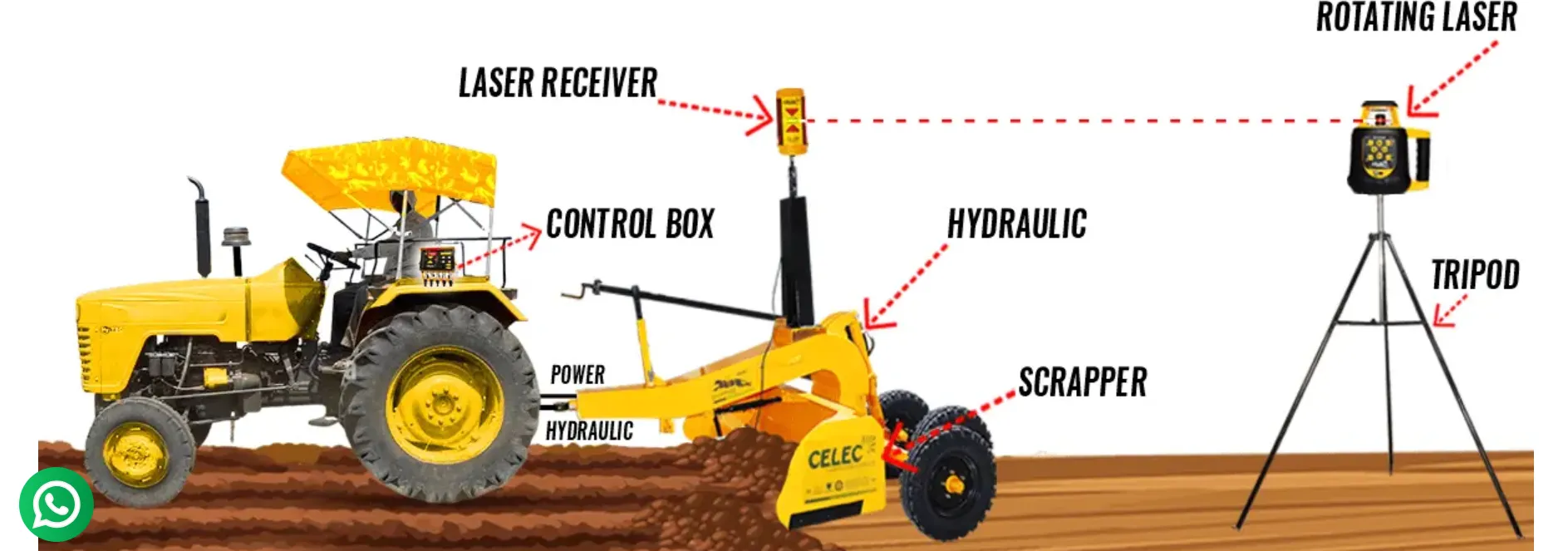
Fig. 2. How a laser land leveller works
Benefits
YR8D- auto-rice transplanter an Auto‑Rice Transplanter is a mechanized agricultural machine that automatically plants rice seedlings in a field at uniform spacing and depth.Instead of manual transplantation (which is slow, hard work and needs many laborers), this machine does the job faster, more evenly and with less labor.
Features of auto‑rice transplanter

Fig. 3. Linear mode only (left) and Auto mode (right)
Multi crop vacuum planter is a mechanized planting device that uses vacuum suction to pick individual seeds and deposit them uniformly in rows at precise spacing and depth. It is capable of handling different types and sizes of seeds-from cereals like rice, wheat, maize to pulses-without changing the main mechanism.
Precision planting mechanization for sesame
|
Planter Type |
Configuration |
Metering Mechanism |
Seed Rate (kg ha-1 ) |
Performance |
Emergence Rate (%) |
|
Manual Broadcasting |
Broadcast/dibble
|
Human
|
5–6
|
Evenness highly variable (around 80–90%), highly reliant on skill and consistency |
30–50
|
|
Single-row drop seeder |
Mechanical plante |
Belt/roller
|
4–5
|
Emergence rate around80–90%, skips around 5–10% |
50–65
|
|
Broadcast drill |
12+rows,air sowing |
Blower plans/shaker |
4–5
|
Low singulation accuracy and poor uniformity |
60–70
|
|
Multi-row air dril |
4–12 rows, air seeder |
Seed plate, Air |
3–4
|
Variation in seed placement around15–30% |
70–85
|
|
Vacuum precision planter |
4–12+rows
|
Vacuum-disc
|
2.5–3
|
Seed singulation around 90%, 50% higher planting speed and lower seed damage rate (with calibration) than conventional drills |
<90
|
Agriculture drone
An agricultural drone is or also known as unmanned aerial vehicle used to help optimize agriculture operations, increase crop production, and monitor crop growth. Sensors and digital imaging capabilities can give farmers a richer picture of their fields.
Use of drones in agriculture
I. Remote sensing applications
1. Precision farming Drones can support precision farming by
2. Soil and field analysis
3. Planting
4. Seedling emergence assessment
5. Weed mapping
6. Crop health assessment
Disease surveillance FAO designed the dLocust drones to monitor the locust infestation.
7. Crop damage assessment & Crop insurance
8. Land use survey
Exact area measurements of land utilization.
9. Water management
II. Non remote sensing applications
1. Crop spraying
2. Remote sampling (collecting specimens with a drone)
Collect the sample from field without walking much longer distance.
Drone for forest seeding also called aerial seeding or seed bombing is an advanced afforestation technology that uses UAVs to distribute seeds over large or inaccessible areas.
Why forest seeding drones are important: Faster Reforestation at Scale, Access to Difficult Terrain, Cost Reduction, Precision & Smart Planting and Disaster Recovery.
Vertical and climate – controlled farming
Urban agriculture and controlled – environment systems are redefining where and how we grow food. In 2025, vertical farms powered by AI climate control and hydroponic or aeroponic systems are making local, pesticide-free produce accessible even in desert regions and dense cities.
Emerging innovations:
AI- driven microclimate control: systems automatically adjust light, temperature, and humidity for each crop.
Modular container farms: Portable, stackable units make it possible to grow food year-round anywhere.
Energy-efficient LEDs: Tunable lighting mimics natural sunlight, enhancing growth cycle while conserving energy.
Circular resource use: vertical farms recycle water and nutrients, cutting waste by up to 90%
This technology not only reduces the environmental footprint but also provides a solution to global food supply chain challenges.
Variable rate technology (VRT) is a key component of precision agriculture that enables the site-specific application of agricultural inputs such as fertilizers, seeds, pesticides, and irrigation water at variable rates within a field, based on spatial variability in soil and crop conditions (Robert, 2002; Pierce & Nowak, 1999).
Application the right amount of nutrient, at the right place, at the right time is the ultimate goal of this technology.
Next generation farming machinery is applied to water management
IoT-based smart irrigation systems uses connected sensors, controllers, and communication networks to automate watering decisions. It is a core application of Internet of Things (IoT) within modern Precision Agriculture.

Fig. 4. IoT-based smart irrigation systems
Water footprint of rice cultivation refers to the total volume of freshwater used to produce rice, including irrigation, rainfall and losses. It is often analyzed using the concept of Water Footprint. Rice is a water-intensive crop and irrigation method plays a major role in determining its water footprint.
Next generation farming machinery is applied to control of weeds
Spraying through drone is a modern agricultural method in which unmanned aerial vehicles (UAVs) are used to spray pesticides, herbicides, fertilizers, or nutrients over crops.
Weed mapping is the process of identifying, locating and recording weed-infested areas in agricultural fields using modern technologies such as: Drones / UAVs, GPS and GIS systems and Remote sensors and cameras.
It is a crucial tool in precision agriculture that helps farmers understand the spatial distribution of weeds for targeted management, improving crop yield and reducing chemical use.
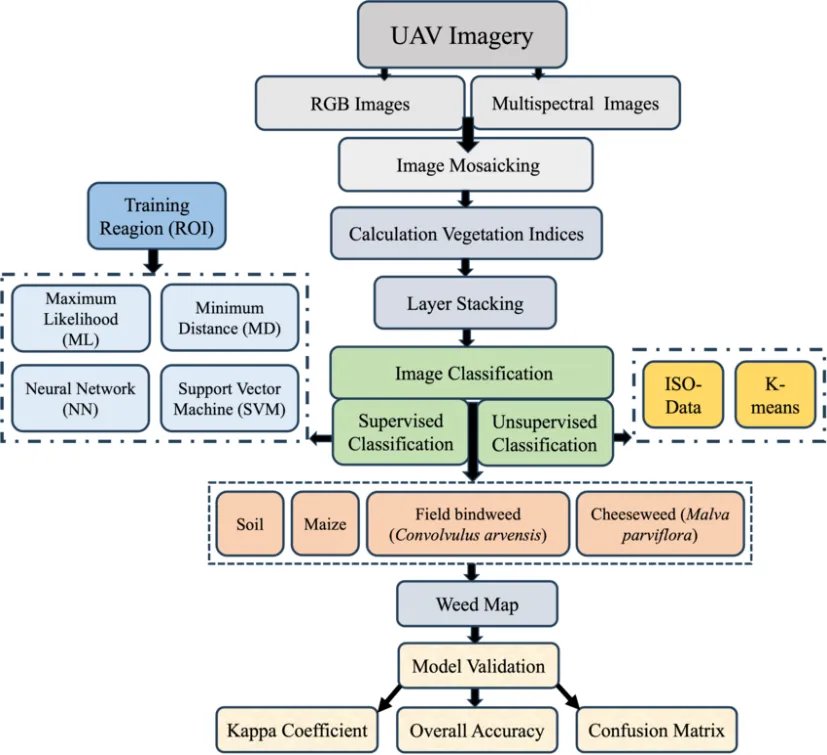
Fig. 5. Weed mapping procedure
Laser weeding is a precision agriculture technique where high-energy laser beams are used to destroy or inhibit weeds without applying chemical herbicides. It is considered a sustainable and environmentally friendly method for weed control.
Smart agriculture drone for crop spraying is an autonomous or semi-autonomous UAV equipped with cameras, sensors, and AI algorithms to detect crop health and weeds and perform precision spraying of pesticides, herbicides, or fertilizers.
By integrating image processing and machine learning, the drone can identify problem areas in crops and adjust spraying accordingly, minimizing chemical use and maximizing yield.
Real-time corn yield monitoring system with dnn-based prediction model is designed to estimate and predict corn crop yield continuously during the growing season or at harvest. Traditionally, yield estimation relies on manual sampling, which is labor-intensive and time-consuming. Modern systems integrate sensors, IoT and AI to automate this process.
Adding a DNN (Deep Neural Network) prediction model allows the system to predict yields based on real-time environmental and crop data rather than only historical data.
Cotton harvester
Sugar cane harvester is a machine used in farming to cut sugarcane stalks at their base, remove leaves and tops, chop the cane into smaller pieces (called billets), and load them into transport vehicles for further processing.
Rice Combined Harvester
A rice combined harvester is a specialized agricultural machine designed to harvest paddy (rice) crops efficiently by combining three main operations in one process:
A combine harvester (including rice combine harvester) is used for harvesting a variety of grain crops, not just rice.
Common crops harvested: rice, wheat, maize, barley, oats, sorghum and millets.
How can rice combine harvester be modified to suite wheat harvest?
A rice combine harvester is a machine that can harvest both rice and wheat crops by cutting, threshing, and cleaning them 1. However, some farmers may prefer to cut and bind wheat crops separately, and use a stationary thresher machine later 2. In that case, a rice combine harvester can be modified to suit wheat harvest by removing the threshing and cleaning device, and replacing it with a binding mechanism 3. Additionally, the feeding and guidance system can be modified to vertically transfer the harvested wheat to the binding device.
This modification can improve the utilization of the rice combine harvester, and reduce the grain losses and operating costs of wheat harvest. However, some factors such as the forward speed, the bundle weight, and the bundle fall height may affect the performance and efficiency of the modified machine. Therefore, it is important to optimize these factors according to the field conditions and the farmer’s preferences.
Robotic Farming
Robotic systems equipped with AI algorithms can perform various tasks such as planting seeds, applying fertilizers and pesticides, and harvesting crops. These robots use sensors and computer vision to navigate fields, identify crops and weeds, and perform tasks with precision.
Types & Advancement of Agri-Robotics
|
Category |
Advancement in Agri-Robotics |
Reference Picture |
|
Precision Agriculture |
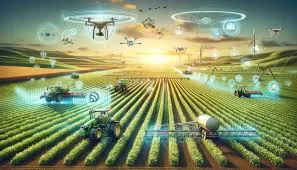
Agri-robots use advanced sensors and GPS to monitor fields at a micro level, ensuring precise application of water, fertilizers, and pesticides. |
|
|
Autonomous actors |
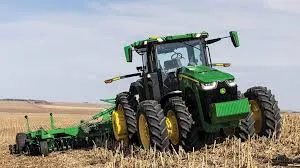
Self-driving tractors equipped with GPS, cameras, and AI for autonomous navigation, steering, and braking. These machines assist in planting, seed selection, and real-time soil analysis while reducing labor dependence. |
|
|
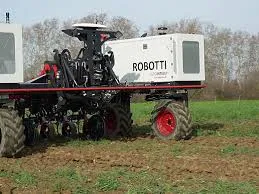
Automated Sowing & Planting |
Robots precisely sow seeds or seedlings at specific depths and spacing, ensuring uniform crop distribution, improving plant establishment, and maximizing yield potential. |
|
|
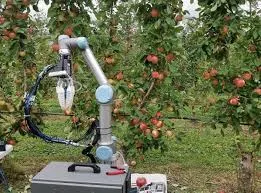
Robotic Harvesting |
AI-powered harvesting robots use computer vision and robotic arms to identify and delicately pick ripe produce, reducing labor costs and minimizing post-harvest losses, particularly in fruits and vegetables. |
|
|
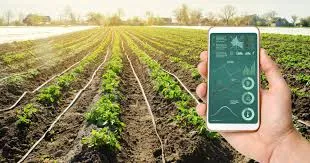
Crop Health Monitoring |
Agri-robots & AI analytic tools with imaging sensors and algorithms assess crop health, detect early signs of diseases, pest infestations, and nutrient deficiencies, allowing for timely interventions and targeted treatments. |
|
|
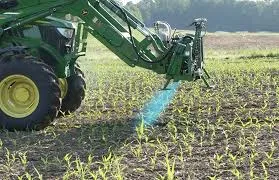
Weed Management |
Autonomous weed control robots identify and remove weeds using non-chemical techniques like mechanical weeding or thermal treatments, promoting sustainable agriculture while reducing reliance on herbicides. |
|
|
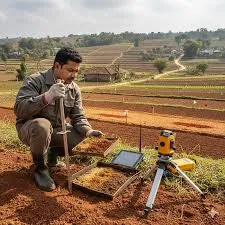
Soil Analysis & Mapping |
Robots analyze soil health by measuring nutrient levels, pH, and moisture content. The collected data helps farmers make informed decisions about fertilization and soil management for improved productivity. |
|
|
Drones for Crop Monitoring & Spraying |
Unmanned aerial vehicles (UAVs) equipped with imaging sensors conduct large-scale crop surveillance, providing real-time information on plant health, pest activity, and water stress along with fertilizer spraying. |

|
|
Solar-Powered Robots |
To overcome power supply issues in rural areas, some agri-robots operate using solar energy, making them sustainable, cost effective, and more accessible to farmers. |

|
Top 11 Futuristic Farming Tools Changing Agriculture! 2025
1. Drones for Precision Monitoring - Drones allow farmers to observe their fields from above, making it easier to spot early signs of crop damage, pests, or nutrient shortages. With real-time images and advanced scanning, they help farmers respond quickly and accurately. This technology enables targeted action before problems spread, making it a key innovation in modern agriculture.
2. GPS-enabled Farming Equipment - GPS-based machinery helps farmers map and manage their fields with high accuracy. It improves efficiency in planting, spraying, and harvesting by minimizing overlaps and missed areas. This leads to higher productivity, reduced fuel use and more precise application of inputs like fertilizers and pesticides.
3. IoT Sensors for Real-time Field Data- IoT sensors collect continuous data on soil moisture, temperature, pH, and nutrient levels. This information helps farmers make informed decisions about irrigation, fertilization and harvest timing. Essentially, these sensors act like a constant monitoring system for farm conditions.
4. Smart Irrigation Systems - Smart irrigation systems use weather data and soil conditions to automate watering. They significantly reduce water consumption while maintaining optimal crop health. Farmers benefit from lower costs, efficient water use and improved yields.
5. Farm Management Software (FMS) - Farm Management Software serves as a digital tool to organize and manage farming activities. It helps with planning, tracking finances, managing inventory and ensuring compliance. Integration with other technologies allows for automation and reduces manual errors.
6. Autonomous Robots for Farm Operations - Self-operating robots can perform tasks such as planting, weeding, and monitoring crops. Using AI and vision technology, they can identify weeds and plant health conditions. Some robots can even apply fertilizers and pesticides with high precision.
7. Robotic Harvesters - Robotic harvesters automate the picking of crops like fruits and vegetables. They use advanced sensors to determine ripeness and quality before harvesting. These machines increase efficiency, reduce labor dependency and minimize waste.
8. AI-powered Tools for Crop Monitoring - AI tools process data from multiple sources to predict diseases, recommend planting strategies, and estimate yields. They help farmers make better decisions and reduce uncertainty. AI can also guide precise application of treatments for crops.
9. Vertical Farming Units - Vertical farming grows crops in stacked layers within controlled environments, often indoors. This method uses much less water and land compared to traditional farming, making it suitable for urban areas and challenging climates.
10. Biodegradable Packaging from Agricultural Waste - Innovations are turning agricultural waste like husks and fibers into eco-friendly packaging. This reduces plastic usage and provides farmers with additional income sources while supporting sustainable practices.
11. Variable Rate Technology (VRT) - Variable Rate Technology allows farmers to apply inputs like water, fertilizers, and pesticides in varying amounts across different parts of a field. This targeted approach improves efficiency, lowers costs and promotes better soil health.
CONCLUSION
The concept of next-generation farming machinery, evaluate its role in improving precision, efficiency and sustainability and assess its relevance to modern agronomic challenges. The discussion highlights that advanced technologies such as automation, GPS, AI and robotics significantly enhance input-use efficiency, reduce labor dependency and support climate-smart agriculture. Although constraints like high cost, technical complexity and limited accessibility remain, continuous research, indigenous development and policy support can bridge these gaps. Overall, next-generation farming machinery holds great potential to transform agronomy by promoting sustainable productivity and ensuring food security in the future.
REFERENCES

Anitta, D., C. Kalaiyarasan, S. Ramesh, S. Madhavan, K. Balagangathar, Next- Generation Farming Machineries, Int. J. of Pharm. Sci., 2026, Vol 4, Issue 6, 6078-6090, https://doi.org/10.5281/zenodo.20827657
 10.5281/zenodo.20827657