

We use cookies to ensure our website works properly and to personalise your experience. Cookies policy
Divine college of pharmacy satana (Nashik).
The nucleotide-binding oligomerization domain, leucine-rich repeat and pyrin domain-containing protein 3 (NLRP3) inflammasome is a major intracellular platform involved in innate immune regulation. It responds to microbial, metabolic and cellular stress signals and regulates inflammatory cytokine maturation and pyroptotic cell death. Persistent or dysregulated NLRP3 activation has been implicated in metabolic disorders, cardiovascular diseases, neurodegenerative diseases, gout and other chronic inflammatory conditions. Recent structural and pharmacological advances have stimulated development of direct NLRP3 inhibitors with improved selectivity, tissue distribution and translational potential. MCC950 established proof-of-concept for direct NLRP3 inhibition, while newer candidates including dapansutrile, selnoflast, inzomelid and NT-0796 have expanded the therapeutic landscape. This review summarizes the molecular mechanisms regulating NLRP3 activation, its disease relevance, current pharmacological approaches, emerging inhibitors and translational challenges. Particular emphasis is placed on direct inhibitors, tissue-selective pharmacology, biomarkers and the transition from mechanistic discovery to clinical development.
Inflammation is an essential biological response that protects the host against infection and tissue injury. However, persistent activation of inflammatory signaling can contribute to tissue damage and chronic disease. The NLRP3 inflammasome has emerged as an important intracellular inflammatory pathway because it integrates signals originating from infection, cellular stress, metabolic disturbance and tissue injury.
The NLRP3 inflammasome is a multiprotein signaling complex composed principally of NLRP3, apoptosis-associated speck-like protein containing a CARD (ASC/PYCARD), and inflammatory caspase-1. Following activation, NLRP3 recruits ASC and promotes caspase-1 activation. Active caspase-1 processes pro-interleukin-1β and pro-interleukin-18 and cleaves gasdermin D, resulting in membrane pore formation and pyroptotic cell death.[1-3]
NLRP3 responds to diverse stimuli, including extracellular ATP, potassium efflux, crystalline materials, lysosomal damage, mitochondrial dysfunction, reactive oxygen species and metabolic stress. Current evidence suggests that these stimuli converge on cellular stress and regulatory events rather than representing a single universal ligand for NLRP3.[1,2]
The importance of NLRP3 extends beyond classical inflammatory disorders. Aberrant activation has been associated with obesity, diabetes, cardiovascular disease, neurodegeneration, gout and other inflammatory conditions.[4-7] This has encouraged the development of direct NLRP3 inhibitors. However, no selective NLRP3 inhibitor has yet become an established approved therapy, and challenges remain concerning selectivity, tissue penetration, pharmacokinetics, long-term safety, biomarkers and patient selection.[3,8]
This review examines NLRP3 from a pharmacological perspective, emphasizing molecular activation, disease relevance, emerging inhibitors, clinical translation and future research opportunities.
STRUCTURAL ORGANIZATION OF THE NLRP3 INFLAMMASOME
NLRP3 belongs to the nucleotide-binding and oligomerization domain-like receptor family. It contains a pyrin domain (PYD), a central NACHT domain and a leucine-rich repeat (LRR) domain. The PYD mediates interaction with ASC, whereas the NACHT domain contributes to nucleotide binding and oligomerization. The LRR region participates in regulatory interactions and conformational control.
ASC is the adaptor connecting NLRP3 with pro-caspase-1. Its PYD interacts with NLRP3, while its CARD recruits pro-caspase-1. Assembly of these components creates a signaling platform that permits caspase-1 activation and downstream inflammatory responses.[1,3]
MOLECULAR ACTIVATION OF NLRP3
NLRP3 activation is commonly described as a priming step followed by an activation step. During priming, pattern-recognition receptor signaling, including Toll-like receptor pathways, activates NF-κB-dependent transcription and increases NLRP3 and pro-IL-1β availability. Priming also involves post-translational regulation that changes inflammasome competence.[1,2]
Activation is promoted by cellular stress signals such as potassium efflux, calcium signaling, mitochondrial dysfunction, mitochondrial ROS, mitochondrial DNA release, lysosomal damage and metabolic disturbances. These events facilitate NLRP3 conformational change, oligomerization, ASC recruitment and caspase-1 activation.[1-3]
Potassium efflux is a well-characterized convergence event. Mitochondrial dysfunction can amplify signaling through ROS and mitochondrial nucleic-acid release, while lysosomal injury following uptake of crystals or particulate material can contribute to inflammasome activation. Recent structural work also supports investigation of NLRP3 interactions with oxidized DNA and other regulatory molecules as potential pharmacological targets.[3,9]
CANONICAL AND NON-CANONICAL NLRP3 ACTIVATION
The canonical pathway involves NLRP3, ASC and caspase-1 and results in maturation of IL-1β and IL-18 and GSDMD-mediated pyroptosis. The non-canonical pathway involves inflammatory caspases, particularly caspase-4 and caspase-5 in humans and caspase-11 in mice. Cytosolic lipopolysaccharide activates these caspases, resulting in GSDMD cleavage and ion disturbances that can secondarily activate NLRP3.[1,2]
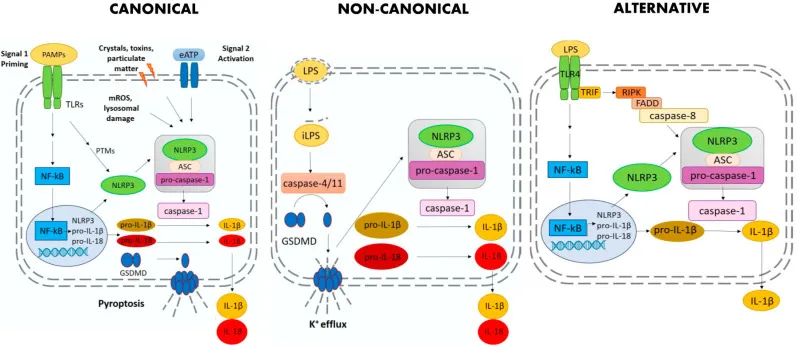
Figure 1: Canonical and Non-Canonical NLRP3 Activation
NLRP3, CYTOKINES AND PYROPTOSIS
Activated caspase-1 processes pro-IL-1β and pro-IL-18 into their mature inflammatory forms. Caspase-1 also cleaves GSDMD, whose N-terminal fragment forms membrane pores and promotes pyroptotic cell death. Consequently, NLRP3 activation produces two interconnected outcomes: inflammatory cytokine maturation and inflammatory cell death. Prolonged activation may therefore amplify tissue injury rather than produce only transient inflammation.
ROLE OF NLRP3 IN METABOLIC DISEASES
Obesity is associated with chronic low-grade inflammation, lipid accumulation, mitochondrial stress and altered metabolic signaling, all of which can promote NLRP3 activity.[4] In type 2 diabetes, NLRP3-associated inflammatory signaling has been linked to insulin resistance and pancreatic dysfunction. In metabolic dysfunction-associated steatotic liver disease, lipid accumulation, oxidative stress and inflammatory injury may promote NLRP3 activation and disease progression. NLRP3 signaling has also been implicated in atherosclerosis and other cardiovascular inflammatory disorders.[4-7]
NLRP3 IN NEURODEGENERATIVE DISEASES
Microglial inflammasome activation has attracted particular attention in neurodegenerative disease. Excessive NLRP3 signaling has been associated with Alzheimer's disease, Parkinson's disease, multiple sclerosis, stroke and traumatic brain injury. Recent preclinical work with brain-penetrant inhibitors suggests that suppressing NLRP3 can reduce neuroinflammatory and disease-associated phenotypes in experimental Alzheimer's disease.[10] CNS development nevertheless requires adequate brain exposure, target engagement and careful neurological safety assessment.
NLRP3 IN OTHER INFLAMMATORY DISEASES
Uric acid crystals can activate NLRP3 and contribute to IL-1β release in gout. NLRP3 has also been investigated in inflammatory bowel disease, rheumatoid and other inflammatory disorders. In autoinflammatory syndromes, gain-of-function alterations in NLRP3 demonstrate the importance of this pathway in human disease. However, NLRP3 functions can be context-dependent, and complete suppression may interfere with protective host responses.
PHARMACOLOGICAL STRATEGIES FOR TARGETING NLRP3
The pathway can be inhibited at several levels, including direct NLRP3 inhibition, blockade of inflammasome assembly, caspase-1 inhibition, IL-1β neutralization and inhibition of GSDMD-mediated pyroptosis. Direct NLRP3 inhibition is particularly attractive because it may suppress multiple downstream effects simultaneously.[3,8]
MAJOR NLRP3 INHIBITORS
MCC950 is a landmark experimental NLRP3 inhibitor that established proof-of-concept for selective direct inhibition. Its development was limited by toxicity concerns, but it remains an important pharmacological tool and a structural starting point for medicinal chemistry.[3]
Dapansutrile (OLT1177) is a selective NLRP3 inhibitor that has entered clinical research. Selnoflast is another selective inhibitor under clinical development. Inzomelid is a brain-penetrant NLRP3 inhibitor designed for CNS applications. NT-0796 represents a prodrug/active-metabolite strategy intended to optimize exposure and tissue distribution. Additional VTX-series and ZYIL1 compounds illustrate the expanding direct-inhibitor pipeline.[3,8,11]
NATURAL PRODUCTS AND DRUG REPURPOSING
Natural products have been investigated for their ability to reduce NLRP3 activation through effects on oxidative stress, NF-κB priming, mitochondrial function and inflammasome assembly. These findings are promising but are often limited by bioavailability, pharmacokinetics and target specificity.
Drug repurposing and computational screening provide complementary strategies. Recent work has combined machine learning, molecular docking, molecular dynamics and ADMET prediction to identify potential NLRP3 inhibitors, demonstrating how computational approaches can accelerate early-stage discovery.[12]
STRUCTURE-BASED DRUG DISCOVERY FOR NLRP3
Structural biology has enabled more rational NLRP3 drug discovery. The NACHT domain, PYD interactions and other conformational interfaces are being investigated as sites for allosteric and protein-protein interaction inhibitors. Structure-guided approaches may improve selectivity and reduce the limitations associated with broad phenotypic inhibition.[3,9]
CLINICAL TRANSLATION
Despite strong preclinical evidence, direct NLRP3 inhibitors have not yet become established approved therapies. Important translational issues include target selectivity, adequate tissue exposure, chronic dosing safety, preservation of host defense, reliable pharmacodynamic biomarkers and appropriate patient selection.
A major advantage of direct inhibition is the possibility of simultaneously reducing IL-1β, IL-18 and pyroptotic signaling. Conversely, broad suppression of innate immunity may produce unintended consequences. Future clinical development should therefore combine pharmacokinetic and pharmacodynamic measurements with tissue- and disease-specific biomarkers.
PHARMACODYNAMIC BIOMARKERS
Potential biomarkers include circulating IL-1β and IL-18, caspase-1 activity, GSDMD cleavage, ASC speck formation and inflammasome-associated transcriptional signatures. Systemic cytokine measurements alone may not accurately represent tissue-specific NLRP3 activation. Future trials should integrate target-engagement biomarkers with disease biomarkers and clinical outcomes.
NLRP3 AND PRECISION PHARMACOLOGY
NLRP3-driven inflammation is unlikely to be uniform across all inflammatory diseases. Precision pharmacology could involve identifying patients with elevated NLRP3 activity, measuring disease-specific biomarkers, selecting an inhibitor according to tissue distribution and monitoring target engagement. This approach may be especially relevant to heterogeneous metabolic and neurodegenerative disorders.
CONCLUSION
The NLRP3 inflammasome is a promising pharmacological target at the intersection of innate immunity, metabolism and chronic inflammation. Its ability to integrate cellular stress signals and promote caspase-1 activation, IL-1β/IL-18 maturation and pyroptosis provides a mechanistic basis for its involvement in diverse diseases.
MCC950 established proof-of-concept for direct inhibition, while dapansutrile, selnoflast, inzomelid, NT-0796 and other emerging molecules illustrate the progression toward clinically relevant NLRP3 pharmacology. Structural biology, tissue-selective approaches, brain-penetrant compounds, biomarker development and computational drug discovery are expanding the therapeutic landscape.
The next stage of research should move beyond demonstrating that NLRP3 can be inhibited and determine which patients should receive inhibition, at what disease stage, in which tissue, for how long and in combination with which therapies. A precision-pharmacology strategy may ultimately determine the clinical success of NLRP3-directed therapeutics.
Table 1: Structural Components of the NLRP3 Inflammasome
| Component | Major role | Pharmacological relevance |
|---|---|---|
| NLRP3 | Intracellular danger sensor | Primary target for direct inhibitors |
| ASC | Adaptor connecting NLRP3 and caspase-1 | Potential assembly target |
| Pro-caspase-1 | Precursor of inflammatory caspase-1 | Downstream target |
| Caspase-1 | Processes IL-1β, IL-18 and GSDMD | Inflammasome-pathway target |
| GSDMD | Forms membrane pores and drives pyroptosis | Potential anti-pyroptotic target |
| IL-1β | Major pro-inflammatory cytokine | Validated downstream target |
| IL-18 | Inflammatory cytokine | Potential therapeutic biomarker/target |
Table 2: Representative NLRP3-Directed Pharmacological Agents
| Compound | Pharmacological concept | Development relevance |
|---|---|---|
| MCC950 | Direct NLRP3 inhibition | Landmark experimental compound |
| Dapansutrile/OLT1177 | Selective NLRP3 inhibition | Clinical translation |
| Selnoflast | Selective NLRP3 inhibition | Clinical development |
| Inzomelid | Brain-penetrant NLRP3 inhibitor | CNS applications |
| NT-0796 | Prodrug/active-metabolite strategy | Tissue exposure optimization |
| VTX-series compounds | Direct NLRP3 inhibition | Emerging clinical pipeline |
| ZYIL1 | Selective NLRP3 inhibition | Emerging candidate |
Table 3: Major Translational Challenges
| Challenge | Pharmacological implication |
|---|---|
| Selectivity | Avoid interference with unrelated proteins and pathways |
| Tissue penetration | CNS diseases require adequate brain exposure |
| Chronic dosing | Long-term suppression requires robust safety evaluation |
| Biomarkers | Reliable target-engagement measures are required |
| Patient selection | Therapy should be directed toward NLRP3-driven disease |
| Disease heterogeneity | NLRP3 contribution may vary by disease stage and tissue |
| Animal-to-human translation | Preclinical efficacy may not predict clinical benefit |
REFERENCES

Vinod Govekar, Neha Shewale, Kajal Pansare, Chandrashekhar Patil, NLRP3 Inflammasome as a Pharmacological Target: From Molecular Mechanisms to Emerging Therapeutics in Metabolic and Inflammatory Diseases, Int. J. of Pharm. Sci., 2026, Vol 4, Issue 10, 3545-3551. https://doi.org/10.5281/zenodo.23633629
 10.5281/zenodo.23633629