

We use cookies to ensure our website works properly and to personalise your experience. Cookies policy
1,2UG Scholar, Oyster Institute of Pharmacy, Chh. Sambhajinagar, Maharashtra, India 1, 2.
3Lecturer, Oyster Institute of Pharmacy, Chh. Sambhajinagar, Maharashtra, India3.
Anxiety disorders are common mental health problems that can affect a person's daily life, work, studies, and relationships. Medicines are widely used to manage anxiety symptoms, but some patients do not get complete relief, and some medicines may cause unwanted side effects. This review paper discusses the current medicines used to treat anxiety disorders and the new treatments being studied. Common medicines include selective serotonin reuptake inhibitors (SSRIs), serotonin-norepinephrine reuptake inhibitors (SNRIs), benzodiazepines, busiprone, and other anti-anxiety drugs. The review also discusses new treatment approaches that target different brain chemicals, such as serotonin, glutamate, and GABA, along with neuropeptides, cannabinoids, and herbal medicines. The findings show that some existing medicines are helpful, but they may not work equally well for every patient. Research on new medicines has shown mixed results, and more clinical studies are needed to confirm their safety and effectiveness. In conclusion, further research is important to develop safer and more effective treatments for anxiety disorders and to improve patients' quality of life.
Anxiety :
Anxiety is a feeling of fear, worry, nervousness or tension about something that may happen in the future it is called anxiety. this time most face anxiety Many people experience anxiety without realizing it. They might mistake physical or emotional stress for just a normal part of life, assuming it will pass on its own. However, leaving chronic anxiety unaddressed can lead to long-term effects, including persistent fatigue, weakened immune function, and increased difficulty managing stress in the future. Anxiety is one of the most common mental health conditions worldwide. It affects a person’s mood, thinking, behavior, and physical health. While normal fear helps us react to immediate danger, pathological anxiety is excessive, persistent, and interferes with daily life, sleep, concentration, and social relationships According to the WHO (ICD-11), Anxiety Disorders are characterized by:
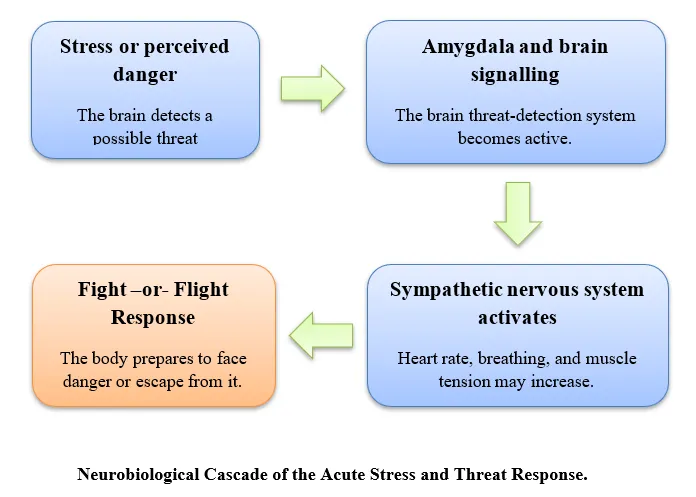
Furthermore, recurrent panic attacks and chronic stress trigger the body's survival mode, often referred to as the 'fight-or-flight' response. During this state, elevated levels of stress hormones such as cortisol lead to an acute increase in blood glucose levels to supply immediate energy. This sustained physiological stress significantly impacts the hypothalamic-pituitary-adrenal (HPA) axis, which in turn disrupts the hypothalamic-pituitary-gonadal (HPG) axis responsible for regulating reproductive hormones (estrogen and progesterone). Consequently, this hormonal dysregulation can delay ovulation, ultimately resulting in an irregular or delayed menstrual cycle among affected females.
For example:
Causes:
feeling on edge, quick fatigue, difficulty concentrating, irritability, muscle tension, and sleep disturbances.
TYPES OF ANXIETY DISORDERS:
1. Generalized Anxiety Disorder (GAD) : Continuous, excessive worry about everyday events for at least 6 months.
2. Panic Disorder & Agoraphobia : Sudden, intense panic attacks with symptoms like chest pain, dizziness, and shortness of breath, leading to fear of crowded or open spaces where is difficult.
3. Phobias : Intense fear of specific objects (e.g., animals, heights, blood) or social situations.
4. Obsessive-Compulsive Disorder (OCD) : Repetitive thoughts (obsessions) that trigger repetitive actions (compulsions) to reduce stress.
5. PTSD & Acute Stress Disorder : Fear, avoidance, and re-experiencing traumatic memories after severe life event
Pathophysiology Of Anxiety:
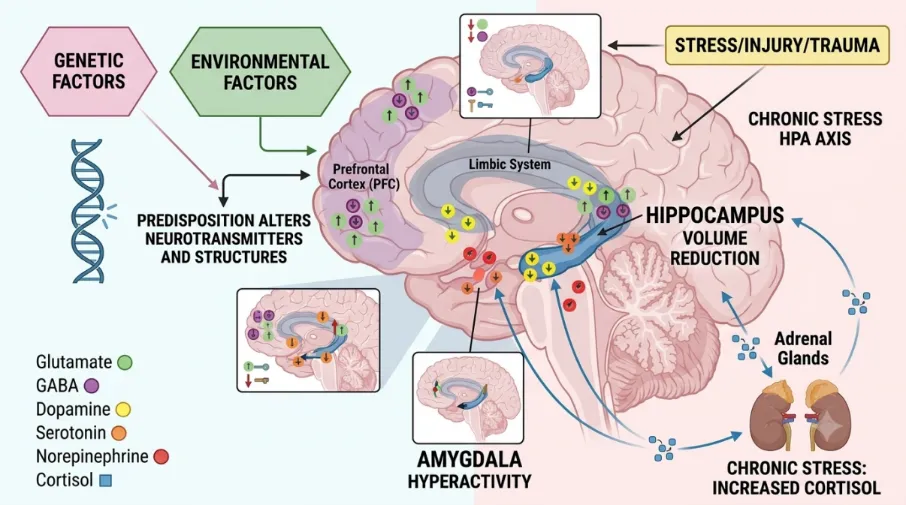
Why Anxiety Happens : The Body and Brain
1. Chemical Imbalances in the Brain:
Different anxiety conditions are connected to imbalances in specific brain chemicals (neurotransmitters). For instance, worry and tension are often linked to the GABA system, panic is connected to fight-or-flight (noradrenergic) chemicals, and obsessive thoughts relate closely to serotonin. Other influences include genetics, daily stress, and hormone shifts.
2. An Overactive Alarm System:
i) People with heavy anxiety—like Generalized Anxiety Disorder (GAD)—have a brain region called the amygdala that acts like an overly sensitive smoke alarm. It reacts intensely to stress and potential threats.
ii) Normally, the front part of the brain (the prefrontal cortex) helps calm this alarm down, but in anxious individuals, this "brake system" doesn't work as well, leaving the body stuck in a state of high alert.
3. The Physical Toll:
Anxiety triggers the sympathetic nervous system, leading to high heart rates and tension, while lowering the calming parasympathetic nervous system activity (like lower heart rate variability).
4. Why Do People Worry So Much?
i) While people often think worrying helps them solve problems, research shows that verbal worrying actually keeps the body stressed and pumps out stress hormones like cortisol.
ii) Psychologically, worry acts as a shield against sudden, painful emotional shocks. By keeping themselves in a constant low-level state of worry, people feel like they are emotionally prepared for the worst so they won't be caught off guard.
General Symptoms:
- shocks. By keeping themselves in a constant low-level state of worry, people feel
like they are emotionally prepared for the worst so they won't be caught off guard.
2. Proven Ways to Treat Anxiety
A. Medications
B. Talk Therapy (Cognitive Behavioral Therapy - CBT)
C. Combined Care & Self-Help
Anti-Anxiety Drugs (Anxiolytics):
Anti-anxiety drugs are medicines used to reduce anxiety, fear, nervousness, restlessness and excessive worry basically anti anxiety are those drugs which used to treat anxiety. Anxiety is a feeling of fear or worry. It is normal in some situations, but when it becomes excessive and affects daily life, treatment may be required.
Anti-anxiety drugs are also called anxiolytic drugs.
Examples: Diazepam, Alprazolam, Lorazepam and Busiprone .
General Classification of Anti-Anxiety :
1. Benzodiazepines
- Diazepam, Lorazepam, Alprazolam, Clonazepam
2. Non-benzodiazepine anxiolytic
- Busiprone
3. Antidepressants used in anxiety
- SSRIs: Sertraline, Escitalopram, Fluoxetine
- SNRIs: Venlafaxine, Duloxetine
4. Antihistamines
- Hydroxyzine
5. Beta-blockers
- Propranolol — mainly for physical symptoms of performance an
1. Traditional & Established Pharmacotherapy
These are the foundational medications currently used in clinical practice, though they often carry limitations such as incomplete response rates or side effects
i. First-Line Agents (SSRIs and SNRIs) : Selective Serotonin Reuptake Inhibitors and Serotonin-Norepinephrine Reuptake Inhibitors are standard treatments, though they can cause adverse effects like sexual dysfunction.
ii. Second-Line / Adjunctive Agents : Tricyclic Antidepressants (TCAs) and Monoamine Oxidase Inhibitors (MAOIs), which are less commonly used as first-line due to side-effect profiles.
iii. Rapid-Onset Sedatives (Benzodiazepines): Fast-acting medications that provide acute relief but carry severe risks of dependence, tolerance, withdrawal, and cognitive impairment.
iv. Atypical Anxiolytics : Compounds like busiprone (5-HT_{1A} partial agonist) that target alternative monoaminergic mechanisms.
2. Emerging Pharmacological Targets & Novel Drug Classes
To address treatment-refractory cases and avoid the drawbacks of traditional drugs, pharmaceutical research has focused on several novel neurochemical systems:
- NMDA receptor antagonists (such as ketamine and esketamine).
- NMDA partial agonists (such as D-cycloserine to augment exposure therapy). –
- Metabotropic glutamate receptor (mGluR) modulators.
- Corticotropin-releasing factor (CRF-1) antagonists.
- Neuropeptide Y (NPY) and oxytocin pathway modulators.
- Vasopressin (V_{1b} and V_{1a}) antagonists.
- Orexin receptor antagonists.
- GABA-A / NMDA-active steroids (such as the intranasal neurosteroid aerosol
PH94B) designed for rapid, acute relief without systemic sedation.
- Cannabidiol (CBD) and synthetic cannabinoids (like nabilone) interacting with CB1,
TRPV1, and 5-HT_{1A} receptors for anxiolytic effects without high-dose THC
panic risks.
- Melatonin agonists (agomelatine) and novel 5-HT_{1A} partial agonists (gepirone,
tandospirone).
- Serotonergic hallucinogens (like psilocybin and LSD) utilized in combination with
specialized psychotherapy.
1. Selective Serotonin Reuptake Inhibitors (SSRIs) & Serotonin-Norepinephrine Reuptake Inhibitors (SNRIs)
- They are non-addictive and serve as the standard,
- long-term foundation for managing anxiety disorders.
- They help treat overlapping conditions like depression very effectively.
- They take several weeks to build up and begin working.
- They can cause disruptive physical side effects, most notably sexual dysfunction
2. Benzodiazepines (GABA-A Agonists)
- They provide extremely rapid, powerful relief during severe panic attacks or acute
stress spikes.
- They are very effective for short-term control
- They carry high risks of tolerance, chemical dependence, and severe withdrawal
symptoms if stopped abruptly
- They cause heavy side effects like drowsiness, cognitive clouding, and motor
impairment, making them poor choices for long-term daily management.
3. Atypical Anxiolytics (e.g., Busiprone)
- They have a lower risk profile, lack the dependency issues of benzodiazepines, and
are safer for older adults.
- They have a delayed onset of action and are often less potent for severe or acute
anxiety symptoms.
4. Emerging Rapid-Action Modulators (e.g., Ketamine / Glutamate Targets)
- They work drastically faster than traditional daily antidepressants, offering relief in
hours or days instead of weeks
- They show promise for individuals whose anxiety has resisted all other standard
medications.
- They usually require clinical supervision (such as monitored infusions) and are not
casual take-home pills
- Long-term safety and standard dosing protocols for anxiety are still being
researched.
Therapeutic Limitations
Current treatment strategies for anxiety disorders face several clinical and logistical barriers:
Emerging Drug Targets
To overcome the limitations of traditional monoaminergic (serotonin/norepinephrine) and GABAergic agents, recent pharmaceutical research has shifted toward alternative neurochemical systems and pathways:
Gender-Specific Physiological Impacts of Chronic Stress and Panic Responses
A. Female Reproductive Axis Disruption (HPA-HPG Axis Interaction): In females, recurrent panic attacks trigger an acute 'fight-or-flight' response, elevating systemic cortisol levels and acutely spiking blood glucose concentration for immediate energy mobilization. Chronic activation of this pathway over-activates the Hypothalamic Pituitary-Adrenal (HPA) axis, subsequently suppressing the Hypothalamic-Pituitary-Gonadal (HPG) axis. This hormonal dysregulation impairs gonadotropin-releasing hormone (GnRH) pulsatility, leading to delayed ovulation and secondary menstrual irregularities (e.g., oligomenorrhea or amenorrhea).
B. Male Hepatic and Metabolic Dysfunctions (Gut-Liver Axis & Cortisol Dynamics):
In males, prolonged exposure to psychological stress significantly degrades hepatic metabolic functions. Chronic cortisol surge accelerates gluconeogenesis and hepatic glycogenolysis, worsening systemic insulin resistance. Furthermore, stress-induced oxidative stress causes lipid accumulation within hepatocytes, contributing to Non-Alcoholic Fatty Liver Disease (NAFLD). Elevated inflammation via the gut-liver axis along with suppressed testosterone levels further diminishes hepatic lipid clearance, elevating the risk of chronic liver dysfunction and metabolic syndrome.
CONCLUSION
Anxiety disorders remain among the most prevalent, disabling, and comorbid psychiatric conditions globally. Despite extensive knowledge of brain fear-circuitry, translating neurobiological findings into novel, FDA-approved medications has lagged significantly behind fields like depression and schizophrenia. Because a substantial portion of patients remain treatment-resistant or vulnerable to high relapse rates, future advancements depend heavily on looking beyond traditional comfort zones. Progress will likely rely on expanding research into novel pathways—such as glutamatergic modulators, neuropeptides, and neurosteroids—alongside personalized, multidisciplinary approaches that integrate pharmacotherapy, targeted psychotherapies, and advanced biomarkers.
REFERENCES



Sneha Bankar, Vaishnavi Shelke, Rohit Jadhav, Pharmacological Management of Anxiety Disorders: A Review of Current Drugs, Limitations and Emerging Therapies, Int. J. of Pharm. Sci., 2026, Vol 4, Issue 10, 3639-3646. https://doi.org/10.5281/zenodo.23639736
 10.5281/zenodo.23639736