

We use cookies to ensure our website works properly and to personalise your experience. Cookies policy
1Tattasaheb Kore College Of Pharmacy , Warananagar Maharashtra 416113.
2Womens College of Pharmacy ,Pethvadgaon , Maharashtra 416112.
3,4Appasaheb Birnale College of Pharmacy, Sangli, Maharashtra 416416.
Since ancient times, plants have been an exemplary source of medicine. Research conducted in last few decades on the plant mentioned in ancient literature or used traditionally In Indian system of medicine, a large number of drugs of either herbal or mineral origin have been advocated for various types of diseases, India has been one of the pioneers in the development and practice of well-documented indigenous systems of medicine, particularly Ayurveda, Siddha and Unani. For millennia, the Indian population has depended mainly upon plant based crude drugs for a variety of ailments. This alternative system of medicine is gaining increasing popularity world wide Plumeria species are widely used as a purgative, remedy for diarrhea, cure of itch, bronchitis, cough, asthma, fever bleeding piles, dysentery, blood disorders and tumors etc. This review on plumeria species focuses over the plant sources, chemical compositions, pharmacological activities ,its ethnomedicinal uses, linked from ancient times to the present with a scope of development in future.
Plumeria L. (Family: Apocynaceae) is indigenous to tropical America and is found from southern Mexico to northern South America and also most abudent in India. However, due to its ease of propagation through cuttings, many species and hybrids of Plumeria are now widely cultivated and distributed in the wanner regions of the world 1 The trees were introduced to Malaysia and at least three main species are commonly found: Plumeria obtusa, P. rubra and P. acuminata ,p.alba 2
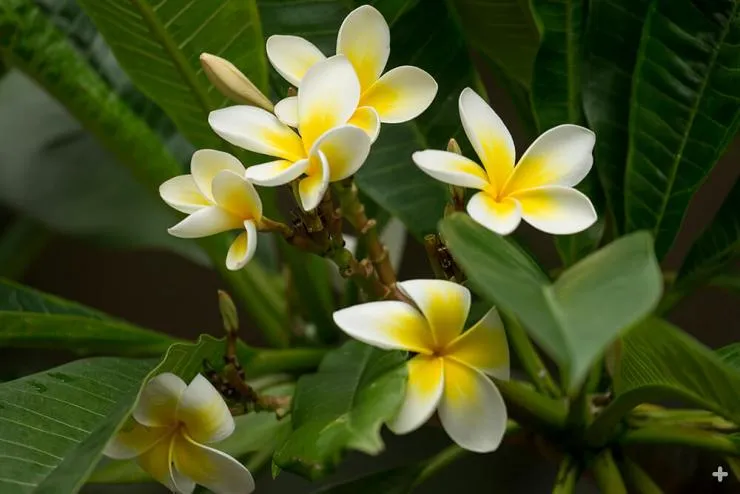
Figure 1: Plumeria
TAXONOMICAL CLASSIFICATION OF PLUMERIA GENUS
Kingdom: Plantae
Subkingdom: Tracheobionta
Super division: Spermatophyta
Division: Magnolliophyta
Class: Magnoliopsida
Sub class: Asteridae
Family: Apocynaceae
Genus: Plumeria
PLUMERIA ACUMINATA
INTRODUCTION:
Plumeria acuminata is used as medicinal plant native to Mexico, Central America, the Caribbean and South America spreaded throughout the tropics. About 155 genera and 2000 species are distributed primarily in the tropical and subtropical region. About eight species are known in India and of which Plumeria acuminata and P.rubra are commonly grown. They are commonly known as "Temple tree" or "Champa" in India.3
Depending on location many other common names also exists like "Kembang kamboja" in Indonesia."Kalachuchi" in the Phillipines, Champa in laos and Dead man's fingers in Australia. The plant material is widely used as purgative, remedy for pain, fever, diarrhoea and cure for itch. The milky juice is employed for the treatment of inflammation. The excessive doses of the latex derived from Plumeria accuminata are poisonous and the root is a violent cathartic. The essential oil from the flowers possesses antifungal activity. In Unani practice, the medicinal herb is used to treat tumors and rheumatic pains. This review compiles the botany, pharmacology, folkloric and traditional medical applications of the plant on the basis of data obtained from various soures.3
It is a tiny tree that ranges in height from 3 to 7 m. Its stem is smooth and shiny, and its plentiful white latex is readily broken. The leaves clustered at the branch's tip were typically rectangular in shape and measured 40 cm long by 7 cm wide.Simple, opposite, infrequently whorled or alternate, with either absent or infrequently present stipules. The stamens are inserted inside the corolla tube of the cymose, terminal, or axillary inflorescence. The flowers are aromatic, bisexual, and 5–6 cm long, with an inner lower half that is yellow and an upper portion that is white. 4
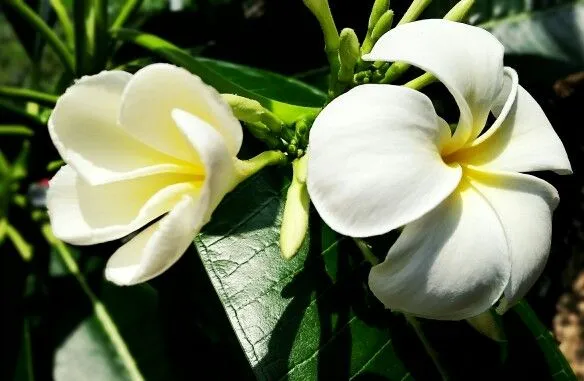
Figure 2: Plumeria Acuminata
TAXONOMICAL CLASSIFICATION OF PLUMERIA ACCUMINATA
Common Name: Frangipani
Kingdom :Plantae
Phyllum: Trachyophyta
Class: Magnoliopsida
Order:Gentianales
BotnicalName :Plumeria accuminata
Family: Apocynacae
Species :Plumeria rubra
PHYTOCHEMICAL CONSTITUENTS OF PLUMERIA ACUMINATA
Phytochemical studies of the genus Plumeria started as far back as 1870 when Peckolt and Boorsma have reported the isolation of the Plumieride as the main irridoid glucoside from the stem bark of P.rubra and P.lancifolia. The stigmast-7-enol, lupeol carboxylic acid, lupeol acetate and ursolic acid had been isolated from leaves.The researchers have successfully isolated Fulvo plummierin, Plumericin along with three new compounds isoplumericin, β-dihydroplumericin and β dihydroplumericinic acid from roots of Plumeria acuminata . The steam distillate of Plumeria acuminata yields an essential oil (0.04-0.07 %) which mainly consist of primary alcohols, geraniol, citronellol, farnesol and phenylethylalchol with little amount of aldehyde and ketones (6.8 %).
These oils have acid value (20.2) and saponification value.Stigmast-7- enol, Lupeol carboxylic acid, lupeol acetate, Urosolicacid had isolated from ethanolic extract of leaves of Plumeria acuminate & also shows significant atimutagenic activity3. The steam distillate of P. acuminata yields an essential oil (0.04-0.07 %) which mainly consist of primary alcohols, geraniol, citronellol, farnesol and phenylethyl alchol with little amount of aldehyde and ketones (6.8 %).
PHARMCOLOGICAL ACTION OF PLUMERIA ACUMINATA
Anti-inflammatory activity:
The methanolic extract of Plumeria acuminata exhibited significant anti-inflammatory activity on the tested experimental animal models. The extract (500 mg) exhibited maximum anti-inflammatory effect. Carrageenan-induced oedema has been commonly used as an experimental animal model for acute inflammation and is believed to be biphasic. The cotton pellet method is widely used to evaluate the transudative and proliferative components of the chronic inflammation. The results obtained in this study indicated that the methanol extract of P. acuminate possess potent anti-inflammatory activity in both acute and chronic models .5
Antioxidant activity:
The laboratory experimental study on animal models exhibited that the antioxidant activity of methanolic extract of P. acuminata (MEPA) increases in a dose dependent manner 50, 100, 200, 300, 400, and 500μg. Like antioxidant activity, the effect of MEPA on reducing power increases in a dose dependent manner. In DPPH radical and nitric oxide radical scavenging assays, MEPA exhibited maximum activity at the concentration of 125μg/ml. The methanol extracts of leaves of P. acuminata possesses potent antioxidant and free radical scavening5
Antimutagens from Plumeria accuminata:
The ethanolic extract of the green leaves of Plumeria acuminata showed ant mutageni activity. Four isolates A1, C1, D3, and F2 from the bioactive hexane and carbon tetrachloride fraction of the ethanolic extract of leaves of Plumeria acuminata. The structure elucidation studies indicated that C1 is stigmast-7-enol, D3 is lupeol carboxylic acid and F2 is ursolic acid. The structure of A1 not fully elucidated but MS data suggested that it contained a long hydrocarbon chain. These fractions were proved to possess ant mutagenic effect.5
Antimicrobial activity:
Methanol extracts of leaves of Plumeria acuminata Ait9 Methanol extracts of leaves of Plumeria acuminata. (MEPA) was investigated for their in vitro antimicrobial properties by agar disc diffusion method. The methanolic extracts of MEPA inhibited the growth of both Gram positive bacteria (Bacillus subtilis, Staphylococcus aureus and Micrococcus luteus) and Gram negative bacteria (Escherichia coli, Pseudomonas aeruginosa and Salmonella typhimurium). The Gram positive bacteria tested appeared to be more susceptible to the extracts than the Gram negative bacteria. The extracts at the concentration ranging between 250 µg/ml and 1000 µg/ml showed inhibitory activity against all tested bacteria except S.typhimurium which was not inhibited at 250 µg/ml concentration. MEPA was found neutral against M.luteus ,E.coli, P.aeruginosa and S.typhimurium. It is concluded that the plant possesses potent antimicrobial activity.5
PLUMERIA RUBRA
INTRODUCTION:
Plumeria rubra L. is a deciduous, commonly ornamental, tropical plant grown in home premises, parks, gardens, graveyards, because of its beautiful and attractive flowers of various colours and size. The different parts of the plant are used traditionally to treat various diseases and conditions like leprosy, inflammation, diabetic mellitus, ulcers, wounds, itching, acne, toothache, earache, tongue cleaning, pain, asthma, constipation and antifertility.6
Plumeria rubra is a deciduous, semi-succulent shrub or small tree with a broad crown that is often as wide as the tree is tall; it can grow up to 12 metres tall in the wild but is usually smaller in cultivation.Frangipani is well-known for its intensely fragrant, lovely, spiral-shaped, reddish blooms which appear at branch tips June through November. The tree itself is rather unusual in appearance; the 12 to 20-inch-long, coarse, deciduous leaves cluster only at the tips of the rough, blunt, sausage-like, thick, grey-green branches.
Branches are upright and rather crowded on the trunk forming a vase or umbrella shape with age. They are rather soft and brittle and can break but are usually sturdy unless they are mechanically hit or disturbed. The crown loses its leaves for a short time during the winter displaying the coarse-textured, stubby branches. A milky sap is exuded from the branches when they are bruised or punctured6.
There is a lore which says that the name Frangipani derives from a perfume created by an Italian family of the same name. Frangipani, also known as the Plumeria, is native to warm tropical areas of the Pacific Islands, Caribbean, South America and Mexico. They can grow to be large shrubs or even small trees in mild areas of the U.S. In tropical regions, Plumeria may reach a height of 30' to 40' and half as wide.
Their widely spaced thick succulent branches are round or pointed, and have long leather, fleshy leaves in clusters near the branch tips. Leaves tend to fall in early winter since they are deciduous and sensitive to cold. Common White Frangipani has very fragrant white flowers with yellow centers. The petals are small and strongly overlapping, giving the impression of a flower in the process of unfolding6
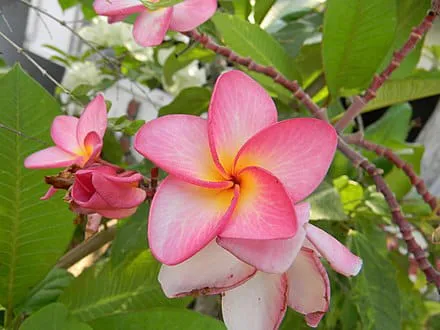
Figure 3: Plumeria Rubra
TAXONOMICAL CLASSIFICATION OF PLUMERIA RUBRA
Vernacular Common Name : Frangipani
English : Frangipani
Kingdom : Plantae
Subkingdom :Tracheobionta
Division :Magnoliophyta
Class :Dicotyledons
Order :Gentiales
Family :Apocynaceae
Botanical Name :Plumaria rubra
PHYTOCHEMICAL CONSTITUENTS OF PLUMERIA UBRA:
Plumeria rubra is a good source of ursolic acid, is a natural pentacyclic triterpenoid carboxylic acid.The gas chromatography of Plumeri arubra revealed that floral oil comprises31 volatile component mainly of alkanoic acid, lauric acid, myristic acid and palmitic acid, were major component, rest of oil contains hydrocarbon, alcohol, ether, aldehyde etc.
A variety of chemical compounds have been isolated and identified from P. rubra, including iridoids, triterpenoids, flavonoids, glycosides, phenolics, alkaloids, carbohydrates, amino acids, fatty acid esters, spingolipid, lignin, monoglyceride, coumarin and some organic compounds.
The compounds were isolated from the heartwood of Plumeria rubra, Plumericin and isoplumericin displayed molluscicidal, cytotoxic and antibacterial activity, hydroxyl acetophenone was weakly cytotoxic.
By bioactivity-directed fractionation of the P. rubra, cytotoxic constituents have been reported from the bark of Plumeria rubra collected in Indonesia. Threeiridoids, fulvoplumierin, allamcin, andallamandin, as well as 2, 5-dimethoxy-p-benzoquinonewere found to be active constituents.
The flower volatile constituents of Plumeria rubra L. grown in foothills of north India were analyzedby gas chromatography (GC) and GC-mass spectrometry (GCMS). Altogether 31 constituents, representing 94.0% of flower essential oil and 89.2% of steam volatile extract were identified. Benzyl esters (49.0%, 41.4%), aliphatic alkanes (25.8%, 7.2%), oxygenated monoterpenes (0.1%, 27.1%), oxygenated sesquiterpenes (9.5%, 8.8%), and diterpene (9.4%, 0.2%), were the major class of constituents. Benzyl salicylate (26.7%, 33.5%), benzyl benzoate (22.3%, 7.9%), geraniol .7
PHARMACOLOGICAL ACTIVITY OF PLUMERIA RUBRA
Anxiolytic effect-
Ethanolic extract of flower of plumeria rubra and its fraction was evaluated for anxiolytic effect using elevated plus model of anxiety. It was observed that the flower extract of Plumeria rubra and its insoluble butanolic fraction might possess significant anxiolytic potential.
Antibacterial activity-
In vitro antibacterial activity of ethanol, chloroform and ethyl acetate and aqueous extract of leaves of Plumeria rubra was performed using disc diffusion method against S. epidermis and E. coli. Of bacterial strains. It was observed that etanolic extract of leaves showed partial antibacterial activity against S. epidermis at 750and 1000 µg/ml and at 1500 µg/ml in E. coli. Chloroform extract showed partial antibacterial activity against S. epidermis at 750and 1000 µg/ml and showed complete antibacterial activity against E. coli at 1500 µg/ml. ehtyl acetate extract showed partial antibacterial activity against S. epidermis at 1000 µg/ml and complete against E. coli at 1500 µg/ml aqueous extract shows partial antibacterial activity against S. epidermis at 750 and 1500 µg/ml and complete antibacterial activity at 1500 µg/ml for E. coli respectively. Standard ciprofloxacin showed complete antibacterial activity against S. epidermidis and E. coli at 500 µg/ml and 750 µg/ml respectively.
Antioxidant, cytotoxic and hypolipidemical activityMethanolic flower extract of Plumeria rubra were evaluated for antioxidant potential, cytotoxic and hypolipidemic activity. DPPH assay showed 72% inhibition and total phenolic content was found 167.3 µg/ml, also observed significant free radical scavenging activity at 1.67 mg/ml. ant cholesterol assay demonstrated that Plumeria rubra had highest hypolipidemic activity 60%. It was revealed that MTT assay using HCT cell lines 116 was failed to control proliferation of colon cancer cell by Plumeria rubra
Hepatoprotective activity- Alcoholic extract of pod Plumeria rubra was evaluated on CCL4 induced hepatic injury in male albino rats. It was found that alcoholic pod extract of Plumeria rubra at 200mg/kg and 100mg/kg possess significant hepatoprotective effect .4
Antifertility activity-Ethanolic extract of Plumeria rubra evaluated for abortifacient properties. it was observed that at dose of 50,100 and 200 mg/kg body wt produces dose dependent adverse effect on fertility index and number of implantation in the uterine horn of the female rats.
Antimicrobial activity- Plumeria rubra extracts were evaluated for antimicrobial activity using cup plate method and minimum inhibitory concentration against Escheria Coli, Bacillus subtilis, Staphylococcus aureus and aspergillus niger.it was observed that a methanol extract exhibited significant activity against bacterial strains. As compared with Ciprtofloxacin as a standard. Aqueous extract was active against fungal strains as compared with standard Flucanazole8
Antiviral activity- plumeria rubra containing fulvoplumerin act as inhibitors of human immunodeficiency virus type 1 (HIV) reversal transcriptase.
Anti-inflammatory and antioxidant activity- Methanolic extract of flowers of Plumeria rubra showed significant antioxidant and anti-inflammatory activity and phytochemical analysis indicate that plumeria rubra was rich in flavonoid and phenol contents .
Anthelmintic activity- Saponin extract of leaves of Plumeria rubra exhibited significant anthelmintic effect in concentration of 25 mg/ml comparable with the standard piperazine citrate.
Anti-oxidative and proteolytic activities -Anti-oxidative and proteolytic activities were performed on lattices of plumeria rubra. results revealed that plumeria rubra posseses relevant enzymatic and proteolytic activities .
P. rubra flowers revealed the presence of tannins, alkaloids, flavonoids, saponins, gums and terpenoids. ~ 206 ~ Journal of Medicinal Plants Studies Strong occurrence of tannins in extract has been shown to possess potent anti-inflammatory properties. Analgesic and anti in flammatory effects have been observed in plumeria rubra. 8
PLUMERIA ALBA
INTRODUCTION:
The Genus Plumeria (Apocynaceae) contains a large number of shrubs and flowering trees which are grown throughout the tropics. Plumeria alba, locally known as forget-me-not in Ghana, is an essential member of the Plumeria genus .
It is indigenous to South America and primarily cultivated for its blossoms and fragrant flowers. Ethnomedicinally, different parts of forget-me-not are used in treating several diseases, such as abdominal tumors, leprosy, rheumatism, and malaria. The latex of the leaf and stem is used to treat skin diseases like ulcers, scabies, and herpes . The bark of P. alba is used as a plaster for challenging tumors, and the fruit is known as a natural source of antioxidants that can reduce free radical-mediated diseases such as diabetes, cancer, and coronary heart disease. Reports on essential oils from P. alba from various countries indicate varying chemical compositions. Lawal et al. in Nigeria identified 43 compounds as the constituents of P. alba flower essential oil.9
Since essential oils isolated from P. alba plant parts in different countries possess varying chemical constituents (qualitative and quantitative) and different biological activities, likely as a result of the differences in chemical composition, the flower and leaf essential oils of Ghanaian cultivars of P. alba were studied in this work. Gas chromatography-mass spectrometry was used to identify the essential oils’ chemical constituents, whereas standard in vitro assays were used to evaluate the antioxidant, antimicrobial, and antibiofilm activities of oils. In the flower and leaf essential oils, 17 and 24 compounds, respectively, were identified, with linalool (flower) and hexadecane (leaf) being the major components. Both oils possessed appreciable antioxidant and antimicrobial activities. Again, both oils were able to inhibit biofilm formation in Pseudomonas aeruginosa
Plumeria alba Linn. is a small latex bearing tree or shrub native of South America. P. alba is known for is pungently fragrant flowers and spiral shaped blooms. Different parts of P. alba are used in traditional medical systems for the treatment of various diseases. Extracts of P. alba have displayed antimicrobial , antifungal and anti arthritic potentials . In addition, the extracts exhibited both significant antitumor and hepatoprotective activities in mice and rats. Leaf extracts of P. alba was found to exhibit larvicidal activity against Aedesaegypti mosquitoes . Extracts are less toxic to rats at tested doses . Phytochemical studies showed that P. alba contains amyrin acetate, β-sitosterol, scopotetin, the iridoidsiso plumericin, plumieride, plumieridecoumerate and plumieridecoumerate glucoside. Antibacterial triterpenoids were isolated from the plant .
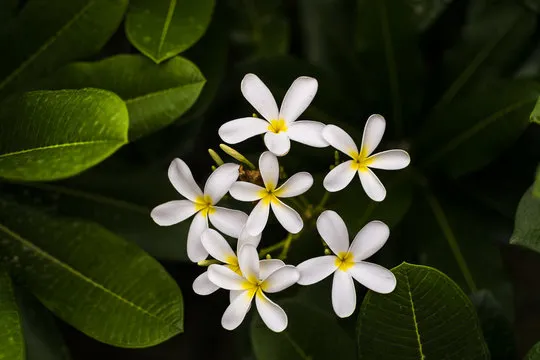
Figure 4: Plumeria Alba
TAXONOMICAL CLASSIFICATION OF PLUMERIA ALBA
Kingdom : Plantae
Synonym: Plumeria revolutifolia stokes
Family : Apocynaceae
Binomial Name: Plumeria alba
Species :P.alba
Genus : Plumeria
PHYTOCHEMICAL CONSATITUENTS OF PLUMERIA ALBA
The essential oils were extracted using the Clevenger-type apparatus and characterized using GC-MS. In the flower essential oil, a total of 17 compounds were identified, with linalool (23.91%), α-terpineol (10.97%), geraniol (10.47%), and phenyl ethyl alcohol (8.65%) being abundant. In the leaf essential oil, a total of 24 compounds were identified, with benzofuran, 2,3-di, hydro-(3.24%), and murolol (1.40%) being present.9
A total of 46 volatile constituents were identified, representing 98.11±0.5 % of the total essential oil. The essential oil was rich in esters comprising 48.61±0.3 % of the essential oil followed by oxygenated monoterpene (15.41±0.1 %), oxygenated sesquiterpene (10.43±0.08 %) and sesquiterpene hydrocarbons (10.39±0.1 %), etc. The dominant components of the essential oil were benzyl salicylate (33.98±0.04 %), benzyl benzoate (12.37±0.03 %), germacrene B (10.30±0.05 %), and linalool (8.17±0.11 %). Other notable constituents identified in the essential oil were (2Z,6Z)-farnesol, n-heneicosane, n-nonadecane, (Z, E)-geranyl linalool, trans-sabinene hydrate acetate, (2E,6Z)-farnesol, α-terpineol, n-docosane, geranyl benzoate, n-tricosane, α-bisabolol, nerol and 8-cedren-13-ol, etc. (1.17 % - 4.76 %10 .
In India, 46 volatile constituents have been characterized in the P. alba flower essential oil, accounting for 98.1% of the total essential oil constituents. Esters were the major compound class (48.6%) identifed in that study . Other studies have focused on the biological activities of essential oils from P. alba..
The bark of P.alba containing alkaloids, carbohydrates, flavonoids, phenolic compounds and tannins. The plant is reported as medicinally important being having amyrin acetate, mixture of amyrins, ß-sitosterol, scopotetin, the iriddoidsiso plumericin, plumieride, plumieride, coumerate and plumieridecoumerate glucoside. The flower oil mainly consists of primary alcohol, such as geraniol, citronellol, farnesol and phenyl ethyl alcohol and some linalool. The flowers contain quercetin and kaempferol. The oil of P. obtuse was found to be rich in benzyl salicylate (45.4%) and benzyl benzoate (17.2%), but also minute concentrations of aliphatic acids 10.
PHARMACOLOGICAL ACTIVITY OF PLUMERIA ALBA
Antimicrobial activity: P. alba appears to have significant antimicrobial capacity resembling a broad spectrum antibiotic against the common uro-gastro pathogenic Escherichia coli, one of the common bacteria with pathogenic strains and are relatively resistant towards synthetic drugs. This aromatic plant can be a potential source of evolving newer antimicrobial compound and as a non-toxic antibiotic producer agent. The extracts of frangipani have a potential as a natural anti-toxic antibiotic producer, , especially against E. coli. 11
Antibacterial activity : (Frangipani) petals methanolic extracts were evaluated against E. coli, Proteus vulgaris, Staphylococcus aureus, Klebsiella pneumoniae, P. aeruginosa, Staphylococcus saprophyticus, Enterococcus faecalis, and Serratiamarcescens using disk diffusion method. Frangipani extract also showed high antibacterial activity against S. saprophyticus, P. vulgaris, and S. marcescens, but not more than the zones of the positive control used 12
Larvicidal activity: Leaves extract of P. alba found (LC50 218.8 ppm) against Aedesaegypti mosquitoes.
Hepatoprotective Activity: Hepatoprotective activity of P. alba extract against paracetamol induced hepatotoxicity in rats. The methanol extract at different doses (100, 200, and 400 mg/kg) of the plant P. alba Lam. syn. Plumeria acutifolia. Poir were tested for its efficacy against paracetamol-induced acute hepatic damage in Wistar rats. Methanolic extract of P. alba did not produce any toxic symptoms or mortality up to the dose level of 2000 mg/kg body weight in mice, and hence the extract was considered to be safe and non-toxic for further pharmacological screening. The normal control group showed a normal liver architecture, hepatocytes very well arranged, central vein without alterations.
Antiarthritic activity: The anti-arthritic potential of ethyl acetate and n-butanol fractions (100 and 200 mg/kg, p.o.), respectively of hydroalcoholic extract from leaves of P. alba were evaluated in vivo models of rodents by using formaldehyde-induced acute non-immunological and Freund’s Complete Adjuvant-induced chronic immunological arthritis in Sprague-Dawley rats. Antiarthritic potential of fractions may be due to the protection of synovial membrane, vascular permeability, prevention of cartilage destruction. Anti-fungal activity Antifungal activities of methanolic extract and the isolated fraction of the plant P. alba was assessed by standard dilution test using Mueller Hinton agar (MH) medium. The zone of inhibition was compared with that of Standard antibiotic ciprofloxacin (5 mg/disc) by disc diffusion method. The anti-fungal activity was assessed by standard dilution technique using Sabouraud dextrose agar medium.12
PLUMERIA OBTUSA
INTRODUCTION:
P. obtusa is commonly grown for ornamental purpose and consist of sweetly fragrant flowers. The beautiful flowers of plant are used for ornamental purpose because of their fragrance . As the flowers are highly fragrant and bright in colour they become the most attractive feature of the plant. The flowers are also used to make necklaces and as offerings to the deities in Combodia .The plant is a symbol of immortality in India because the plant produces leaves and flowers even after it has been removed out of the soil .Different parts of the plant mentioned traditionally are used to treat various diseases. This review is aimed towards providing an overview and critically analyse the reported traditional uses, morphology, phytochemistry, pharmacological activities and toxicological studies of P. obtusa and to identify the remaining gaps and thus supply a basis for further investigations.13
Plumeria obtusa L. (Apocynaceae) is a deciduous, ornamental, tropical plant grown in premises, parks, gardens, graveyards, because of its attractive and fragrant flowers. The different parts of the plant are coming future.used traditionally to treat various diseases like diabetes mellitus, wounds and skin disease, diuretic, purgative, abortion and also used in cosmetics, aromatherapy, necklaces and as offerings. In spite of the many pharmacological properties reported for P. obtusa, there is not a review that studies all the phytochemicals and pharmacological activities and critically analyse all of them.13
Plumeria obtusa L. (Apocynaceae) commonly known as Gulechin, Graveyard Tree or Frangipaniries a small, much-branched, evergreen or partly deciduous tree. The plant has been used in the management of diabetes mellitus, asthma, gonorrhea and constipation and also as a contraceptive, expectorant and anthelmintic14
Plumeria (Apocynaceae) is a genus comprising mostly of lactiferous trees and deciduous shrubs. Plumeria obtusa L.. Plumeria obtusa is a mainly evergreen tree bearing spreading branches and a rounded dome. Although the common name of the plant is "Singapore", but its origin is from Colombia. Its height ranges to 8m and circumference to 4m. Leaves are pointed and oval shaped up to the length of 18cm. During summer–autumn tubular fragrant bearing flowers occur.15
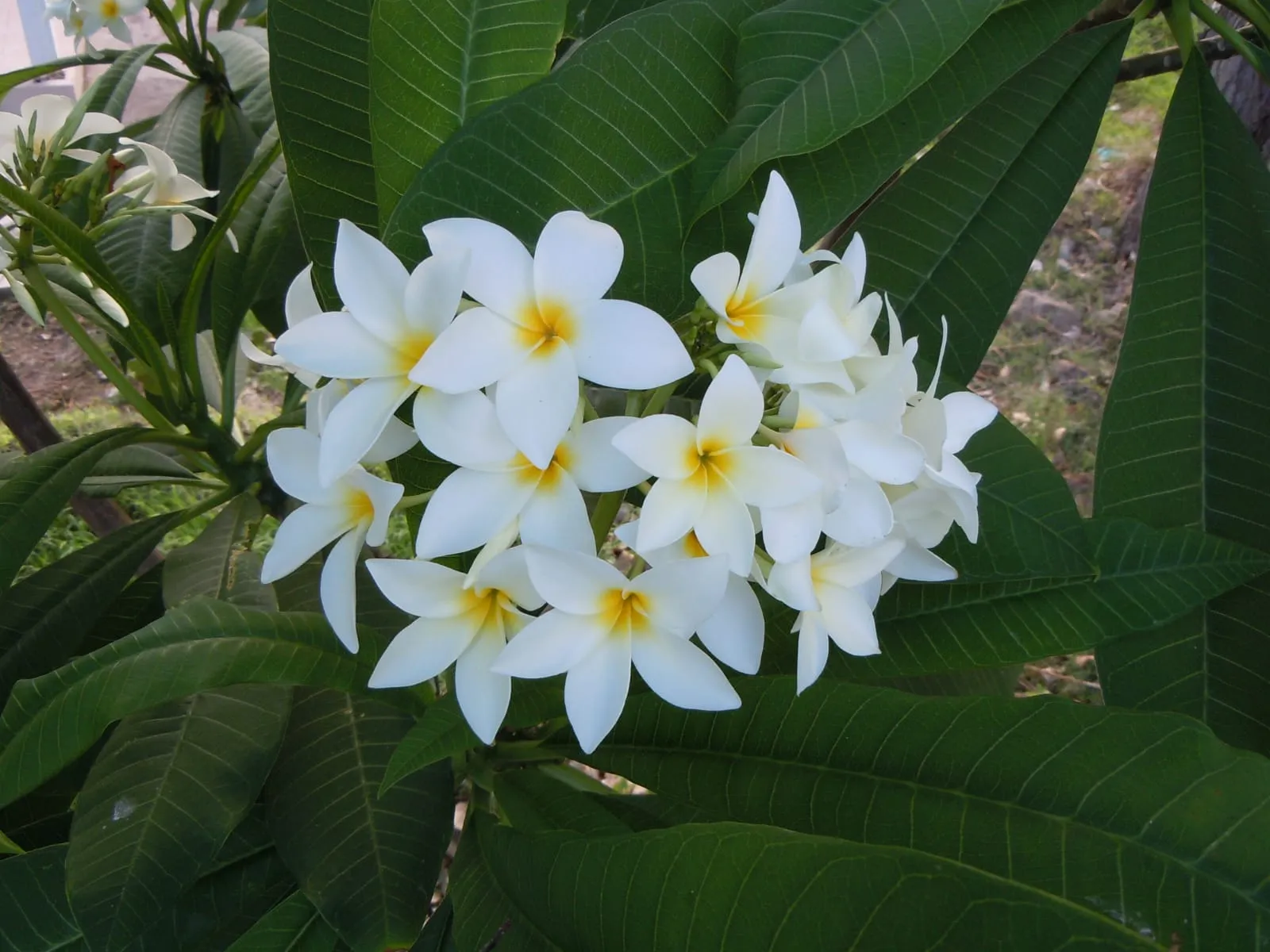
Fig,5.Plumeria Obtusa
TAXONOMICAL CLASSIFICATION OF PLUMERIA OBTUSA
Kingdom: Plantae
Synonym:Plumeria marchiiurb
Family : Apocynacy
Genus: Plumeria
Species : plumeria obtusa
PHYTOCHEMICAL CONSTITUENT OF PLUMERIA OBTUSA
A variety of chemical compounds have been isolated and identified from P. obtusa, including essential oils, iridoids, triterpenoids, flavonoids, phenolic acids, cardiac glycosides, coumarin, cardenolide, fatty acid esters and steroids which were previously reviewed to an extent by Begum et al., 1994 and Sharma et al., 2011 but both doesn't contain all the phytochemical sand the classification of phytochemicals is also not made in Begum et al., 1994. Hence, in this review we have summarized all the phytochemicals with classification in Table 3 and the chemical structures of all are attached as supplementary material with the paper, shown in Notice, environmental and other factors such as geographical source, harvest time and storage time may cause variability of chemical components contained in P. obtusa.16
Kaneroside, oleandrin, -amyrin, neriucoumaric acid, isoneriucoumaric acid, alphitolic acid, oleanonic acid, methyl p-E-coumarate, and scopoletin are pentacyclic triterpenoids found in P.obtusa. Oacetylplumieride. Plumieride Pcoumarate Obtusilinin, Oleandrin, and Obtusol are examples of antacids.Obstusin, -Hydroxy27-[(Z)-p-coumaroyloxy]-urs-12-en-28-oic acid, -urs-12-en-28-oic acid, -urs-12- Obtusinin, Obtusilin (14 3b-hydroxy-11-oxours- 12-en-28- oic acid), Obtusinidin, Obtusidin, Ob 27-[p-(E)-Coumaroyloxy] 20Z ursolic acid-Dammara-,20 (22)-dien (3,20Z)Dammara-12,20 (22)-dien-3-ol, (327-diol, 27-Hydroxyolean-12-en-3Urs-12-en-3-one, (3β)[(Z)-Feruloyloxy] -273-hydroxyurs-12-en-28-oic acid. 14 (3b)-3,28-dihydroxyurs-12-ene (uvaol). 6''-Oacetylplumieride p-E-coumarateiridoids.
The areal portions of P.obtusa include pentacyclic triterpenoids such as kaneroside, oleandrin, -amyrin, neriucoumaric acid, isoneriucoumaric acid, alphitolic acid, oleanonic acid, methyl p-E-coumarate, and scopoletin, all of which have previously been unreported from this source.8 . Two new iridoids and three recognize diridoids were isolated from P.obtusa fresh, entire spring leaves. The new iridoids are 6''-Oacetylplumieride p-E-coumarate42,43 and 6''-Oacetylplumieride p-Z-coumarate44, while the remaining compounds are plumieride, plumieride p-Z-coumarate42,43 and plumieride p-Z-coumarate44.16
PHARMACOLOGICAL ACTIVITY OF PLUMERIA OBTUSA
Gastroprotective activity:
The methanolic extract of Plumeria obtuse from the stem barkwas evaluated ced gastric ulcer and inhibited gastric secretion in pylorus ligated rats 65 . 5.7 Antiarthritic activity The anti-arthritic potential of ethyl for gastroprotective activity by pylorus ligationann indomethacin models. The extract showed activity due to reduction of gastric acid secretion, gastric cytoprotection and proton pump inhibition machanism64. Antiulcerogenic property of hydroalcoholi cextract and fractions obtained from the leaves of Plumeria alba L were performed using the protocols of ulcer induced by non-steroidal anti-inflammatory drugs, ethanol and pylorus ligation. The hydroalcohol extract (200 and 400 mg/kg), ethyl acetate and n-butanol fractions (100 and 200mg/kg, p.o.), respectively showed gastric ulcer healing effect in indomethacin induced ulcer model. Both EAPA and BPA showed gastriccytro protective effect in ethanol-indu17
Other activity:
P.obtusa is used in traditional medicine as healers to diabetes mellitus. Leaves are used as purgative, treat headache, skin defects, abortifacient , healing wrap. Roots are used in treatment of skin and liver diseases, leprosy, tumors, ulcers, etc. The plant is also reported to have anticancer properties. The latex is used as diuretic and purgative. Flowers are used as ornamental purpose, perfumes, etc. In Asia, decoction of leaves of the plant is used for treating wounds and skin diseases. Vietnamese people believed that the plant has healing powers and also used it to treat various skin disease17
CONCLUSION:
Our pharmaceutical industry is focused towards the expansion of new innovative/indigenous plant based drugs through examination of leads from traditional system of medicine. In recent years, traditional uses of natural compounds, especially of plant origin received much attention as they are well tested for their efficacy and generally believed to be safe for human use. It is best classical approach in the search of new molecules for management of various diseases. Plumeria species has wide scope to isolate various phytochemical constituent and evaluate their pharmacological screening to get better therapeutic value. P. rubra is a valuable medicinal source and further study in this topic can validate the traditional and ethnobotanical use of the plant. However, many aspects of the plant have not been studied yet
However, many aspects of plumeria species have not been studied yet. For example, the activity of the active chemical constituents from P. obtusa has been reported only for one pharmacological activity, while the rest have been proven from the crude extracts, i.e., lack of bioguided isolation strategies and unclear mechanism of action is observed. In addition, the bioavailability, pharmacokinetics and structural activity relationship studies of active ingredient to be isolated need to be studied, which will contribute to the development of a phyto preparation containing P. obtusa extracts. Toxicity studies of the plant are poorly investigated and need to be further explored. Studies are also required on long term in vivo toxicity, toxicity in humans and the clinical efficacy of the plant species. Based on the results of the review, it can be concluded that frangipani flowers have the potential as an antibacterial
REFERENCES

Aditi Gejage, Dr. Dhanraj Jadage, Umesh Gaikwad, Prathmesh Kurane, Phytochemical and Pharmacological Activities of Plumeria Species. a Comprhensive Review, Int. J. of Pharm. Sci., 2026, Vol 4, Issue 10, 3484-3494. https://doi.org/10.5281/zenodo.23633216
 10.5281/zenodo.23633216