

We use cookies to ensure our website works properly and to personalise your experience. Cookies policy
Dr. M. S. Gosavi College of Pharmaceutical Education and Research, Nashik.
The growing demand for herbal and eco-friendly cosmetic products has encouraged the utilization of medicinal plants and natural waste materials in personal care formulations. The present study focuses on the formulation and evaluation of a herbal shaving lotion prepared from marigold flower (Calendula officinalis) waste. Floral waste generated from temples and religious activities is often discarded in large quantities, contributing to environmental pollution. In this work, discarded marigold flowers collected from temples in Nashik during the Navratri festival were utilized as a sustainable raw material for the development of an after-shave cosmetic formulation. Marigold flowers are well known for their therapeutic and dermatological properties due to the presence of bioactive constituents such as flavonoids, carotenoids, triterpenoids, saponins, glycosides, and essential oils. These phytoconstituents exhibit antimicrobial, antioxidant, anti-inflammatory, wound-healing, and skin-soothing activities, making marigold a suitable ingredient for post-shaving skin care products. The study aimed to formulate a herbal shaving lotion capable of reducing irritation, preventing microbial infections, moisturizing the skin, and improving post shave comfort. The collected marigold petals were cleaned, shade dried, powdered, and subjected to morphological and physicochemical evaluation. Morphological examination confirmed the characteristic yellowish-orange color, aromatic odor, oval shape, and smooth texture of the petals. Physicochemical parameters such as foreign organic matter, loss on drying, and ash value were determined according to standard procedures. The percentage of foreign organic matter was found to be 6.8%, the loss on drying was 20%, and the ash value was 8% w/w, indicating acceptable purity and quality of the crude drug.The marigold extract was prepared using aqueous extraction by heating dried petals with distilled water. Different formulations of shaving lotion containing varying concentrations of marigold extract were prepared using natural excipients such as Witch Hazel, vegetable glycerin, rose water, lavender oil, and vitamin E. Witch Hazel acted as a natural astringent and antiseptic, glycerin served as a humectant and moisturizer, rose water provided soothing and cooling effects, lavender oil contributed fragrance and antimicrobial action, while vitamin E functioned as an antioxidant and skin-conditioning agent. The formulated shaving lotions were evaluated for alcohol content, fragrance stability, and antimicrobial activity.
Wet or dry shaving causes the removal of skin as well as hair from the face. The total quantity of skin and hair removal can vary depending on the individual. Similarly, the percentage of skin in the shaving debris can range between 25 and 75 percent. Much of the skin removed is the epidermal horny layer which would be shed naturally without shaving. The skin trauma associated with shaving occurs when the outer horny layer is penetrated. Damage is most likely to occur at follicular hairshaft openings. A second source of irritancy in shaving is from shaving preparation. The degreasing effect of soaps and synthetic surfactants can increase skin permeability and allow alkali and other irritants to reach the malphigian cells.
The purpose of after shave preparation is to relieve the slight irritation or afterglow and provide a pleasant feeling of comfort and well being after shaving. This is achieved by giving a slight coolness, anesthesia, mild astringency, or emolliecy to the skin. At the same time, the preparation should be antiseptic and help to keep the skin free from bacterial infection during the short time it takes to recover from the slight degree of injury inflicted during the shaving operation. The extent to which these properties are emphasized depends on the type of formulation.
In its simplest form an aftershave is a clear aqueous Witch Hazel solution containing a perfume. The desired balance of mild astringency and coolness is achieved by controlling the ratio of ethyl alcohol to water.
The commercial success of an aftershave is largely dependent the perfume and the way in which the product is marketed. Many different perfume types for example spicy, sandalwood, leather and tobacco have been successful. The creation of perfume which is free from components likely to cause skin irritation or sensitization is the province of the perfumer. Chemical composition of the perfume determines the maximum concentration at which it can be used in a particular water-alcohol mixture. So here the attempt is made to make marigold water aftershave lotion keeping all the above things into consideration.
Aftershave is a product spread on to skin after shaving. Traditionally it is an alcohol based liquid (splash), but it may be a lotion, gel, or even a paste.
It often contains an antiseptic agent such as denatured alcohol, stearate citrate or witch hazel to prevent infection of cuts and act as an astringent to reduce skin irritation. Menthol is used in some varieties as well to soften and cool irritated skin. Alcohol-based aftershaves usually cause an immediate stinging sensation after use, with the effects sometimes lasting a few minutes but most often just a few seconds. There are also non-alcoholic products.
Aftershave balms are often recommended for winter use because they do not contain alcohol and resemble a lotion, moisturizing the skin. Some aftershaves use fragrance or essential oil to enhance scent. Moisturizers natural and artificial often touted as a skin softener
Marigold Flower :-
Marigold was first discovered and known by the Portuguese in Central America in the sixteenth century. They then introduced these flowers to Europe and India. Historically, the Greeks, Romans, Indians, and Arabs all used this plant as a medicinal plant, dye, flower, and cooking ingredient. The golden yellow color of the marigold reflects the color of the Arya era. Marigold is one of the traditional flowers used in garlands and offerings in Maharashtra from Navratri till Diwali. Due to increased or ample availability of water, marigolds are grown in large production in Nashik district. Nashik is a major centre or hub for the marigold market, due to its high accessibility and easy modes of transportation available in other major cities. Marigolds are mostly used in all kinds of rites, rituals and sacred works.

Fig. Marigold Flower
It is also known as the religious flower of India. Calendula is one of the most important flowering plants and year grown or grown in India. It became popular thanks to its simple culture and wide flexibility, wide attractive colors, shape, size and excellent storage quality. There are usually two cultivated types of marigold. They are: African marigold - Tagetes erecta and French marigold - Tagetes patula.
The leaves, pollen and branches are full of triterpenoid esters (anti-inflammatory), antioxidants and carotenoids that make the flower active. Currently, calendula products are used as bactericidal, antiseptic, antiviral and anti-inflammatory to treat different skin diseases and pains.
In cosmetics, it is majorly used for oil extraction as a skin healing agent, anti-inflammatory agent, wound healing agent, and as a perfume additive. The flavonoids and saponins present in the plant have been shown to not only promote skin healing, but also significantly reduce inflammation. It is an excellent treatment for bruises, cuts, ulcers, cuts, rashes, eczema and more. On the skin, marigold is used to treat inflammation, tenderness, redness, and even thirst.
Calendula flowers are called the "herb of the sun" and the sweet fragrance of these flowers helps improve mood and control stress. The orange and yellow colors of marigolds are considered good for new beginnings and important events in human life.
Calendula (Calendula), a member of the Asteraceae family, commonly known as English Marigold or Pot Marigold is an aromatic plant used in the traditional systems of medicine to treat wounds, ulcers, boils, scars, skin injuries, colds and to purify the blood. It is majorly used for its various biological functions in the treatment of diseases such as analgesic, anti-diabetes, anti-ulcer and anti-inflammatory. It is also used for gastrointestinal diseases, gynecological problems, eye diseases, skin injuries and some cases of burn. Calendula oil is still used as an antiseptic, as well as for wound healing. Pharmacological studies of the plant indicate that extracts of calendula have antiviral and antigenotoxic properties in vitro.
In herbal medicine, calendula is used in suspension or tincture to treat acne, reduce inflammation, control bleeding and irritated tissue. Calendula is used to protect against the plague. In original American Shaker medicine, marigold was a cure for gangrene. In addition to his first aid use, marigold acts as a magical digestive remedy. Taking a tincture of the flowers taken internally helps treat yeast infections and diarrhea. Calendula officinalis infusion can also be used in treatment of bee stings, eye infections, ulcers and abscesses, varicose veins, eczema and as a mouthwash for ulcers or to relieve toothache. It improves blood circulation and lymph nodes and helps remove toxins from the body.
This plant is rich in many active pharmaceutical components such as carotenoids, flavonoids, glycosides, steroids and sterols, quinines, volatile oils and amino acids. The extract of this plant and the pure compound isolated from it has been shown to have many pharmacological activities such as anticytotoxic, hepatoprotective and spasmolytic etc.
Studies with potent toxins in mice and rats indicate that the release is not toxic. Animal tests show minimal skin irritation and no photosensitivity or toxicity. Minor ocular irritation is seen in one form and no irritation in others. Six saponins are separated from C flowers. Calendula officinalis i.e. marigold had not changed in the Ames test, and the tea taken from C. officinalis was not genotoxic in Drosophila melanogaster. This review examines the organoleptic, in-vitro and in-vivo pharmacological activities as well as the description, cultivation and active chemical constituents of Calendula officinalis in order to provide information about this plant as well as highlight its multi-active properties as a medicinal agent.
Marigold scientifically called as calendula officinalis belonging to family Asteraceace is a rich source of saponins, triterpendial esters, and flavonoids, etc. Calendula officinalis has many therapeutic effects including antibacterial, antifungal, anthelmintic, antiviral, cytotoxic, hepatoprotective, cardioprotective, gastroprotective, wound healing, and many other effect.
Floral waste management has yielded good results in Ajmer’s Dargah Sharif, where the flowers generated regularly are recycled and with the technical assistance from Central Institute of Medicinal and Aromatic Plant, Lucknow, A rose water distillation plant has been established in the outskirts of the city another such example is of Shirdi where rose flowers offered to Saibaba are used to convert rose perfumes, rose water and incense sticks.
New design project "Agarbatii Production from Waste Flower": At the Shirdi Shri Saibaba Temple daily a large number of devotees come to worship Shri Saibaba, sending flowers to Shri Saibaba which results in daily production of 2 to 2.5 tons garbage cans. Prior to setting up the Agarbatti processing unit two to 2.5 tons of flower waste was used for disposal at the disposal site. After considering this fact, the Shirdi Municipal Council and Shri Saibaba Sansthan established a polluted flower processing unit to convert it into Agarbatti.
OBJECTIVE:-
MATERIAL AND METHOD
COMPOUNDS USED AS A NATURAL INDICATOR:-
Marigold Calendula Officinalis L-
Common marigold (Asteraceae) The plant can be cultivated in warm temperatures regions of the world. Calendula flower consists of whole or cut, dried and fully opened flowers isolated from the receptacle of the cultivated two flowered variety Calendula Officinalis L. It contains at least 0.4% flavonoids, calculated as hyperoside by the reference to dried and crushed drug.
Constituents
The characteristic constituents are triterpene saponins (mainly oleanolic acid gylcosides e.g. calendulaglycoside A), triterpenes in free state, (e.g. faradiol, α-amirin, lupeol). Other constituents include flavonoids, carotenoids (e.g. β-carotene, licopene, zeaxanthin, violaxanthin), polysaccharides, sterols, susquiterpenoids and essential oils.
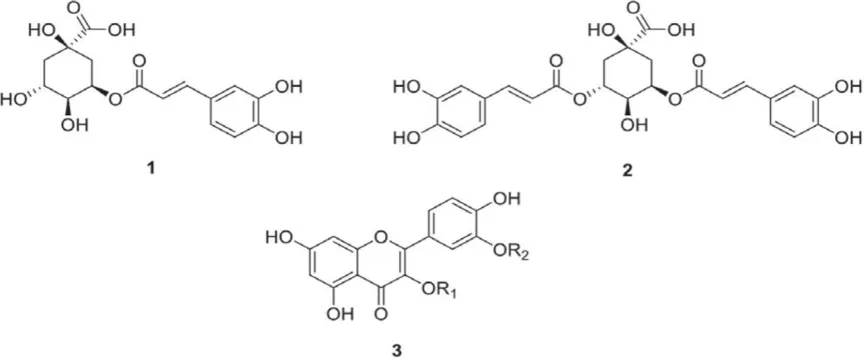
Figure :-Structure of 1) faradiol 2) calendulagylcoside A 3) α-amirin
Uses:-
The therapeutic indications include the symptomatic treatment of minor inflammations of the skin and mucosa. The drug and its preparation aid the healing of minor wounds, leg ulcer and burns.
Dosage:-
Infusion for topical application: 1-2 gm of dried flower per 150ml of water. Fluid extracted 1: 1 in 40% ethanol or tincture 1: 5 in 90% ethanol. To treat wounds, tincture is used consistently; by pressing, the tincture is usually diluted at least 1: 3 with freshly boiled water. Semi-solid preparations containing 2-10% fluid extract 1:1.
Nutrient value-
Table No. 3 Nutrient Value of Marigold Flower
|
Sr. No. |
Nutrients (%) |
Calendula |
|
1. |
Moisture |
89.34±0.1 |
|
2. |
Dry matter |
10.66±0.1 |
|
3. |
Ash |
0.93±0.005 |
|
4. |
Ethereal extract |
1.32±0.015 |
|
5. |
Protein |
1.20±0.014 |
|
6. |
Raw fiber |
1.59±0.105 |
|
7. |
Carbohydrates |
5.62 |
|
8. |
Caloric value |
45.52 |
Excipients Analysis for After Shave Lotion-
Witch Hazel
Witch Hazel is a natural botanical extract derived from the leaves and bark of the Hamamelis virginiana shrub. Unlike synthetic ethyl alcohol, it is a biological "astringent" containing high concentrations of tannins, making it a preferred ingredient in herbal cosmeceuticals for sensitive skin.
Chemical Composition
Witch Hazel is an aqueous or hydro-glycolic extract. Its formula is complex because it is a mixture of several bioactive compounds, primarily Hamameli-tannins, Gallic acid, and Flavonoids. The primary active group responsible for its "stinging-free" antiseptic action is the Hydrolysable Tannins.
Properties and Uses
Witch Hazel is produced through the steam distillation of the plant's twigs and bark. It is widely used in skincare for its anti-inflammatory and vasoconstrictive properties.
|
Property |
Description / Value |
|
Physical State |
Liquid |
|
Color |
Clear to slightly yellowish liquid |
|
Odor |
Mild, characteristic woody or herbal aroma |
|
Boiling Point |
Approximately 100°C (varies slightly based on distillation) |
|
Density |
0.98 – 1.02 g/cm³ (closer to water than ethanol) |
|
Melting Point |
Approximately 0°C |
|
Refractive Index |
1.33 – 1.35 (at 20°C) |
|
pH Range |
3.0 – 5.0 (Slightly acidic, which helps restore skin's acid mantle) |
|
Solubility |
Fully miscible in water and glycerin |
|
Viscosity |
Slightly higher than water due to tannin content |
Uses-
It is used as a solvent; it acts as an astringent and as a preservative.
Antiseptic-
Witch Hazel (Hamamelis virginiana) serves as a multifaceted biological agent. Unlike alcohol, which kills bacteria by protein denaturation (and often damages healthy skin cells), Witch Hazel works through a combination of Astringency and Phytochemical inhibition.
Medicinal Solvent
In traditional formulations, Witch Hazel is used as a solvent because it dissolves phytochemicals easily and evaporates quickly. However, Witch Hazel (Distillate/Extract) serves as a "Superior Solvent" for herbal lotions because it is a Hydro-glycolic or Aqueous medium that carries its own therapeutic load.
Witch Hazel is an excellent solvent for the polar and semi-polar compounds found in Marigold (Tagetes erecta).
Solvent
In pharmaceutical formulations, a solvent is the medium that holds and delivers active ingredients. While Ethyl Alcohol is a volatile organic solvent, Witch Hazel (Hamamelis Distillate) is a botanical solvent that enhances the efficacy of the Marigold (Tagetes erecta) extract.
Vegetable Glycerin (Glycerol)
Vegetable Glycerin is a clear, odorless, and viscous liquid derived from plant oils (such as palm, soy, or coconut oil). In your Marigold Shaving Lotion, it serves as a superior natural Humectant compared to synthetic Propylene Glycol.
Nonproprietary Names
Synonyms
1,2,3-Propanetriol; E422; Glycerolum; Glycon; Osmoglyn; Trihydroxypropane.
Chemical Name and CAS Registry Number
Propane-1,2,3-triol [56-81-5]
Empirical Formula and Molecular Weight
C3H8O3- 92.09
Structural Formula
H H H
| | |
H---C---C---C---H
| | |
OH OH OH
Functional Category:-
Antimicrobial preservative; Cosolvent; Humectant; Plasticizer; Solvent; Sweetening agent; Tonicity agent.
Description:-
Propylene glycol is clear, colorless, viscous, odorless, slightly fragrant liquid similar to glycerin.
Typical Properties:-
|
Property |
Value / Description |
|
Appearance |
Clear, colorless, viscous liquid. |
|
Autoignition Temp |
393°C |
|
Boiling Point |
290°C (with decomposition) |
|
Density |
1.261 g/cm³ at 20°C |
|
Flash Point |
176°C (open cup) |
|
Melting Point |
17.8°C (as a pure solid) |
|
Refractive Index |
n20, D = 1.474 |
|
Solubility |
Miscible with water, ethanol (95%), and methanol. Insoluble in oils and chloroform. |
|
Surface Tension |
63.4 mN/m at 25°C |
|
Viscosity (dynamic) |
1412 mPa s (at 20°C) — much higher than Propylene Glycol. |
Applications in Pharmaceutical Formulation or Technology
Vegetable Glycerin is widely used in topical formulations like shaving lotions primarily as a Humectant (moisturizer).
Stability and Storage Conditions
Glycerin is hygroscopic (absorbs water from the air). It is chemically stable at moderate temperatures. When mixed with water, ethanol, or Witch Hazel, it remains stable for long periods. It should be stored in an airtight container in a cool, dry place. At very high temperatures, it can produce acrolein, but under normal cosmetic storage, it is extremely safe.
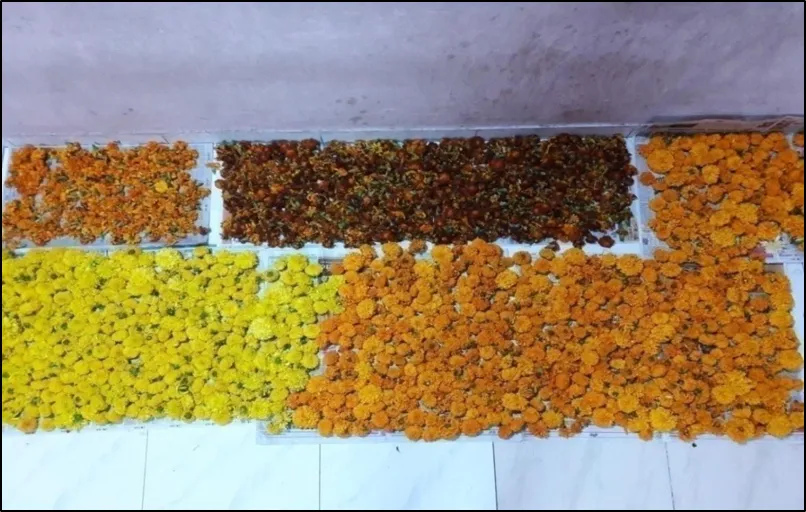
Fig:-Collection of marigold flower
Collection of Floral Waste:-
The floral waste incorporated as an active in cosmetic was collected from Nasik city temples. Nasik is a holy land. City is rich in olden temples of various deities and culture and also rich in flora and fauna. The floral waste obtained was of marigold and rose flowers during navratri festival. Floral waste available during this period was in tones and in rest of the days it was in kgs. These flowers obtained were segregated from other waste according to its colour, and then the petals were peeled and left to dry at room temperature for 3 to 4 days. After complete drying petals were pulverised into a coarse powder for further cosmetic use while some petals were macerated for extraction purpose according to need.
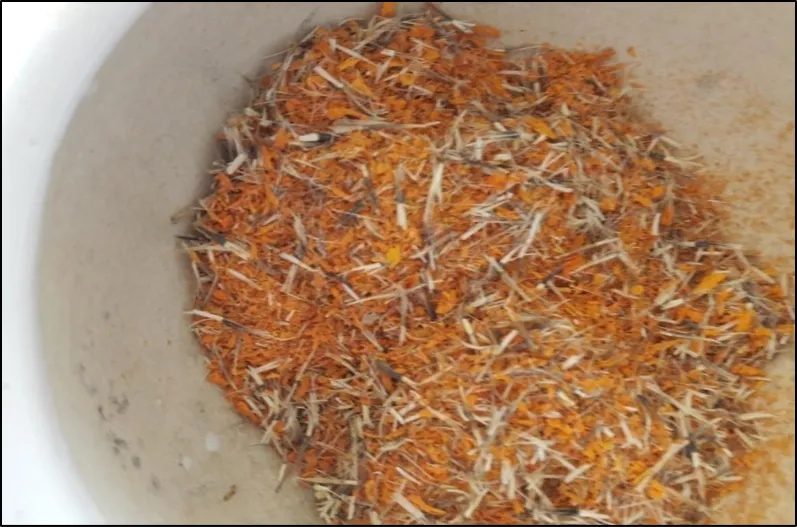
Fig:-Dried Marigold Petals
Morphological evaluation of marigold flower waste:
Macroscopic study was analyzed by means of sense organs. Which include the assessment of crude drug color, odor, size, shape and touch of the petals of marigold flowers.
Physicochemical characterization of marigold flower waste:
In physical parameter foreign organic matter, loss on drying, total ash, water soluble ash, acid insoluble ash, and different extractive values are produced for dried marigold petals were carried out as per standard techniques.
Determination of foreign organic matter of marigold flower waste:
Foreign matter means the material which isn't gathered from the original plant source, part of organ other than prescribed, Insects, molds or the creature adulterant. For confirmation of foreign natural matter 5 gm of air dried coarsely powdered material was disperse in a thin layer. The sample material was reviewed with the unaided eye. The foreign matter was isolated. physically as totally as could really be expected. Sample was weighed and percent of foreign organic matter was determined from the weight drug sample taken.
Determination of loss on drying of marigold flower waste:
Loss on drying is the measure of both water and volatile mater which vanishes during drying. For LOD 2gm of test the sample is accurately weighed in dried slender porcelain dish. Then, at that point stacked porcelain dish was kept in oven at 100o C. The sample was dried to consistent weight. Once drying was complete dish was kept at room temperature in desiccator. Loss on drying was determined in terms of percent w/w.
Determination of ash value of marigold flower waste:
Ash is the leftover after complete ignition. Ash value is utilized to decide quality and purity of sample. It contains various inorganic radicals such as phosphates carbonates and silicates of sodium, potassium, magnesium, calcium etc and occasionally inorganic factors like calcium oxalate, silica and carbonate content of the sample influences total ash value. Such factors are then taken out by treating with acid and afterward acid insoluble ash value is calculated.
Preparation of after shave lotion-
Preparation of marigold extract-
The floral waste of marigold petals dried were taken 20gms and dissolved in 140ml distilled water. Heat it gradually till degree 35 C for 15 minutes. Now cool the extract and filter it. The extract is ready for further cosmetic incorporation.
Table No. 7 :- Ingredients
|
Sr. No. |
Ingredients |
Formulation E (%) |
Formulation F (%) |
Formulation G (%) |
Formulation H (%) |
|
1 |
Witch Hazel |
55 |
55 |
55 |
55 |
|
2 |
Vegetable Glycerin |
03 |
03 |
03 |
03 |
|
3 |
Marigold extract |
10 |
15 |
20 |
25 |
|
4 |
Rose Water |
Upto 100 |
Upto 100 |
Upto 100 |
Upto 100 |
|
5 |
Lavender Oil |
q.s. |
q.s. |
q.s. |
q.s. |
|
6 |
Vitamin E |
q.s. |
q.s. |
q.s. |
q.s. |
Formulation of After Shave Lotion
Method of preparation-
All the above ingredients were accurately measured and taken in a beaker stirred uniformly and the after shave lotion is ready to use.
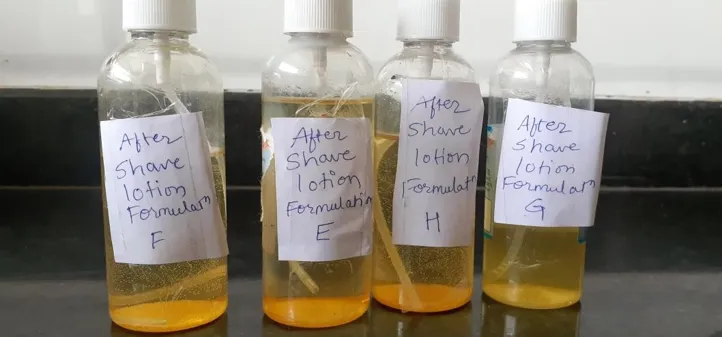
Photograph of formulation of After Shave Lotion
Application-
To be used after shave, quantity used can vary from person to person. All these formulations are subjected for further analysis.
Evaluation of after shave lotion-
Determination of alcohol content-
Reagents-
Sodium chloride
Hexane
Sodium hydroxide
1 N Phenolphthalein (solid)
Procedure-
Take a 25 ml sample accurately measured at 25 degrees C in the separator. Add 100 mL of water and mix to saturate the mixture with sodium chloride, then add 100 mL of hexane and shake the mixture thoroughly for two to three minutes. Run the lower layer into distillation flask, wash the hexane in the separator by washing vigorously with about 25 ml of sodium let the chloride stand and start the washing liquid in the first physiological solution. The mixed solution is made alkaline only with sodium hydroxide with solid phenolphthalein as indicator. Add some pumice stone and 100 ml of water. Distill and collect at least 90 ml of the distillate into 100 ml volumetric flask. Adjust the temperature at 25 degree C and dilute with water to 100ml at the same temperature. Determine the specific gravity at 25 degree C. Find the percentage v/v of Witch Hazel corresponding to the specific gravity by reference to Witch Hazel table.
Calculation-
RD= ρ substance ρ reference
RD = relative density
ρ substance = density of substance being measured ρ reference = density of reference
Stability of smell-
Put some pieces of bleached gauze of dimensions 5 × 10 cm, which has been pre- washed in hot water without soap and dried, into a porcelain cup and pour 1.5 ml of after shave lotion in this cup. After wetting the gauze, remove it with tongs and dry it in a warm place without pressing and having temperature 27 ± 20 C and humidity 65 ± 5%. If after 8 hours, the smell of after shaves lotion can be clearly picked up, the product shall be taken to have passed the test.
Microbial Assay
The antibacterial activities of different formulations were determined by modified agar well diffusion method. In this method, nutrient agar plates are inoculated with 0.2 ml of a 24-hour broth culture of Escherichia coli and Pseudomonas aureginosa acausative organism for acne vulgaris. The agar plates were allowed to settle. A sterile eight mm drill bit was used to cut wells evenly from each of the plates. 0.5 ml of preparations, herbal extracts were randomly inserted into the wells. These plates were incubated at 37°C for 24 hours. Antibacterial activities are evaluated by measuring inhibition zones (in mm).
Collection of flowers-
The flowers were collected from Nashik city temples and were segregated according to colour and size. Unwanted material was removed and then flowers were kept for room drying and treated according as can be used in cosmetic products.
Morphological evaluation- Crushed marigold petals
The evaluation was done with the naked eyes and the result is as follows-
Morphological Evaluation- Crushed marigold petals
|
Sr. No. |
Characteristics |
Observation |
|
1. |
Colour |
Yellowish and red |
|
2. |
Odour |
characteristic odor |
|
3. |
Shape |
Oval |
|
4. |
Size |
3cm height ×1.5 cm width |
|
5. |
Texture |
smooth surface texture |
Determination of loss on drying-
Calculation-
Weight of sample taken – 2gms Weight after drying -1.6 gms
% loss on drying (w/w) = 0.4 ×100
2
= 20%
The percent loss on drying was found to be 20%.
Determination of ash value-
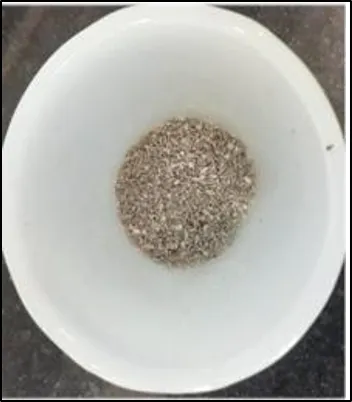
Ash Value
The ash value was found to be 8% w/w
Determination of alcohol content
RD (formulation ) = 0.61
0.99
= 0.616
% of Witch Hazel (formulation H) =
Volume of solute (ml) × 100
Volume of solution (ml)
= 0.68 ×100
= 68%
Determination of alcohol content-For after shave lotion
|
Sr. No. |
Formulations |
% Alcohol content |
|
1. |
Formulation E |
51 |
|
2. |
Formulation F |
62 |
|
3. |
Formulation G |
42 |
|
4. |
Formulation H |
68 |
All the formulations of After Shave Lotion i. e. Formulations E, F, G and H showed required range of Alcohol Content. Hence all pass the test.
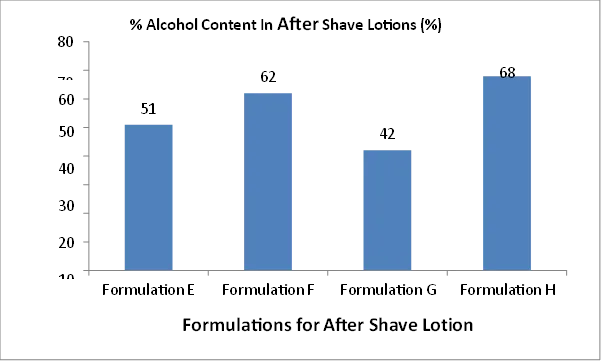
Fig:-Alcohol Content in After Shave Lotion (%)
Stability of smell-
Result-
Stability of smell-For after shave lotion
|
Sr. No. |
Formulation |
Stability Test |
|
1. |
Formulation |
Fail |
|
2. |
Formulation |
Fail |
|
3. |
Formulation |
Pass |
|
4. |
Formulation |
Pass |
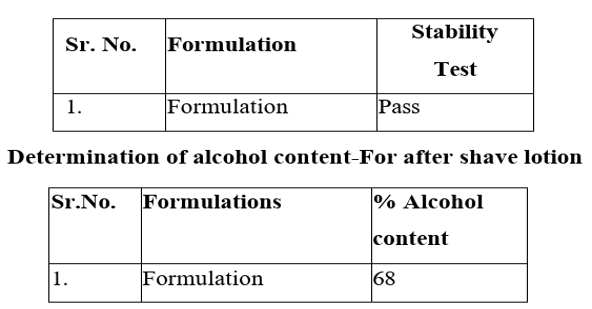
The formulations E and F do not showed clear fragrance while Formulations G and H perfume was picked up after 8 hrs. Hence Formulations E and F fail the test and Formulations G and H pass the test.
Microbial Assay
Microbial Assay For After shave lotion
|
Sr. No. |
Bacteria |
Zone of inhibition of Formulation(mm) |
|||
|
E |
F |
G |
H |
||
|
1. |
Escherichia coli |
41 |
42 |
39 |
37 |
|
2. |
Pseudomonas aureginosa |
41 |
39 |
38 |
35 |
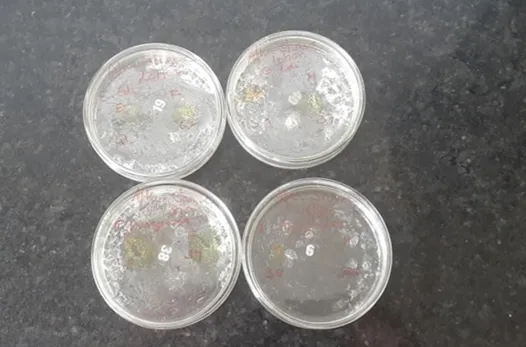
Microbial Assay for After Shave Lotion
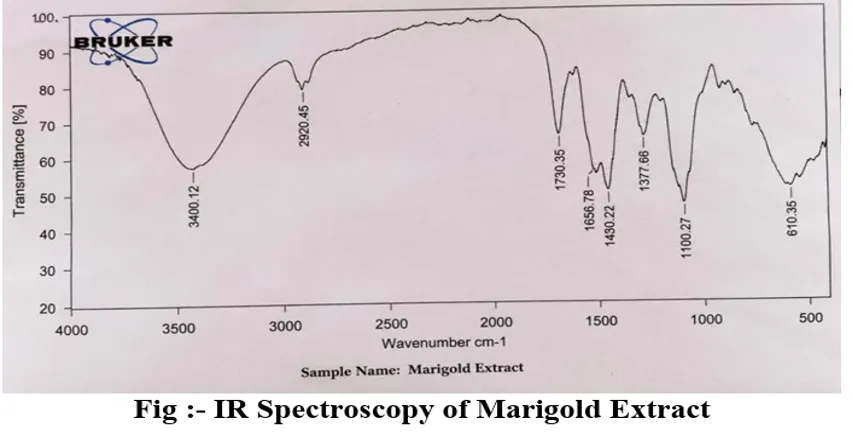
IR Spectroscopy of Marigold Extract Principle:
Infrared (IR) spectroscopy is an analytical technique used to identify functional groups present in Marigold extract by measuring absorption of infrared radiation at different wavelengths. Different chemical bonds absorb IR radiation at characteristic frequencies, producing a unique spectrum.
Procedure of IR Spectroscopy
Observed IR Peaks of Marigold Extract
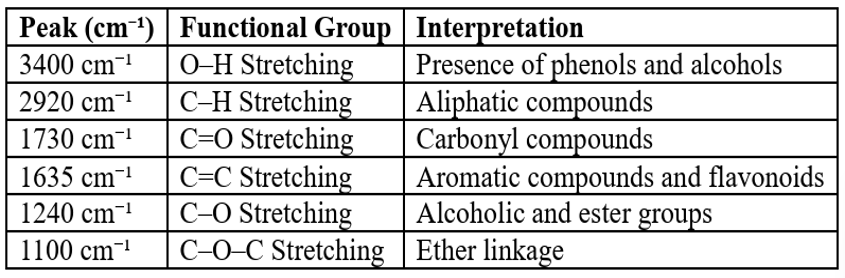
Result
The IR spectrum of Marigold extract showed characteristic peaks corresponding to hydroxyl, carbonyl, aromatic, and ether functional groups. These peaks confirmed the presence of flavonoids, phenolic compounds, and other phytoconstituents responsible for anti-inflammatory, antioxidant, and skin soothing activity of the extract. No abnormal peaks were observed, indicating purity and stability of the extract.
Result and discussion:
Collection of flowersThe flowers were collected from Nashik city temples and were segregated according to colour and size. Unwanted material was removed and then flowers were kept for room drying and treated according as can be used in cosmetic products.
RESULT:-
The shaving lotion formulated using marigold flower extract exhibited excellent physical, chemical, and microbial stability. It was well tolerated by the skin, provided a pleasant user experience, and demonstrated good foaming and moisturizing properties, making it a promising herbal alternative to conventional shaving products.
Morphological evaluation:-
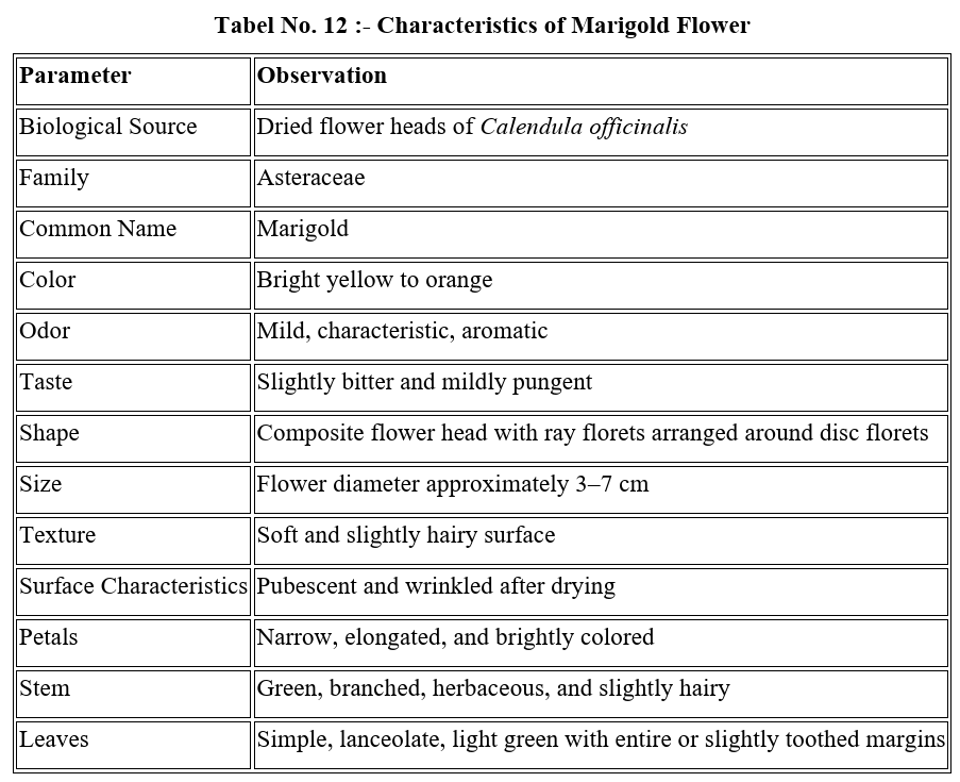
Morphological Evaluation of Marigold Flower
The morphological evaluation of Marigold Flower was carried out to confirm the identity, purity, and quality of the crude drug used in the formulation of the herbal shaving lotion. Morphological studies mainly involve the observation of external characteristics of the plant material using visual and sensory examination.
Morphological Characteristics of Marigold Flower
Description
The fresh flowers of Marigold Flower were collected and examined for their macroscopic features. The flowers appeared bright orange-yellow in color with a characteristic aromatic odor and slightly bitter taste. The petals were soft, thin, and elongated, while the flower heads were compact and circular in arrangement. The plant possessed green hairy stems and simple leaves with slightly serrated margins. The dried flowers used for extraction showed slight shrinkage and wrinkling due to moisture loss during drying. No foreign matter, fungal growth, discoloration, or insect contamination was observed, indicating good quality plant material suitable for herbal formulation development. The morphological evaluation confirmed the authenticity and acceptable quality of the marigold flowers employed in the preparation of the shaving lotion.
loss on drying- The percent loss on drying was found to be 20%.
Ash Value:-The ash value was found to be 8% w/w
Determination of foreign organic matter- The percent of foreign organic matter was found to be 6.8%.
Stability of smell-For after shave lotion
CONCLUSION
In the present study the flower marigold was selected as floral waste and it is then incorporated in different cosmetic products. These cosmetic products were then evaluated according to Bureau of Indian Standards and the best formulation was selected. The marigold floral waste was collected from different temples of Nashik during Navratri period. The flowers were cleaned and segregated from the unwanted material and separated according to its colour shade. They were then peeled or put into petals these petals are left to dry in the room temperature. These dried and crushed petals went for morphological and physiochemical evaluation. Now the petals are ready for use in cosmetics. The cosmetic product selected to formulate were After Shave Lotion and the value added product Incense Stick. These were selected according to marigold uses in cosmetics. Here, the crushed marigold petals extract was prepared using water and it was then incorporated in after shave lotion. The four formulations viz. Formulation E, Formulation F, Formulation G and Formulation H having different extract percentage were formulated. These formulations are subject to Chemical analysis according to Indian Standards. The test performed were determination of Alcohol Content and Stability of smell. All four formulations pass the test for alcohol content as the results are in required range. The Formulations E and F fails the stability test as do not pick the lingering smell after 8 hours. The Formulation H is chosen as best as it showed high alcohol content and satisfactory astringency.
REFERENCES

Smita Andhale, Prashant Pingale, Preparation and Evaluation of Natural Shaving Lotion using Marigold Flower Extract, Int. J. of Pharm. Sci., 2026, Vol 4, Issue 5, 8366-8384. https://doi.org/10.5281/zenodo.20480361
 10.5281/zenodo.20480361