

We use cookies to ensure our website works properly and to personalise your experience. Cookies policy
1Pharmaceutical Quality Assurance, Institute of Pharmacy and Research, Badnera-Amravati
2 Pharmaceutical Chemistry, Institute of Pharmacy and Research, Badnera-Amravati
3Pharmaceutical Chemistry, Institute of Pharmacy and Research, Badnera- Amravati
Oral films represent a novel and patient-friendly drug delivery system designed to overcome limitations associated with conventional oral dosage forms, particularly in paediatric, geriatric, and dysphagic patients. These thin polymeric films rapidly hydrate upon contact with saliva, leading to quick disintegration and drug release without the need for water, thereby enhancing patient compliance and providing a faster onset of action. ODFs are formulated using hydrophilic film-forming polymers combined with plasticizers, sweetening agents, saliva-stimulating agents, surfactants, flavors, and colouring agents to achieve optimal mechanical strength, palatability, and performance. Ideal APIs for ODFs are potent, low-dose drugs with stability in aqueous environments. Various manufacturing techniques, such as solvent casting, semi-solid casting, hot-melt extrusion, and solid dispersion extrusion, are employed to produce uniform films. Evaluation of ODFs involves assessment of physical properties, disintegration and dissolution behaviour, mechanical strength, surface pH, drug content uniformity, and weight variation. Due to their ease of administration, rapid disintegration, and improved patient acceptability, ODFs have significant potential in modern pharmaceutical therapy.
Oral route of medicine administration is a most favored route due to its ease of administration, non-invasiveness, rigidity, patient compliance and adequacy. Regarding oral route of medicine administration, numerous backups have continuously been presented by using recent new technologies for pediatrics, elders, squeamish andnon-compliance cases. Bioadhesive mucosal lozenge forms including tenacious tablets, gels and patches are issues of technological development. Among colorful lozenge forms, the use of polymeric flicks for delivering drug into buccal depression has developed great eventuality in recent area. Orally disintegrating flicks( ODFs), when placed on lingo, incontinently hydrates by soaking slaver following decomposition and/ or dissolution releasing active pharmaceutical agent from the lozenge form. ODFs are kind of phrasings which are generally prepared using hydrophilic polymers enabling rapid-fire dissolution upon contact with slaver. Oral disintegrating tablets (ODTs) and oral disintegrating flicks( ODFs) are the typical exemplifications of orally disintegrating medicine delivery systems. These systems were developed in late 1970 to serve as an volition to conventional lozenge forms, for case, fast disintegrating tablets and capsules for elders and pediatric cases having difficulty in swallowing conventional lozenge forms. A typical ODF is generally equal to the size of a postage stamp [1] In request place, the preface of ODT was explosively associated with comforting of cases about the applicable administration by giving instruction like ‘‘ do not chew/ do not swallow’’ still, in malignancy of these instructions, incidents regarding biting and swallowing were frequently reported.[2]
1.1 Special features of Dissolving film [3]
Advantages of oral film [4]
Ideal properties of film forming polymers [5]
2. Formulation of dissolving film
Active pharmaceutical agents: The active substance is may be from any class of pharmaceutically active substances that can be administered orally or through the buccal mucosa respectively. According to literature, API can be added from 5%-25% w/w of total weight of polymer. For the effective formulation, dose of drug should be in mgs (less than 20 mg/day). The drugs which are potent, show high first pass metabolism and patient non- compliant are best candidates for fast dissolving buccal films. Researchers have shown interest in development of fast dissolving films for drugs like: Pediatrics (antitussive, expectorants, antiasthamatics), Geriatrics (antiepileptic, expectorants), Gastrointestinal diseases, Nausea (e.g. due to cytostatic therapy), Pain (e.g. migraine), CNS (e.g. antiparkinsonism therapy).
Among which favored active agents include chlorpheniramine maleate, brompheniramine maleate, dexchloropheniramine, triprolidine hydrochloride, acrivastine, azatadine maleate, loratidine, phenylephrine hydrochloride, dextromethorphan hydrochloride, ketoprofen, sumatriptan succinate, zolmitriptan, loperamide, famotidine, nicotine, caffeine, diphenhydramine hydrochloride, and pseudophedrine hydrochloride, and their amounts per strip can be well known in the art.
Polymers A variety of polymers are available for medication of fast dissolving buccal flicks. The polymers can be used alone or in combination to gain the asked film parcels. The film attained should be tough enough so that there will not be any damage while handling or during transportation. The robustness of the strip depends on the type of polymer and the quantum in the expression. The colourful polymers to make fast dissolving flicks include cellulose or cellulosederivatives, pullulan, Gelatin, hydroxypropyl methyl cellulose,hydroxyethylcellolose,hydroxypropyl cellulose, polyvinylpyrrolidone, carboxymethylcellulose, polyvinylalchohal, sodium alginate, xanthine goo, tragacanth goo, guar goo, acacia goo, methylmethacrylate copolymer and hypromellose are most generally used for medication of fast dissolving flicks. Modified beans are also used for medication. Due to low cost of this excipient it's used in combination of pullulan to drop the overall cost of the product. Pullulan is a natural polymer attained from nonanimal origin and does n't bear chemical revision. About 50 to 80 percent w of pullulan can be replaced by bounce in the product of fast dissolving flicks without loss of needed parcels of Pullulan. Combination of microcrystalline cellulose and maltodextrin has also been used to formulate fast dissolving flicks. Kulkarni et al., 2010 explored different polymers for use in expression of oral fast dissolving strips. Different polymers viz., HPMC E15, HPMC K4M, HPMC E5, PVP, PVA, gelatin, eudragit RL100 and pullalan were used to formulate presto dissolving buccal flicks; by solvent casting system. Results verified that pullalan is stylish polymer for oral fast dissolving strips [6]
Plasticizers: Plasticizer 7- 8 is a vital component of the fast dissolving buccal flicks expression. The mechanical parcels similar as tensile strength and extension to the flicks can be bettered by the addition of the plasticizer. Variations in their attention affect these parcels. The selection of the plasticizer will depend upon its comity with the polymer and also the type of solvent employed in its casting. Plasticizers include glycerine, sorbitol, propylene glycol, polyethylene glycol, triacetin, di- butylpthalate, triethyl citrate, acetyl triethyl citrate and other citrate esters. generally the plasticizers are used in the attention of 0- 20 w/ w of the dry polymer weight [7]. unhappy use of the plasticizer may lead to film cracking, unyoking, shelling of the strip and it may also affect the immersion rate of the medicine.
Surfactants: Surfactants are used as solubilizing or wetting or dispersing agents so that the film gets dissolved within seconds and release active agent incontinently. Surfactants also ameliorate the solubility of inadequately answerable medicines in fast dissolving buccal flicks. Some of the generally used are polaxamer 407, sodium lauryl sulfate, benzalkonium chloride, benzthonium chloride, tweens and spans etc [8]
Sweetening agents: Sweeteners have come the important part of pharmaceutical products intended to be disintegrated or dissolved in the oral depression. The classical source of sweetener is sucrose, dextrose, fructose, glucose, liquid glucose. The agreeableness of fructose is perceived fleetly in the mouth as compared to sucrose and dextrose. Fructose is sweeter than sorbitol and mannitol and therefore used extensively as a sweetener. Polyhydric alcohols similar as sorbitol, mannitol can be used in combination as they also give good mouth ‐ sense and cooling sensation. Polyhydric alcohols are less carcinogenic and don't have bitter after taste which is a vital aspect in formulating oral medications. The artificial sweeteners have gained generation of the artificial sweeteners followed by acesulfame ‐ K, sucralose, alitame and neotame which fall under the alternate generation artificial sweeteners. Acesulfame ‐ K and sucralose have further than 200 and 600 time agreeableness. Neotame and alitame have further than 2000 and 8000 time enhancing power as compared to sucrose. Rebiana which is a herbal sweetener, deduced from factory Stevia rebaudiana( South American factory) has further than 200 ‐ 300 time agreeableness [9]
Saliva Stimulating Agents: The purpose of using slaver stimulating agents is to increase the rate of product of slaver that would prop in the briskly decomposition of the rapid-fire dissolving strip phrasings. Generally acids which are used in the medication of food can be employed as salivary instigations. Citric acid, malic acid, lactic acid, ascorbic acid and tartaric acid 10 are the many exemplifications of salivary instigations, citric acid being the most favored amongst them.
Flavoring agents: seasoning agents can be named from the synthetic flavor canvases, oleo resins, excerpt deduced from colorful corridor of the shops like leaves, fruits and flowers. Flavors can be used alone or in the combination. Any flavor can be added similar as essential canvases or water answerable excerpts of menthol, violent mints similar as peppermint, sweetmint, spearmint, wintergreen, cinnamon, clove, sour fruit flavor similar as bomb, orange or sweet confectionery flavors 11 similar as vanillin, chocolate, or fruit substance like apple, jeer, cherry, pineapple. The quantum of flavor demanded to mask the taste depends on the flavor type and its strength.
Coloring agents: A full range of colours is available including FD & C colors, EU colours, natural colouring more fashionability in pharmaceutical medications. Saccharin, cyclamate and aspartame are the firstColoring agents A full range of colours is available including FD & C colors, EU colours, natural colouring agents, and natral juice concentrates, colors similar as titanium oxide, silicon dioxide and zinc dioxide and custom pantone- matched colours. These all coloring agents should n't exceed attention situations of 1 w/ w. these agents are incorporated when some of the expression constituents or medicines are present in undoable or suspense form.
2.1 The ideal chracteristics of drug to be selected
Methods of preparation of Films
There are some methods in which oral dissolving films can be prepared, each of the methods are described below

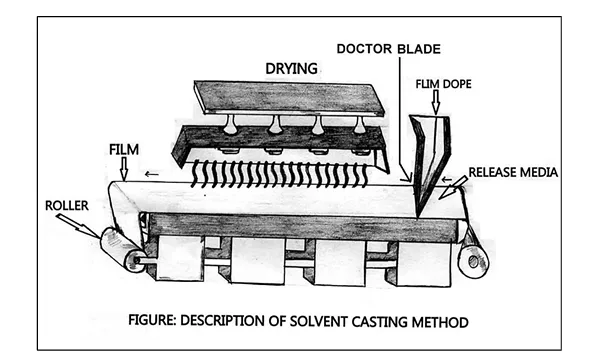
Figure 1: Solvent casting method
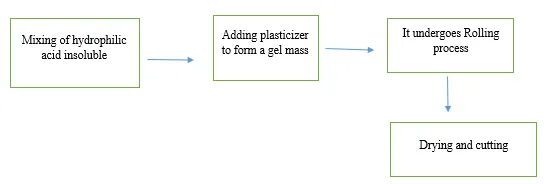
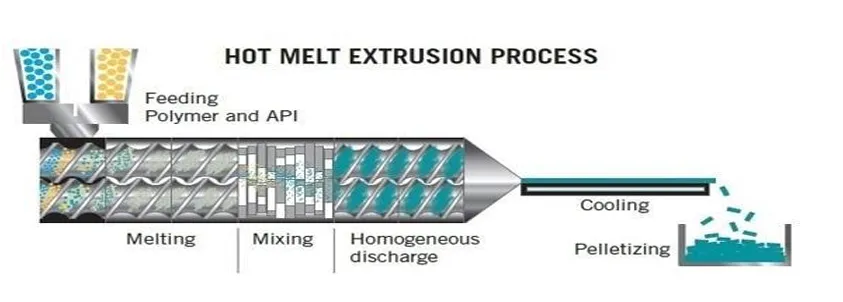
Fig No. 2 Hot melt extrusion

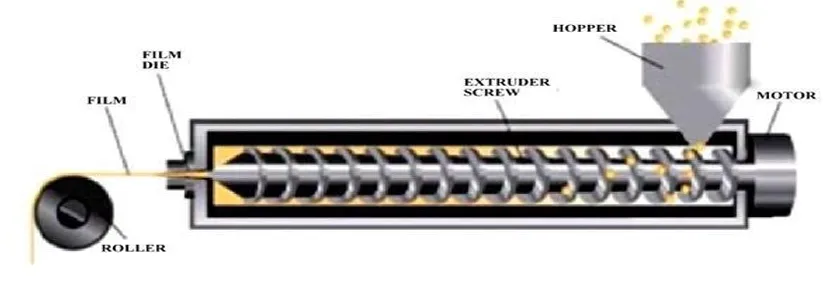
Fig No. 3 Semi solid casting method
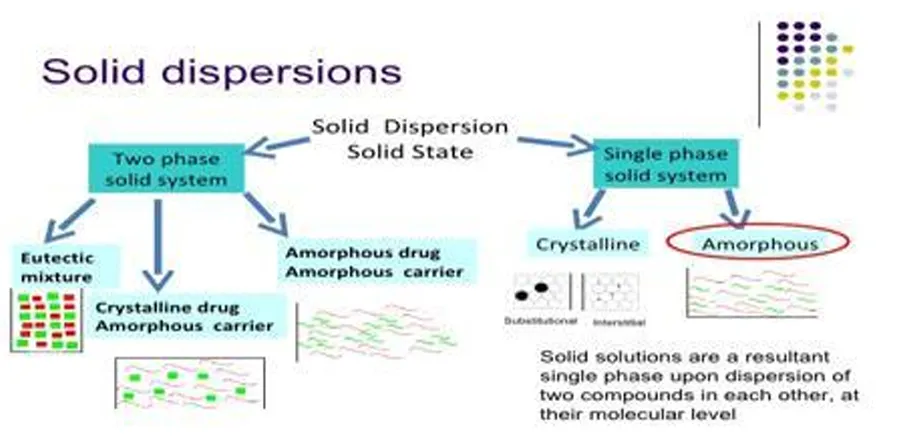
Fig No. 4.Solid Dispersion Extrusion Method
Formula given below is used for determination of Tensile strength
Tensile strength= Load at failure × 100
Strip thickness × Strip width Type equation here.
% Elongation = Increase in length of strip × 100 Initial length of Strip
CONCLUSION
In conclusion, oral films represent an innovative and patient-centric drug delivery system that addresses many limitations of conventional oral dosage forms. These films rapidly disintegrate in the oral cavity without the need for water, offering enhanced patient compliance, comfort, and convenience, especially for paediatric, geriatric, dysphagia, and non-cooperative patients. ODFs improve therapeutic performance by enabling rapid onset of action, bypassing first-pass metabolism, and enhancing bioavailability, while also providing precise dosing and ease of administration. Although challenges such as limited drug loading, moisture sensitivity, and special packaging requirements persist, ongoing research and formulation advancements continue to expand the practical utility of ODFs in pharmaceutical therapy. Overall, orally disintegrating films are a promising and adaptable platform that can potentially replace or supplement traditional dosage forms and improve the quality of drug delivery across diverse patient populations.
REFERENCES

Radhika D. Holkar*, P.G. Patil, S. J. Dighade, Establishment of Animal Research Facilities in Review on Oral Fast Dissolving Film Technology: Materials, Methods, Int. J. of Pharm. Sci., 2026, Vol 4, Issue 6, 3740-3751. https://doi.org/10.5281/zenodo.20705329
 10.5281/zenodo.20705329